
Retro watches bring design details from earlier decades into modern wristwear. They can feature compact rectangular cases, simple analog dials, digital displays, domed crystals, slim profiles or vintage-inspired bracelets. Some closely reproduce historical designs, while others borrow only a few familiar details. Retro watches are not defined by one movement, brand or display type.
The term describes an aesthetic that draws on earlier watchmaking styles. Understanding the difference between genuine vintage pieces, reissues and modern retro-inspired designs makes it easier to choose a watch that suits your wrist, daily routine and budget.
Retro Watches at a Glance
- Definition: Watches that use design cues from earlier decades, particularly the 1950s through the 1990s.
- Main styles: Digital, dress-inspired, sports, field-inspired and chronograph designs.
- Most important distinction: Vintage watches are genuinely old; reissues and retro-inspired watches are modern products.
- Common misconception: A retro appearance does not mean an outdated movement or unreliable technology.
What Makes a Watch Retro?
A retro design takes inspiration from an earlier period of watchmaking. Its identity comes from visual details rather than a particular movement or manufacturing date.
For example, watches from the 1960s often had relatively simple dials, slim cases and restrained markers. The 1970s brought angular cases, integrated bracelets and colourful designs. The 1980s and 1990s popularised compact digital displays, multifunction watches and distinctive LCD layouts.
Modern manufacturers recreate these details using contemporary materials and movements. A watch can therefore look decades old while offering modern quartz accuracy, improved manufacturing and everyday convenience.
There are three useful categories to understand:
- Vintage watches: Original watches manufactured in an earlier period.
- Reissues: Modern recreations of identifiable historical designs.
- Retro-inspired watches: New designs that borrow older visual elements without reproducing a specific original model.
This distinction matters because an original vintage watch may need specialist maintenance, while a modern reissue is generally easier to maintain.
[readmore url=”https://wristaurahub.com/moon-phase-watches/”]
The Main Retro Styles Compared
| Style | Recognisable features | Common movement | Best suited to |
|---|---|---|---|
| Digital | LCD display, buttons, compact case | Quartz | Everyday use |
| Dress-inspired | Clean dial, slim case, simple markers | Quartz or automatic | Smart casual and formal outfits |
| Sports | Rotating bezel, bold markers | Quartz or automatic | Casual and active wear |
| Field-inspired | Arabic numerals, readable dial | Quartz or automatic | Everyday practical use |
| Chronograph | Sub-dials and stopwatch pushers | Quartz or automatic | Sporty styling |
1. Retro Digital Watches
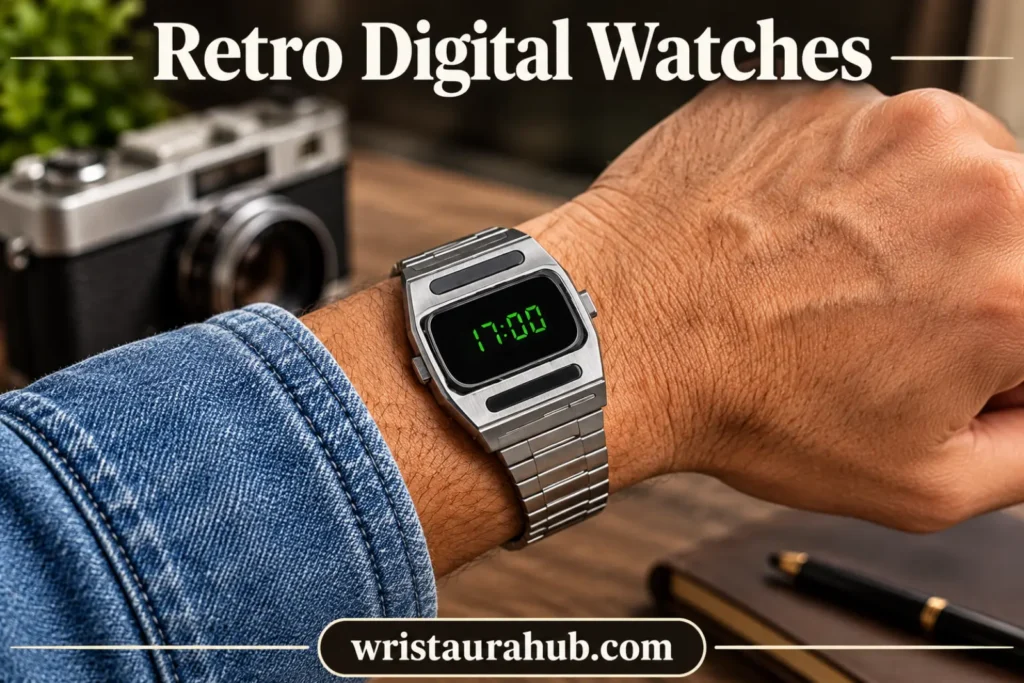
Digital designs are among the most recognisable styles from the late twentieth century. They typically feature rectangular or square cases, LCD displays, small buttons and straightforward layouts.
A classic example is the Casio Vintage collection. Its designs bring familiar historical shapes together with modern everyday functions. The A168 range is a good example of how Casio combines classic digital styling with practical features.
These watches are practical because they often provide alarms, calendars, stopwatches and backlighting.
Limitation: Small displays and compact cases can be difficult to read if you prefer larger watches.
2. Retro Dress Watches
Dress-inspired designs take their cues from earlier formal watches. They usually have uncluttered dials, slim cases, polished finishes and leather straps.
Gold-tone cases, cream dials and simple baton markers can create a particularly convincing vintage appearance.
These watches work well with office clothing, shirts and smart casual outfits. A modern quartz movement is perfectly suitable if you want dependable timekeeping without regular winding.
Limitation: Highly polished cases can show scratches, while minimal dials may lack the features some everyday users want.
3. Retro Sports Watches
Sports designs from the 1970s and 1980s often used angular cases, colourful dials, rotating bezels and integrated metal bracelets.
The Timex Q Reissue is a useful illustration of how manufacturers recreate this design language. Timex draws on its historical quartz designs and updates them for modern use. The collection includes several different interpretations of earlier designs.
A retro sports watch can provide a stronger wrist presence than a traditional dress watch.
Limitation: Integrated bracelets and unusual case shapes can make replacement straps more difficult to find.
4. Retro Field Watches
Field-inspired watches use a practical design associated with military and outdoor timepieces. Their typical features include Arabic numerals, clear minute markings, simple hands and durable-looking straps.
Some modern designs recreate the appearance of older military watches without copying a particular historical model.
A field-style watch is a good option if you prefer readability over decorative details. Canvas, leather and nylon straps all complement this appearance.
Limitation: The straightforward dial may look too plain if you prefer colourful or more elaborate designs.
5. Retro Chronographs
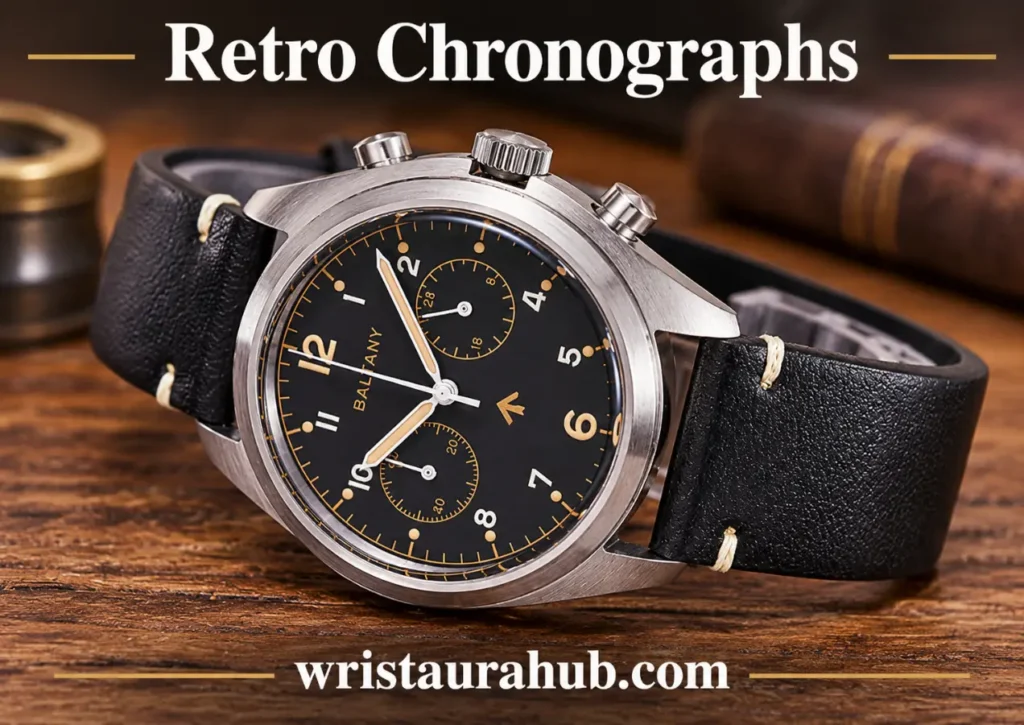
Chronographs bring a more technical appearance to vintage-inspired designs. Their defining feature is a stopwatch function operated through pushers on the side of the case.
Common visual details include two or three sub-dials, contrasting colours, tachymeter scales and prominent hands.
Some designs borrow from the motorsport watches of the 1960s and 1970s. A panda dial, with dark sub-dials against a lighter background, is another recognisable design choice.
Limitation: Multiple scales and sub-dials can make the display harder to read than a simple three-hand watch.
[readmore url=”https://wristaurahub.com/michael-kors-watches/”]
How to Identify Different Retro Designs
You can identify the design period and style by examining a few details in order.
- Look at the display. An LCD screen usually points towards digital-era styling, while traditional hands suggest an analog design.
- Examine the case. Rectangular, tonneau and angular cases are common in many retro-inspired collections.
- Check the dial. Applied markers, printed numerals, colourful accents and simple layouts can reveal the design influence.
- Inspect the bracelet. Woven stainless-steel bracelets, narrow links and integrated designs are common retro details.
- Study the crystal. A domed crystal can add an older visual character, although modern watches may use updated materials.
- Check the movement. Quartz, automatic and manual movements can all appear in retro designs.
Do not assume that an old-looking case contains an old movement. Modern reissues often use contemporary quartz or mechanical technology.
How to Choose a Retro Watch for Your Wrist
The right size matters more than the decade a watch represents. A beautiful design can look awkward if the case is too wide or the watch extends beyond your wrist.
Small wrists
Rectangular digital watches and compact dress-inspired designs can work particularly well. Check the case width and length rather than relying on diameter alone.
Medium wrists
You have more flexibility. Traditional round cases, sports designs and digital watches can all work, depending on their proportions.
Larger wrists
Look for watches with wider cases, longer lugs or more substantial bracelets. Avoid assuming that every retro design must be small.
Choosing the right display
If you prefer traditional timekeeping, an analog dial is a sensible choice. If you want alarms, stopwatch functions and an easy-to-read digital display, a digital design may be more practical.
Choosing a movement
- Quartz: Usually affordable, accurate and easy to maintain.
- Automatic: Uses wrist movement to wind its mainspring and does not need a battery.
- Manual: Requires regular hand winding.
- Solar: Uses light to recharge its internal power source.
For everyday convenience, quartz is often the easiest choice. An automatic movement makes more sense if you specifically enjoy mechanical watchmaking.
Affordable Retro Designs: What Should You Look For?
You do not need an expensive vintage watch to enjoy this aesthetic. Modern quartz watches and affordable reissues can offer the same visual character without the maintenance concerns of an ageing mechanical watch.
What are good retro-inspired watches under $200?
Look at three main categories:
- Digital classics: Simple LCD watches with metal or resin cases.
- Quartz reissues: Modern watches based on designs from the 1970s and 1980s.
- Basic analog designs: Clean dials, vintage-inspired markers and traditional straps.
The Casio Vintage range is worth exploring for digital styling. Timex’s Q Reissue collection offers another direction, particularly if you prefer analog designs and vintage-inspired metal bracelets.
Prices vary by model, market and retailer, so check the current local price rather than assuming every version falls below your budget.
Are there any good retro watches with a date?
Yes. A date window is a practical feature that does not interfere with the vintage appearance.
You can find date displays in several styles:
- Three-hand analog watches with a date window at 3 or 6 o’clock.
- Day-date watches showing both the weekday and calendar date.
- Digital watches with an LCD calendar.
- Chronographs that combine timing functions with a date display.
The important thing is dial balance. A small, well-positioned date window usually looks more natural than a crowded display with unnecessary complications.
What are the best retro digital watches for men?
Digital watches with stainless-steel bracelets, square cases and readable LCD screens are strong options.
The Casio A168 is a recognisable example of this design direction. Its familiar digital appearance combines everyday functionality with an electroluminescent backlight, making it a practical choice for people who appreciate classic digital styling..
Other useful features to compare include:
- Display visibility in low light.
- Alarm and stopwatch functions.
- Calendar readability.
- Button accessibility.
- Bracelet adjustment.
- Case proportions.
Do not choose a watch only because it resembles an old digital model. Make sure its display is comfortable to read and its functions suit your routine.
How to Style Affordable Digital Designs
A digital watch can work with more than casual clothing. The key is to coordinate its case, bracelet and overall appearance with the rest of your outfit. Classic silver-tone digital watches pair particularly well with denim, neutral colours and smart casual clothing.
Casual clothing
A silver-tone digital watch pairs naturally with jeans, plain T-shirts, sweatshirts and denim jackets. A stainless-steel bracelet gives the outfit a slightly more polished finish.
Smart casual clothing
A slim digital watch can work with chinos, knitwear and casual shirts. Silver and black finishes are generally easier to coordinate than brightly coloured cases.
Minimal outfits
If your clothing already includes several colours or patterns, choose a simple watch with a clean display. Let the watch provide a small design detail rather than becoming the main focus.
Gold-tone styling
Gold-tone digital watches can complement brown, cream, black and navy clothing. Keep other accessories relatively restrained so the watch does not compete with too many metallic details.
Finding a Larger Retro Design
Not everyone wants a small rectangular watch. Some historical designs are compact, but retro styling also includes substantial sports watches, wide cases and bold chronographs.
If you are looking for men’s retro watches with more wrist presence, consider these characteristics:
- Wider rectangular or tonneau-shaped cases.
- Longer case dimensions.
- Integrated stainless-steel bracelets.
- Larger analog dials.
- Contrasting bezels and prominent markers.
Any retro watches that aren’t tiny?
Yes. Look beyond the smallest classic digital designs and consider 1970s-inspired sports watches, larger chronographs and modern interpretations of vintage dive watches.
Case diameter is only one part of the measurement. Case length, lug-to-lug distance, thickness and bracelet width also affect how a watch looks on your wrist.
A rectangular watch can wear larger than its width suggests because of its case length. Similarly, an integrated-bracelet design can appear wider than a traditional round watch.
Try to compare actual measurements before purchasing. If possible, check wrist photographs taken from above and from the side. These give a more realistic impression than catalogue images.
[readmore url=”https://wristaurahub.com/tom-ford-watch/”]
How to Spot Quality in a Modern Retro-Inspired Watch
A convincing appearance is only one part of a good watch. Construction and usability matter just as much.
Case finishing: Look for consistent brushing and polishing. Uneven edges and rough finishing can make an otherwise attractive watch feel inexpensive.
Crystal: Mineral crystal is common in affordable watches, while sapphire offers better scratch resistance. Acrylic can provide an authentic vintage appearance but scratches more easily.
Bracelet quality: Check for comfortable links, secure clasps and suitable adjustment. A poorly finished bracelet can spoil the experience.
Dial readability: Markers should be easy to distinguish. Digital displays should remain legible at different viewing angles.
Movement: A dependable quartz movement is often a sensible choice for an affordable daily watch. Mechanical movements can be appealing, but they require more maintenance.
Water resistance: Check the manufacturer’s actual rating. A 30-metre rating is for splashes, not swimming. A 50-metre rating is generally suitable for swimming, but it is not a diving rating. Do not assume a vintage appearance means the watch is suitable for water activities.
Retro Style Without the Vintage Maintenance
A modern reissue is often the more practical choice than an original vintage watch. It can preserve the appearance of an earlier design while using contemporary movements, crystals and manufacturing methods.
For example, people researching Seiko retro watches can explore the brand’s historical designs and milestones. These earlier designs help explain how traditional watchmaking styles influenced modern collections.
Similarly, the Timex Q collection demonstrates how a manufacturer can revisit its historical designs without relying entirely on original vintage components.
For anyone comparing different retro watches for men, the most useful approach is to compare proportions, display type, movement and everyday comfort rather than choosing based on nostalgia alone.
The Final Talk
Retro-inspired watches are appealing because they combine familiar design details with modern practicality. You can choose a digital classic, a slim dress watch, an angular sports design or a more substantial chronograph.
My recommendation is to start with the case shape and display type. Then consider movement, readability and wrist proportions. A well-designed modern reissue will often make more sense for daily use than an original vintage watch that needs specialist attention.
The best choice is not necessarily the oldest-looking watch. It is the one that captures the design you enjoy while remaining comfortable and reliable.
Frequently Asked Questions
Yes. Digital displays, rectangular cases, integrated bracelets and vintage-inspired analog dials continue to appear in modern collections. Their appeal comes from distinctive designs rather than changing technology.
Yes. Many offer quartz accuracy, lightweight cases, alarms, calendars and backlighting. Check display readability, bracelet comfort and water resistance before choosing one.
Not necessarily. Original vintage watches offer historical character, but modern reissues generally provide easier maintenance and updated components. The better choice depends on whether originality or everyday practicality matters more.
No. Quartz is common in retro designs, particularly digital watches. Automatic and manual movements are also available in vintage-inspired analog designs.
Yes. Choose a slim case, simple dial, restrained colors and a leather strap or polished bracelet. Avoid overly bulky sports designs with formal clothing.
Compare case width, case length, thickness and lug-to-lug distance with your wrist. Do not rely on diameter alone, especially when considering rectangular or tonneau-shaped watches.
Discover More to Learn
Wren Watches Review: Models, Prices & Buying Guide
Best Dive Watches Under $500: 4 Top Picks
[authorbox]