
What if the watch on your wrist could keep you connected to time without ever needing a battery?The best automatic watches do more than tell time—they give you a reason to glance at your wrist again and again. From the smooth sweep of the seconds hand to the intricate mechanical movement working beneath the dial, every detail adds character that a quartz or smartwatch simply can’t replicate.
In 2026, automatic watches make that experience accessible at almost every price point. You can find affordable Japanese standouts like Seiko and Orient, refined Swiss options like Tissot, and rugged everyday favorites like Hamilton. After comparing design, movement quality, durability, value, and everyday wearability, these are the automatic watches that stand out most.
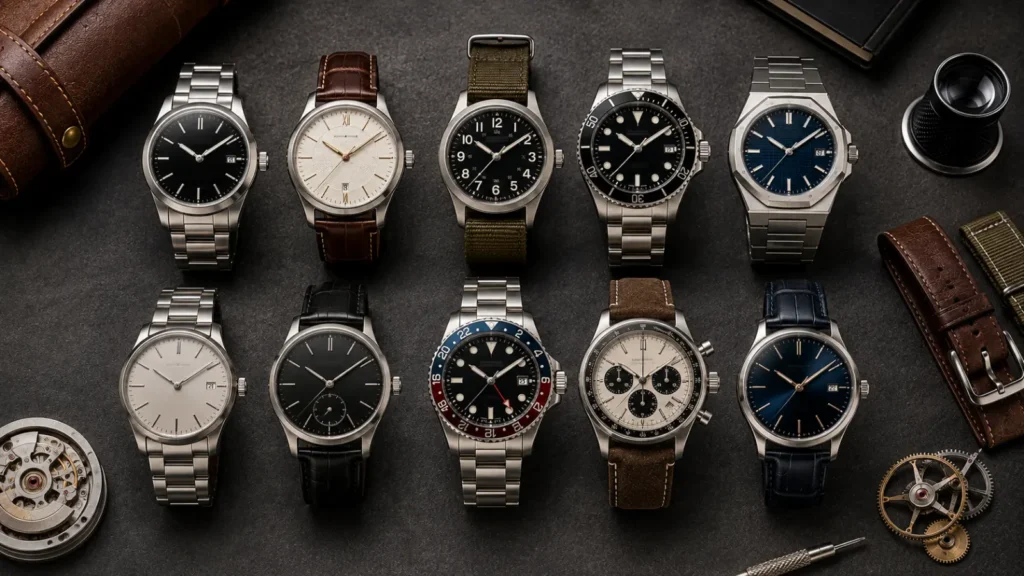
1. THE BEST AUTOMATIC WATCHES AT A GLANCE
The right choice depends less on finding one universally “best” watch and more on matching the watch to your budget, wrist, and lifestyle. A $200 Orient can be a better purchase than a $1,000 Swiss watch if what you actually want is a simple, enjoyable daily wearer.
| Watch | Approx. price tier | Movement | Size | Best for |
|---|---|---|---|---|
| Orient Kamasu | Under $300 | Automatic | Around 42mm | Budget dive watch |
| Seiko 5 Sports | Under $400 | Automatic | Varies by model | Casual everyday wear |
| Citizen Tsuyosa | Under $500 | Automatic | 40mm | Integrated-bracelet style |
| Seiko Presage Cocktail Time | $400–$600 | Automatic | Around 39–41mm | Dressy dial design |
| Tissot PRX Powermatic 80 | $700–$900 | Automatic | 40mm | Best Swiss all-rounder |
| Hamilton Khaki Field Auto | $700–$900 | Automatic | 38mm | Field-watch fans |
| Tissot Gentleman Powermatic 80 | $700–$900 | Automatic | Around 40mm | Office-to-weekend versatility |
| Christopher Ward C63 Sealander | Around $1,000+ | Sellita SW200-1 | 39mm | Premium everyday sports watch |
Prices vary by model, retailer, promotions, and market, so treat these as useful buying bands rather than permanent price tags.
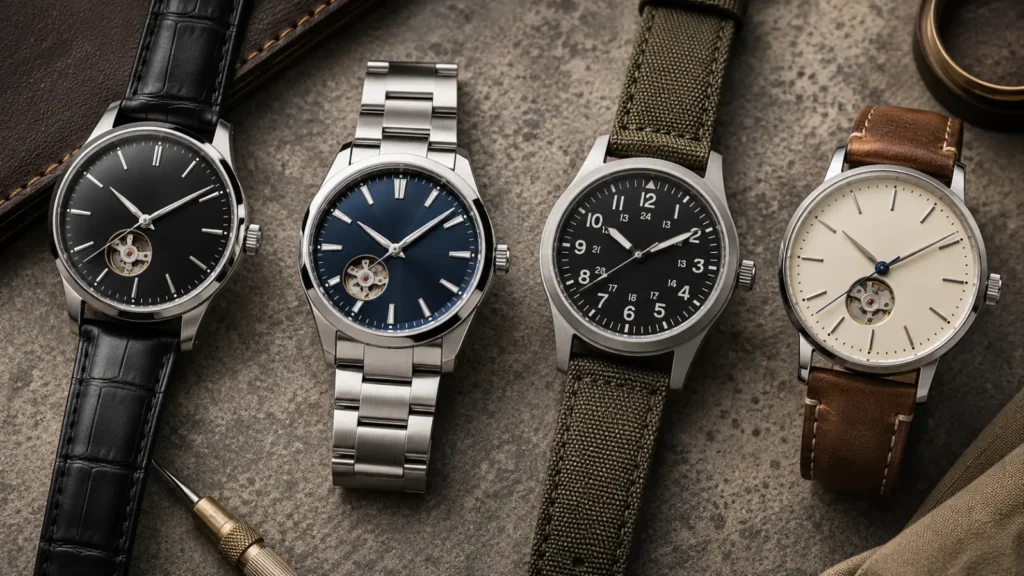
2.BEST AUTOMATIC WATCHES UNDER $200
The sub-$200 market is where expectations need to be realistic. You can absolutely get a genuine automatic movement, but compromises such as mineral crystal, simpler bracelets, basic finishing, or shorter power reserves are common.
For a first mechanical watch, that’s not necessarily a problem. A dependable movement and a watch you actually enjoy wearing matter more than checking every specification box.
Orient Bambino: Best Budget Dress Watch
The Orient Bambino remains one of the easiest recommendations for someone who wants a traditional dress watch without spending much. Its appeal is straightforward: classic proportions, a mechanical movement, and a dial that looks considerably more expensive than the price suggests.
The catch is that different Bambino generations vary considerably in size, crystal, dial design, and movement, so check the specific reference before buying.
Best for: First automatic dress watch, office wear, weddings, and smaller budgets.
Seiko 5 Sports: Best Casual Entry Point
Seiko’s 5 Sports family makes more sense for casual buyers who don’t want a delicate-looking dress watch. The collection offers numerous dial colors, bezel designs, bracelet and strap combinations, and case sizes.
The brand’s broad mechanical lineup is also a major advantage. Seiko manufactures its own movements and covers everything from inexpensive mechanical watches to much more advanced Prospex and Grand Seiko offerings.
Best for: Students, first-time mechanical-watch buyers, and casual everyday wear.
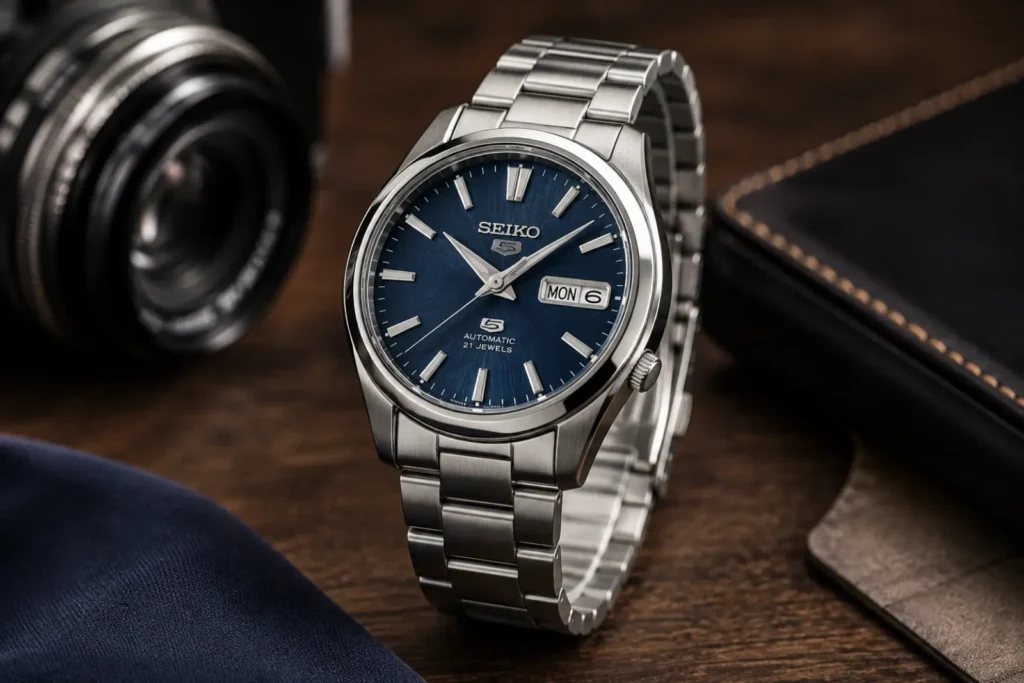
3.BEST AUTOMATIC WATCHES UNDER $500
This is arguably the most interesting value segment. Around $200–$500, you can move beyond the basic mechanical-watch experience and start getting better case finishing, sapphire crystal on selected models, stronger bracelets, more interesting dials, and more specialized designs.
Recent 2026 buying guides and enthusiast discussions repeatedly highlight Seiko, Orient, Tissot, Hamilton, and Citizen as the brands worth investigating in this range.
Citizen Tsuyosa: Best Integrated-Bracelet Value
The Citizen Tsuyosa is one of the easiest watches to recommend if you want something modern rather than traditionally dressy. Its 40mm case, integrated-style bracelet, sapphire crystal, automatic caliber 8210, date display, and 50-meter water resistance make it a particularly useful everyday package. Citizen lists a 42-hour power reserve for this movement.
What makes the Tsuyosa interesting isn’t that it dominates every specification. It doesn’t. Its strength is personality. The colorful dials and compact integrated-bracelet design give it considerably more visual presence than many conservative watches at the same price.
Best for: Smart-casual outfits, office wear, and buyers who want a modern sports-watch look.
Orient Kamasu: Best Automatic Dive Watch on a Budget
If your idea of a daily watch includes swimming, beach trips, or outdoor use, the Kamasu is a stronger choice than a typical dress automatic. It has become a favorite among budget-conscious enthusiasts because it combines a Japanese automatic movement with a proper dive-watch format.
Its biggest appeal is simple: you aren’t paying primarily for a logo. You are getting a purpose-built sports watch with a rotating bezel and substantial water resistance for relatively little money.
Best for: Swimming, travel, outdoor wear, and buyers who want maximum utility below $500.
Seiko Presage Cocktail Time: Best Dial Under $500
The Cocktail Time occupies a different corner of the market. It isn’t trying to be a dive watch or a rugged field tool. Its reason for existing is the dial.
Seiko describes the collection as using glossy, vibrant dials inspired by cocktails, with several case sizes and colorways across the family.
The trade-off is equally clear: many Cocktail Time references use Hardlex rather than sapphire crystal, and water resistance is generally modest. That makes it a dressier proposition rather than an all-purpose adventure watch.
Best for: Dressier occasions, office wear, and anyone who prioritizes dial character.
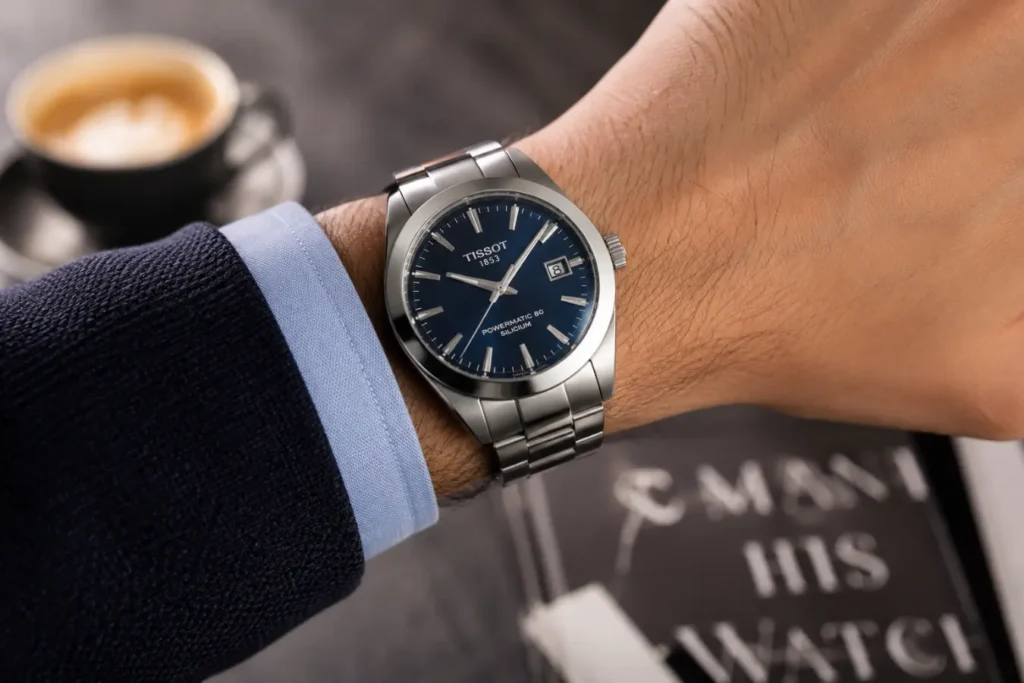
4.BEST AUTOMATIC WATCHES UNDER $1,000
Crossing into the $500–$1,000 range changes the buying equation. This is where Swiss automatics with long power reserves, sapphire crystals, better bracelets, and more sophisticated cases become readily available.
Recent 2026 market guides consistently identify this price bracket as one of the strongest areas of value in mechanical watches.
Tissot PRX Powermatic 80: Best Swiss All-Rounder
The Tissot PRX Powermatic 80 is the obvious choice for buyers who want a watch that looks contemporary without abandoning traditional mechanical watchmaking.
The current 40mm PRX uses a Swiss automatic movement with an 80-hour power reserve, sapphire crystal, stainless-steel construction, and a quick-release bracelet. Tissot also rates the watch to 100 meters of water resistance on the referenced model.
Its integrated-bracelet shape gives it a stronger wrist presence than a conventional three-hander. The downside is that the styling isn’t universally versatile. It works beautifully with modern casual and business-casual clothing, but it isn’t the watch I’d choose for someone who wants a traditional dress aesthetic.
Best for: One-watch collections, office wear, dinners, travel, and modern sports-watch fans.
Hamilton Khaki Field Auto: Best Automatic Field Watch
The Hamilton Khaki Field Auto is the pick for someone who wants the charm of a military-inspired field watch without sacrificing the convenience of automatic winding.
The 38mm version uses Hamilton’s H-10 automatic caliber with an 80-hour power reserve, sapphire crystal, Nivachron balance spring, and 100-meter water resistance. Hamilton also lists a 47mm lug-to-lug measurement, which helps explain why the watch wears compactly despite its practical proportions.
That 38mm case is particularly appealing if you’ve found modern sports watches too large. Hamilton also offers the collection in 42mm, but the smaller version is the more convincing all-rounder for most wrists.
Best for: Field-watch enthusiasts, smaller wrists, outdoor wear, and anyone wanting military-inspired design.
Tissot Gentleman Powermatic 80: Best Office-to-Weekend Watch
The Gentleman makes a strong case for itself by being deliberately uncontroversial. There is no oversized bezel, integrated bracelet, flashy dial texture, or aggressive tool-watch styling.
That’s precisely why it works.
A clean dial, conventional case, bracelet, and long-running Powermatic 80 movement create the kind of watch you can wear to a meeting on Monday and a restaurant on Saturday without changing anything.
Best for: Professionals, business-casual wardrobes, and buyers who want maximum versatility.
Christopher Ward C63 Sealander: Best Independent Alternative
The C63 Sealander is worth considering when you have moved beyond the usual Seiko-Hamilton-Tissot shortlist.
Christopher Ward’s technical documentation lists a Sellita SW200-1 automatic movement, 39mm stainless-steel case, 150-meter water resistance, 28,800 vibrations per hour, and a 45.8mm lug-to-lug measurement.
This is an excellent example of why microbrands and independent watchmakers deserve attention. You aren’t buying the same level of mainstream brand recognition as Tissot or Hamilton, but you can get a thoughtfully designed sports watch with serious specifications.
Best for: Enthusiasts who value specifications and independent brands over mainstream recognition.
5.BEST AUTOMATIC WATCHES FOR MEN
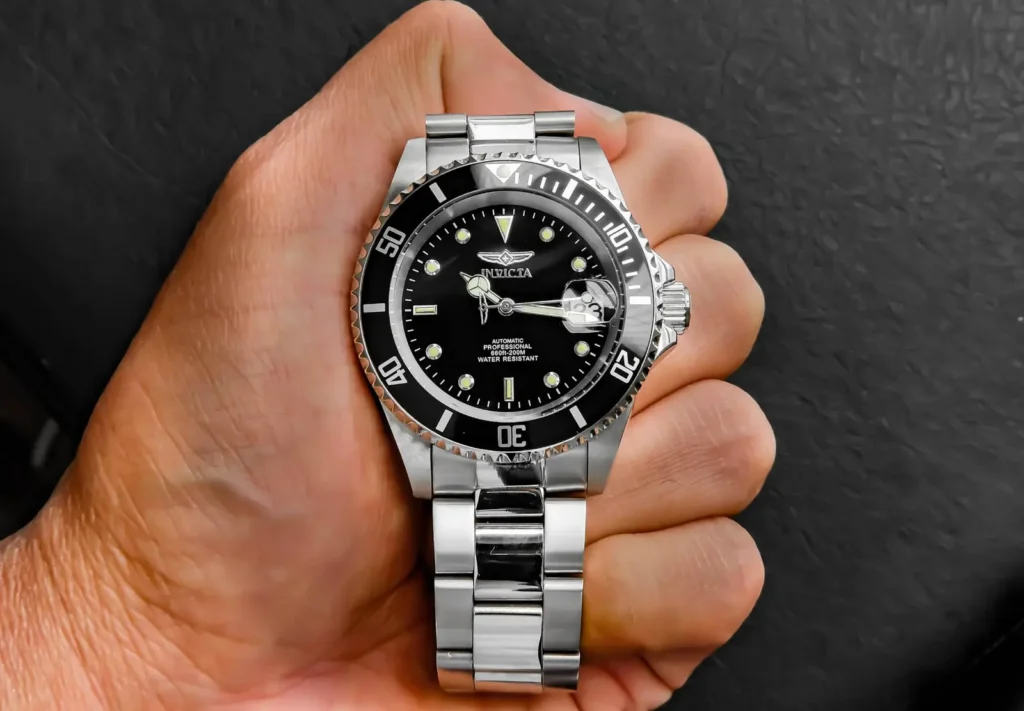
For men’s watches, case diameter alone is a poor way to judge fit. Lug-to-lug length, thickness, bezel width, dial opening, and bracelet taper can completely change how a 40mm watch wears.
The safest starting point is usually around 38–41mm for a versatile everyday watch, but wrist shape matters more than a magic number.
For a traditional masculine field aesthetic, the Hamilton Khaki Field Auto is hard to beat. The Tissot PRX takes the lead if you prefer a modern sports look. Meanwhile, Seiko 5 Sports remains one of the easiest entry points for inexpensive casual wear.
6.BEST AUTOMATIC WOMEN’S WATCHES AND SMALLER WRIST PICKS
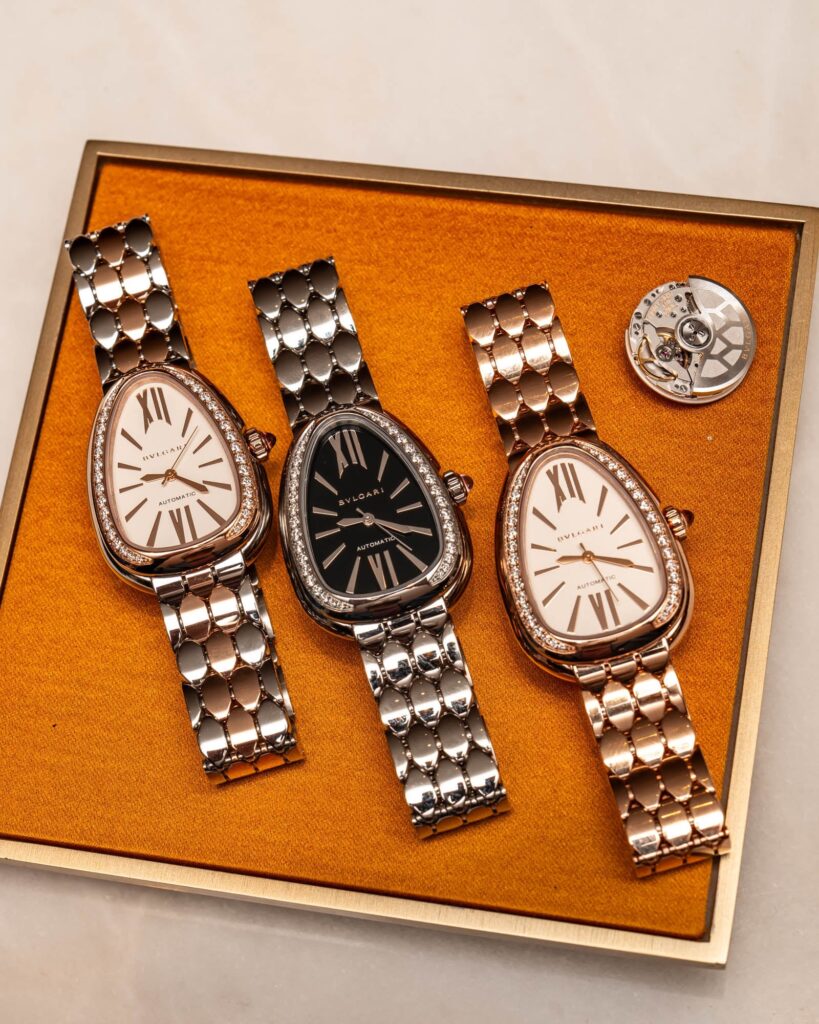
Automatic watches aren’t inherently men’s or women’s watches. Case dimensions, styling, and comfort are more useful considerations than the label on the product page.
For smaller wrists, look for shorter lug-to-lug measurements and thinner cases rather than simply choosing the smallest diameter available. A 38mm watch with long lugs can wear larger than a compact 40mm case.
The Seiko Presage family offers several smaller sizes, while Citizen’s Tsuyosa provides a relatively compact 40mm option with a modern bracelet design. Seiko’s current Cocktail Time collection alone spans multiple sizes, including 33.8mm, 34mm, 38.5mm, 39.5mm, and 40.5mm options.
Best for: Smaller wrists, women who prefer mechanical watches, and anyone who likes traditionally styled watches without oversized cases.
7.WHY THESE WATCHES MADE THE CUT
A good buying guide shouldn’t reward watches simply because they have a famous logo. The strongest choices above cover different reasons to buy.
The Orient and Seiko options demonstrate how inexpensive mechanical watches can still be genuinely enjoyable. Citizen brings a more contemporary design language. Tissot offers a particularly strong Swiss proposition. Hamilton combines historical character with modern specifications, while Christopher Ward demonstrates how far independent brands have come.
The result is a list where the “best” choice changes depending on what you value.
If You Care Most About Value
Start with Orient, Seiko, or Citizen.
You won’t get every premium feature, but you can spend considerably less and still own a genuine automatic mechanical watch.
If You Want Swiss Watchmaking
Look first at Tissot and Hamilton.
The PRX is the more contemporary option, while the Khaki Field Auto has stronger military and tool-watch character.
If You Want the Most Versatile Design
The Tissot Gentleman is arguably the safest choice.
It doesn’t dominate a particular style category, which is exactly what makes it easy to wear.
If You Want a Proper Tool Watch
Choose a diver or field watch rather than a dress automatic.
The Orient Kamasu is the budget-minded route. The Hamilton Khaki Field Auto is the better fit for someone who prefers field-watch aesthetics.
8. WHAT ACTUALLY MATTERS IN AN AUTOMATIC MOVEMENT?
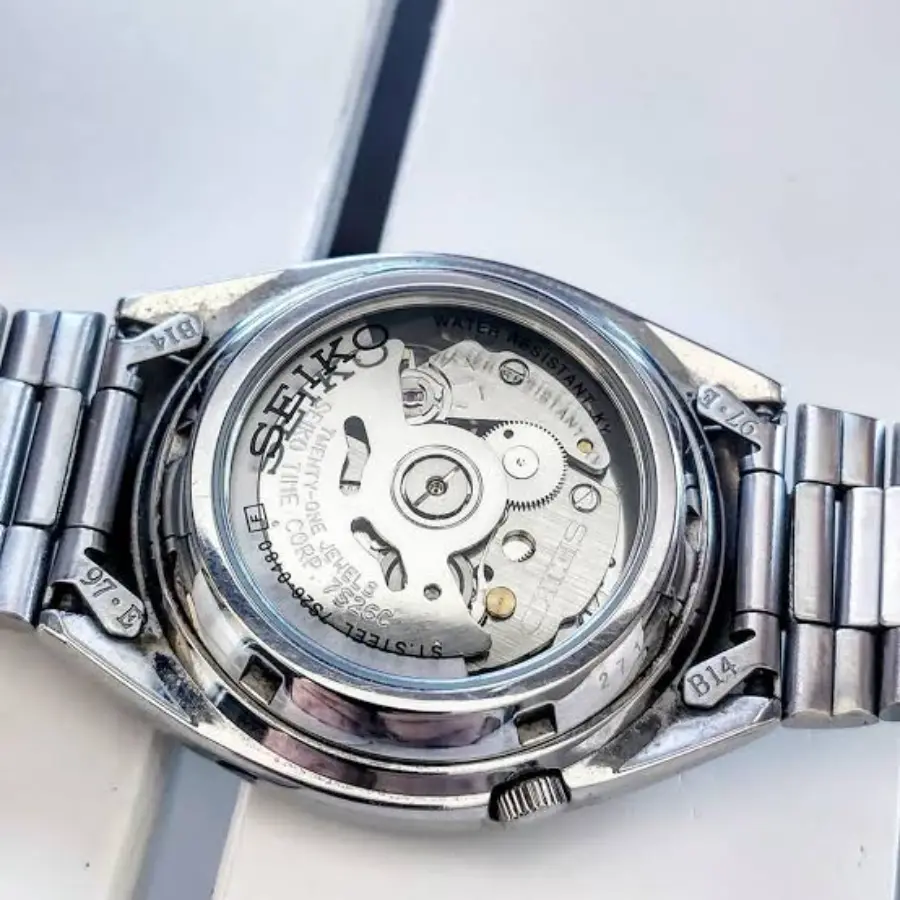
Movement specifications can become confusing quickly. A higher jewel count or a longer list of technical terminology doesn’t automatically make one movement better than another.
For most buyers, focus on four things: power reserve, serviceability, accuracy expectations, and the brand’s support network.
A movement with roughly two days of power reserve may be perfectly adequate if you wear the watch every day. An 80-hour movement becomes more useful if you rotate watches because it is much less likely to have stopped when you pick it up after the weekend.
Beat rate also matters, but don’t use it as a simple quality score. A 28,800-vph movement can offer a smooth seconds hand, while slower-beating movements can be perfectly reliable and desirable.
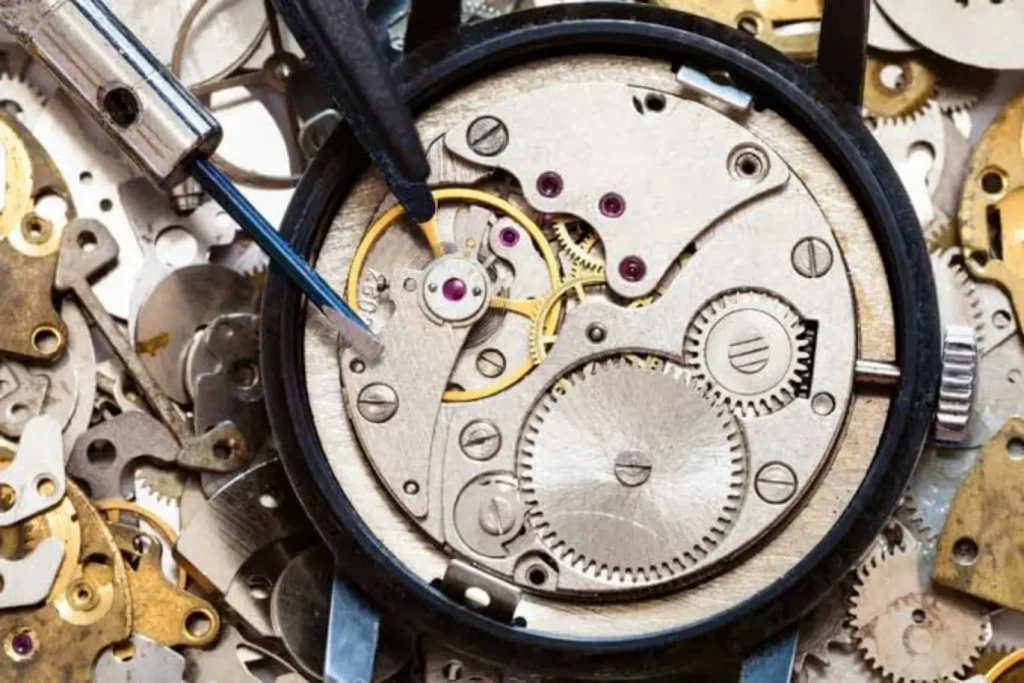
9. DO YOU NEED A WATCH WINDER FOR AN AUTOMATIC WATCH?
Usually, no.
An automatic watch does not need to remain running when you’re not wearing it. If it stops, you can generally wind and set it again when you put it back on.
A winder becomes useful primarily for convenience, particularly if you own several watches with complications that take time to reset. It isn’t a requirement for keeping a normal automatic movement healthy.
If you’re comparing the best watch winders for automatic watches, prioritize adjustable winding direction, controlled rotation settings, secure watch holders, and quiet operation rather than assuming more rotations are better.
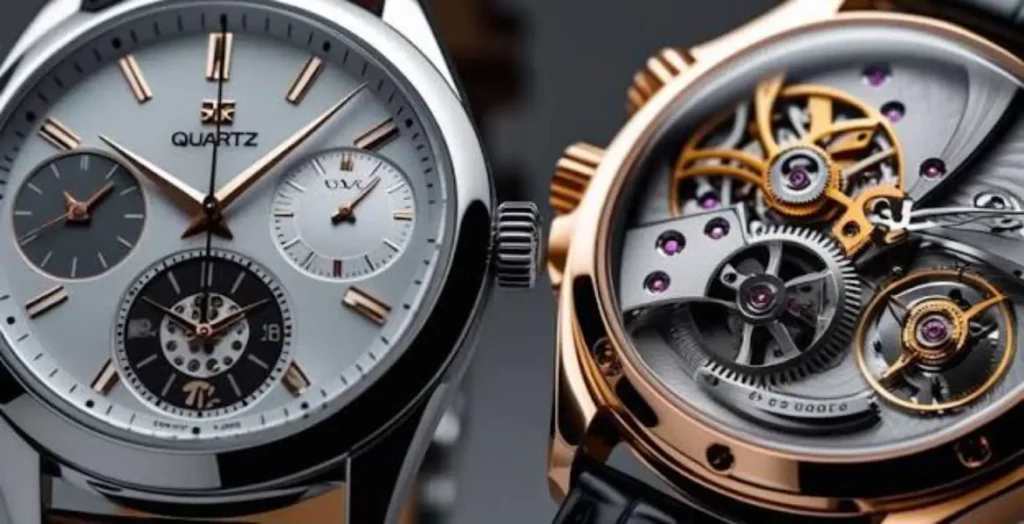
10. AUTOMATIC VS. QUARTZ: WHICH SHOULD YOU BUY?
Automatic watches win on mechanical character. Quartz watches win on convenience and usually on raw accuracy.
An automatic needs to be worn or manually wound and will generally require periodic servicing. Quartz can sit in a drawer for weeks and still be ready to go once the battery is healthy.
That makes the decision surprisingly simple:
- Choose automatic if you enjoy mechanical engineering, traditional watchmaking, and the experience of ownership.
- Choose quartz if accuracy, convenience, low maintenance, and grab-and-go reliability matter most.
- Choose solar quartz if you want convenience without regularly thinking about conventional battery replacement.
The “better” technology depends on what you want from the watch.
11.HOW TO CHOOSE THE RIGHT MECHANICAL WATCH
The best purchase is rarely the watch with the longest specification sheet. Start with how you actually intend to wear it.
1. Where will you wear it?
Office, hiking, swimming, formal events, and daily casual wear demand different designs.
2. What is your real budget?
If $300 is comfortable but $800 feels excessive, don’t stretch simply because someone says the more expensive watch is “better.”
3. Does the case actually fit?
Check diameter and lug-to-lug measurement together. If possible, try the watch on before buying.
4. Do you need sapphire crystal?
Sapphire is highly scratch resistant and particularly useful for an everyday watch. But mineral or Hardlex crystal isn’t automatically a deal-breaker on an inexpensive dress watch.
5. Will you actually enjoy the design?
This is the part specifications can’t solve. A technically impressive watch that stays in the drawer is a worse purchase than a modest automatic you wear constantly.
COMMON MISTAKES TO AVOID
Buying a mechanical watch is relatively straightforward once you know which compromises you’re willing to accept. Most mistakes happen because buyers focus too heavily on specifications or brand prestige.
- Buying the wrong size: A watch can look enormous because of long lugs even when its diameter seems reasonable.
- Treating water resistance as a guarantee: A 100-meter rating doesn’t mean every watch is suitable for diving. Follow the manufacturer’s usage guidance.
- Overvaluing the movement: A famous caliber doesn’t rescue a watch you dislike wearing.
- Ignoring the bracelet: A mediocre bracelet can make an otherwise excellent watch feel cheap.
- Assuming every automatic needs a winder: Most owners can simply let a watch stop and reset it when needed.
- Shopping only by brand: Some of the strongest values in this price range come from models rather than prestige alone.
FINAL TALK
The best automatic watch isn’t the one with the biggest name—it’s the one you’ll actually love wearing every day.Choosing the right automatic watch comes down to what matters most to you. For unbeatable value, Seiko and Orient are hard to overlook. Want a more refined Swiss experience? Tissot delivers the right balance of heritage, design, and performance. And for rugged field-watch appeal, Hamilton’s Khaki Field Auto remains a standout.
If you want one watch that does almost everything well, the Tissot PRX Powermatic 80 is our top all-round pick. Its distinctive integrated-bracelet design, sapphire crystal, 100-meter water resistance, and impressive 80-hour power reserve make it equally at home in the office or on the weekend.Ultimately, don’t buy the automatic watch with the longest spec sheet—buy the one that fits your wrist, your style, and your everyday life.
FAQs
Seiko, Orient, Citizen, Tissot, and Hamilton are among the safest starting points because they offer established mechanical platforms across multiple price levels. For a first purchase, prioritize comfort, serviceability, and a design you’ll actually wear.
Yes, provided you accept some compromises. Orient and Seiko offer genuine entry-level mechanical options, although crystal, bracelet quality, finishing, and power reserve may not match more expensive watches.
The Hamilton Khaki Field Auto, Tissot Gentleman, Tissot PRX Powermatic 80, and Citizen Tsuyosa are strong everyday choices for different reasons. Your preferred style should determine which one makes the most sense.
Absolutely. The $200–$500 range contains some of the strongest value in mechanical watchmaking, particularly from Seiko, Orient, Citizen, and selected Swiss models. Recent enthusiast discussions also repeatedly point buyers toward these brands in this price bracket.
The Hamilton Khaki Field Auto is one of the strongest modern choices because its 38mm case, sapphire crystal, 100-meter water resistance, and 80-hour H-10 movement combine traditional field-watch design with modern specifications.
Discover More,
Tissot Watches Women: 7 Best Picks for Every Style
Mens Digital Watches: 7 Best Picks for Every Budget
Vintage Watches for Men: 7 Timeless Picks
[author box]
Pingback: Classic Watches: 7 Proven Picks That Stand the Test of Time