
The appeal of art deco watches comes from their distinctive shapes, balanced proportions, and decorative details. Developed during an era when modern design was transforming architecture, jewellery, and fashion, these timepieces brought geometric styling to the wrist. Most examples associated with the movement date from the 1920s and 1930s, although its influence began earlier and continues today.
Rectangular cases, stepped edges, Roman numerals, contrasting materials, and elegant bracelets are common features. Understanding the different designs also helps distinguish an authentic period watch from a modern reproduction. This guide explores their history, famous watchmakers, vintage styles, and the details that make these timepieces recognizable.
Art Deco Watches at a Glance
- Definition: Wristwatches influenced by the Art Deco design movement, known for geometric shapes, symmetry, and decorative detailing.
- Main styles: Rectangular, square, tonneau, round geometric, and jeweled cocktail designs.
- Key distinction: Case architecture and dial decoration matter more than the movement type.
- Common misconception: Not every rectangular vintage watch is automatically an original Art Deco piece.
What Makes a Watch Art Deco?
Art Deco was a decorative design movement that became prominent during the 1920s and 1930s. Its name comes from the 1925 International Exhibition of Modern Decorative and Industrial Arts in Paris. The style combined geometric patterns, symmetry, stylised ornament, and influences from modern technology and earlier artistic traditions. National Galleries of Scotland+2
In watchmaking, these ideas appeared through structured case shapes, carefully arranged dial elements, and decorative materials. Instead of relying entirely on traditional round cases, designers experimented with rectangular, square, curved, and elongated profiles.
Several details help identify this aesthetic:
- Geometric cases: Rectangles, squares, curves, and stepped outlines.
- Balanced dials: Symmetrical layouts with clearly arranged hour markers.
- Roman numerals: Often paired with a railway-style minute track.
- Decorative materials: Gold, platinum, stainless steel, enamel, and gemstones.
- Distinctive bracelets: Integrated metal bracelets and finely detailed leather straps.
Art Deco is a design language rather than a specific watch movement. A period watch could use a manual-winding mechanical movement while still displaying a distinctly modern exterior.
[readmore url=”https://wristaurahub.com/digital-watches/”]
Main Vintage Designs Compared
The easiest way to classify these timepieces is by examining their case shape, dial layout, decoration, and wearing style. These categories describe visual designs rather than strict technical classifications.
| Design | Identifying feature | Common dial style | Typical appearance |
|---|---|---|---|
| Rectangular | Long, straight case | Roman numerals | Formal and architectural |
| Square and cushion | Four-sided case with softened corners | Geometric markers | Bold and balanced |
| Tonneau | Curved barrel-shaped case | Elongated numerals | Distinctive and sculptural |
| Round geometric | Circular case with angular detailing | Arabic or Roman numerals | Traditional with modern decoration |
| Jeweled cocktail | Small decorative case | Minimal or gemstone-set | Ornamental and elegant |
Rectangular Wristwatches
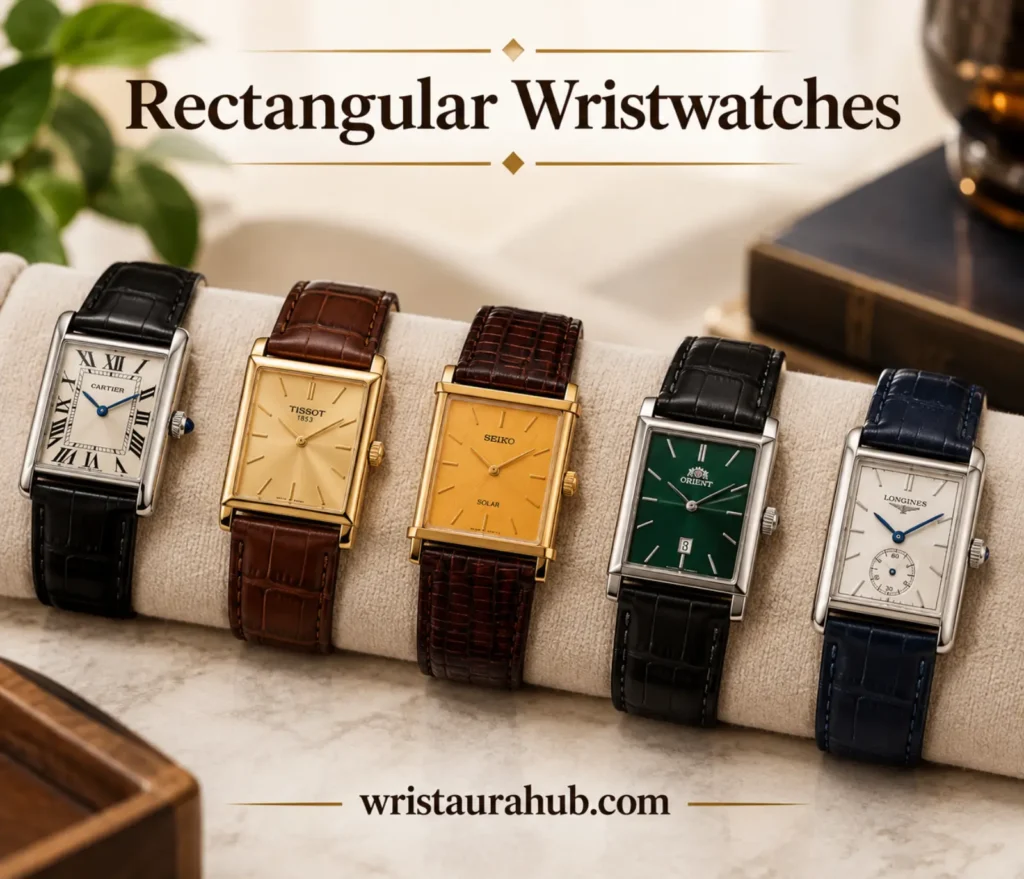
Rectangular cases are among the most recognisable features of this design period. Their long proportions create a clean outline, while straight edges and carefully positioned lugs give the watch an architectural appearance.
Roman numerals, railway minute tracks, and slim hands frequently complement the case. Some examples feature curved edges or stepped borders that add depth without making the design overly complicated.
The Cartier Tank is an important historical reference. Introduced in 1917, it developed into one of the defining geometric wristwatch designs of the period. Its parallel case flanks and structured dial demonstrate how architectural ideas influenced watchmaking. Cartier Tank: Timeless Luxury Watch Design+1
The limitation is that narrow rectangular cases can have smaller dials, making them less suitable for people who prefer large, highly legible displays.
Square and Cushion-Shaped Watches
Square and cushion-shaped designs offer a stronger, more compact appearance. A square case has defined corners, while a cushion case uses rounded edges that soften its outline.
These watches often feature contrasting dial finishes, prominent numerals, and decorative bezels. Some use stepped case construction to create the appearance of several layers.
Their proportions make them visually distinctive without requiring an unusually long case. However, heavily decorated examples can look busy, particularly when the dial, bezel, and bracelet all contain competing patterns.
Tonneau-Shaped Watches
Tonneau watches have elongated, barrel-shaped cases with curved sides. The shape follows the wrist more naturally than a completely straight rectangular case and gives the design a distinctive profile.
Some examples have curved dials, while others use straight displays inside rounded cases. Their proportions can make them appear more refined than traditional square watches.
The main identification point is the barrel-like outline. A rounded rectangular case is not necessarily tonneau-shaped; the sides and overall proportions should create a recognisable curved profile.
Round Watches With Geometric Details
Not every design from the Art Deco period used a rectangular case. Round watches also adopted the movement’s visual language through stepped bezels, contrasting finishes, angular numerals, and symmetrical dial arrangements.
These designs combine familiar watch proportions with decorative elements associated with the period.
They are useful examples of why case shape alone cannot determine whether a watch has Art Deco characteristics. The dial, bezel, hands, and overall construction must also be considered.
Jeweled and Cocktail Watches
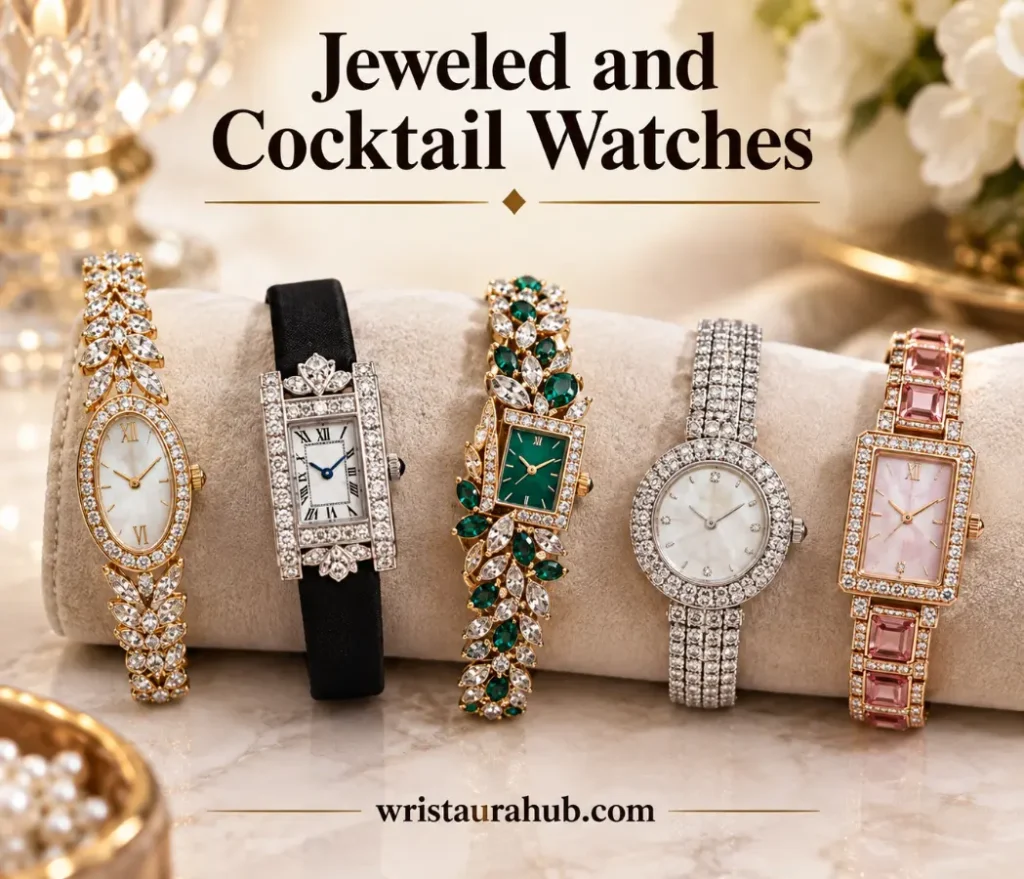
Jeweled cocktail watches brought watchmaking and jewellery design together. Many featured small cases, precious metals, diamonds, and decorative bracelets.
Some designs placed greater emphasis on the surrounding jewellery than on the dial itself. Others used symmetrical gemstone arrangements or geometric patterns to create a more structured appearance.
These pieces were especially suited to formal occasions. Their main limitation today is practicality: small vintage dials can be difficult to read, and delicate bracelets may require specialist restoration.
[readmore url=”https://wristaurahub.com/norqain-watches/”]
How to Recognise an Original Period Design
Identifying an original example requires more than finding a rectangular case or an old-looking dial. Several details should agree with the watch’s claimed production period.
1. Examine the case construction
Look for crisp geometric lines, stepped edges, curved profiles, and integrated lugs. The shape should feel intentional rather than like a modern round case with a different bezel.
2. Study the dial layout
Check the numerals, minute track, hand shape, and spacing. Roman numerals, Breguet-style numerals, railway tracks, and carefully balanced displays can all appear on period examples.
3. Inspect the materials
Gold, platinum, steel, enamel, and gemstones were used in different price categories. The material should be consistent with the watch’s age and claimed specification.
4. Check the movement
Most mechanical examples from this period use manual-winding movements. Examine the movement markings, serial numbers, and manufacturer information where available.
5. Verify the watch’s history
A matching case and movement, period-correct dial, documented provenance, and credible service records provide stronger evidence than appearance alone.
Restored watches deserve particular attention. A refinished dial or replacement crown does not necessarily make a watch worthless, but undisclosed alterations can affect originality and collector interest.
Who Made Watches During the Art Deco Era?
Several established watchmakers helped shape the period’s distinctive wristwatch designs. Some became known for architectural cases, while others contributed through jewellery craftsmanship, mechanical development, or accessible production.
Cartier
Cartier is one of the most important names associated with Art Deco watch design. Its Tank, introduced in 1917, established a distinctive rectangular silhouette. The Tank Cintrée and Tank Louis Cartier further developed the design during the early 1920s.
Jaeger-LeCoultre
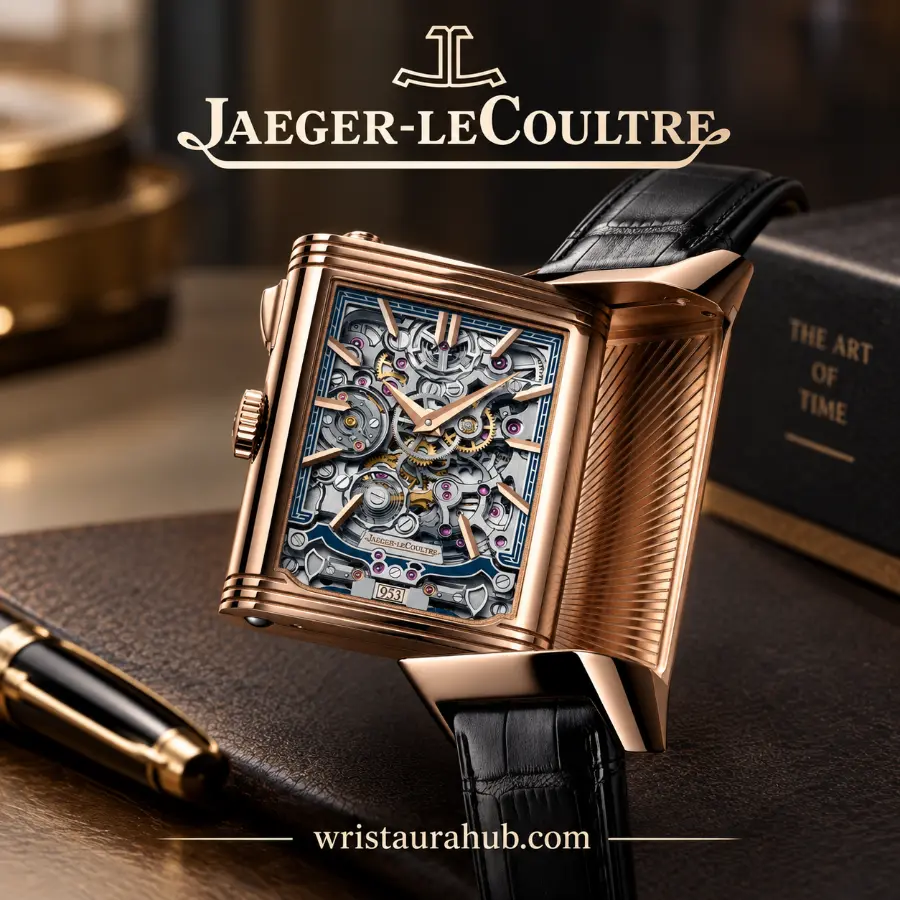
Jaeger-LeCoultre became closely associated with elegant rectangular watchmaking. Its Reverso, introduced in 1931, featured a reversible case originally developed for polo players. Its geometric construction made it an important design of the era.
Longines
Longines produced elegant wristwatches with rectangular and tonneau-shaped cases. Its designs combined traditional Swiss watchmaking with the changing proportions and styling of early twentieth-century wristwatches.
Gruen
Gruen is particularly interesting to collectors because of its Curvex designs, which appeared in 1935. Their curved movements and cases helped create watches that followed the shape of the wrist.
Hamilton
Hamilton produced American wristwatches with distinctive rectangular cases and carefully arranged dials. Its historical collections provide useful examples of the period’s combination of practical timekeeping and decorative design.
Other Important Watchmakers
Other manufacturers also contributed to the period’s watchmaking landscape:
- Bulova: Produced a wide range of wristwatches with changing case shapes and decorative details.
- Elgin: Known for American-made watches across different price categories.
- Waltham: Contributed to the development of American watchmaking and wristwatch production.
- Omega: Produced refined mechanical wristwatches during the period.
- Patek Philippe: Created high-end watches featuring precious metals and sophisticated finishing.
- Rolex: Expanded its wristwatch range during the period as wristwatches became increasingly popular.
These makers did not all specialise in Art Deco styling. Their inclusion reflects their historical presence in watchmaking during the era, not a claim that every vintage model they produced follows the movement.
Men’s and Ladies’ Vintage Designs
Art Deco styling appeared in watches made for different wrists and occasions. Case proportions, bracelet construction, and decoration often varied, but the geometric design language remained recognisable.
Men’s Vintage Wristwatches
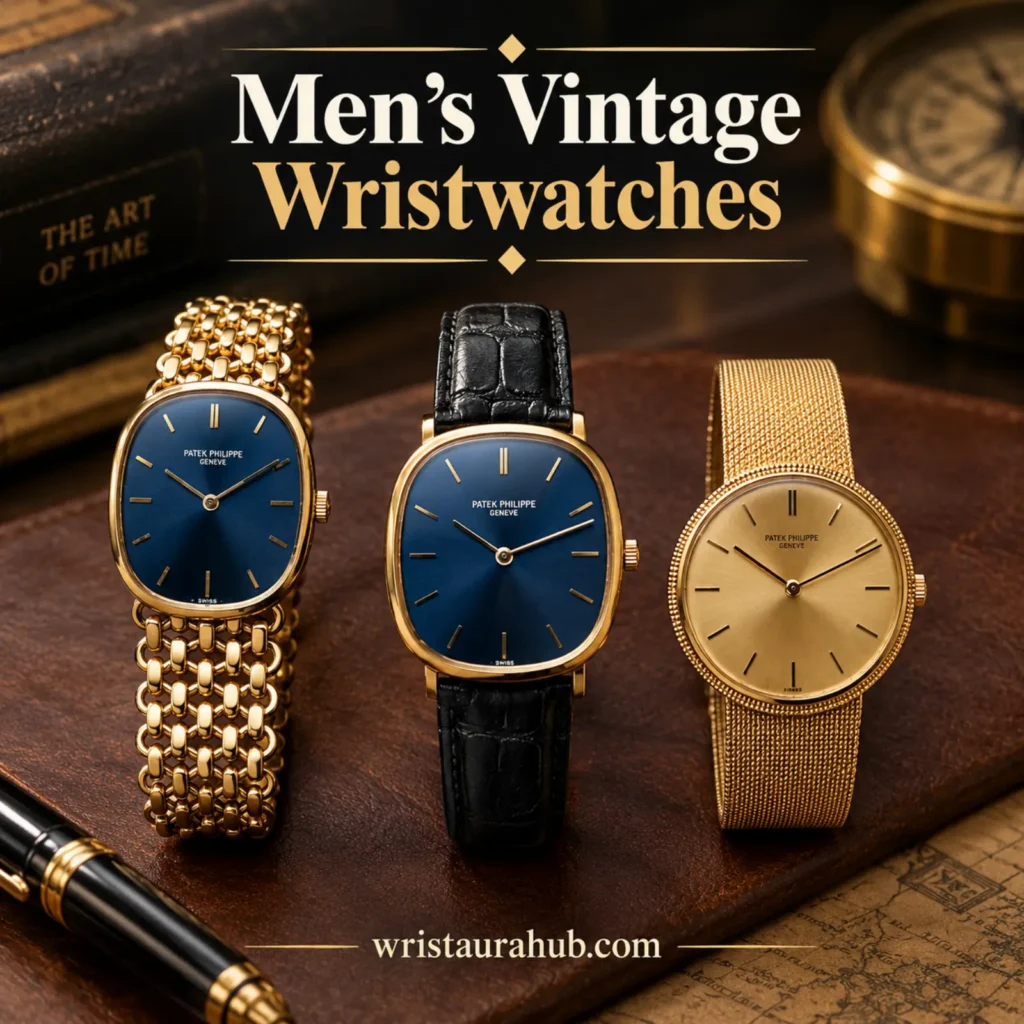
Men’s designs often featured larger rectangular, square, and tonneau-shaped cases. Gold or steel cases, restrained Roman numeral dials, and leather straps were common choices.
Some examples used stepped bezels and stronger case lines to create a more substantial appearance. Others maintained a slim profile suited to formal clothing.
When examining an original men’s example, pay attention to the case proportions and dial condition. A larger case does not automatically indicate a more valuable or more authentic watch.
Ladies’ Vintage Wristwatches
Ladies’ designs frequently combined timekeeping with jewellery. Small rectangular cases, platinum settings, diamonds, decorative numerals, and intricate metal bracelets were popular elements.
Some watches used concealed clasps or narrow bracelet constructions that made the timepiece resemble a piece of jewellery.
However, not every ladies’ watch was heavily decorated. Simple gold and steel examples also existed, and many remain attractive because of their clean proportions.
The best approach is to assess the complete design rather than assume that a particular case size or material determines the intended wearer.
[readmore url=”https://wristaurahub.com/mens-watches-under-1000/”]
How to Choose a Vintage Piece Worth Collecting
A good vintage watch should have more going for it than an attractive appearance. Originality, condition, serviceability, and historical documentation all affect whether it is a sensible addition to a collection.
| What to inspect | What to look for | Warning sign |
|---|---|---|
| Case | Correct shape and period details | Poorly reshaped edges |
| Dial | Original finish and consistent markers | Unexplained refinishing |
| Movement | Matching manufacturer and markings | Missing or mismatched movement |
| Crystal | Suitable replacement or original crystal | Cracks or poor fitting |
| Bracelet | Period-appropriate construction | Stretched or damaged links |
| Documentation | Service history and provenance | Unsupported authenticity claims |
Originality: An untouched dial and correctly matched movement can be more desirable than a heavily restored example.
Mechanical condition: A vintage manual-winding movement may need cleaning, lubrication, adjustment, or replacement parts. Ask a qualified watchmaker to inspect it before purchase.
Case condition: Deep polishing can remove sharp edges and soften the original geometry. This is particularly noticeable on rectangular and stepped cases.
Service availability: Some older movements are difficult to repair because replacement components are scarce. Check whether a watchmaker can service the specific movement.
Water resistance: Do not assume a vintage watch is suitable for swimming. Original seals may have deteriorated, and many older dress watches were never designed for water exposure.
How Art Deco Styling Differs From Modern Reproductions
Modern watches sometimes borrow vintage shapes, but an original period design and a contemporary interpretation are not the same thing.
| Feature | Original period watch | Modern interpretation |
|---|---|---|
| Case construction | Period-specific metalwork | Modern machining |
| Dial | Original printing and finishing | Newly manufactured details |
| Movement | Period mechanical mechanism | Modern quartz or mechanical |
| Materials | Historically appropriate metals | Wider range of materials |
| Condition | Natural ageing may be present | Usually factory-fresh |
A modern rectangular watch can capture the same visual character without being an antique. That is not necessarily a disadvantage. Newer examples are generally easier to maintain and may offer better everyday reliability.
For collectors, the distinction matters because historical authenticity and modern styling appeal to different interests.
Which Style Is Right for Your Collection?
The best choice depends on what you appreciate about vintage design.
- For formal occasions: Choose a slim rectangular watch with a restrained dial and leather strap.
- For distinctive case shapes: Consider a tonneau or cushion-shaped design.
- For jewellery-inspired styling: Look for a small cocktail watch with precious-metal details.
- For everyday vintage character: A simple round or square design may be easier to wear.
- For historical collecting: Prioritise documented period examples from established manufacturers.
Budget also matters. Original precious-metal and gemstone-set watches can cost considerably more than simpler steel examples. Restoration expenses should be included in the total cost.
Common Misconceptions About Art Deco Watches
Every Rectangular Vintage Watch Is an Art Deco Watch
Not necessarily. Rectangular cases existed before the Art Deco movement became popular. To classify a watch as Art Deco, examine its case proportions, dial layout, decorative details, and production period rather than relying on its shape alone.
Cartier Invented the Rectangular Wristwatch
Cartier did not invent the rectangular wristwatch, but its Tank design became one of the most influential examples of geometric watchmaking. Introduced in 1917, the Tank helped establish a distinctive architectural style that influenced later watch designs.
All Art Deco Watches Are Expensive
Not all vintage examples carry high prices. Their value depends on the manufacturer, materials, condition, originality, rarity, and collector demand. Simple steel watches can be more affordable than rare gold or gemstone-set pieces.
Every Watch From the 1920s Is an Art Deco Design
Age alone does not make a watch Art Deco. The design must reflect the movement’s characteristic geometry, symmetry, proportions, and decorative details. Some watches from the same period followed entirely different design traditions.
Vintage Watches Are Always Suitable for Daily Wear
Older watches may have worn components, dried lubricants, fragile crystals, or deteriorated seals. Even a watch that appears to work properly may need professional servicing. Have its movement and overall condition inspected before wearing it regularly.
The Final Talk
Art Deco remains an important chapter in wristwatch design because it changed how manufacturers approached case shapes, dial layouts, and decorative details. Cartier, Jaeger-LeCoultre, Longines, Gruen, and other historical makers helped establish a design language that collectors still recognize. Whether you prefer a restrained rectangular dress watch or an elaborate jewelry-inspired piece, the most useful distinction is between genuine period craftsmanship and modern interpretations. Focus on originality, condition, and documented history rather than appearance alone.
Frequently Asked Questions
Cartier, Jaeger-LeCoultre, Longines, Gruen, Hamilton, Bulova, Elgin, Omega, and Patek Philippe were among the established watchmakers producing wristwatches during the period. Their designs varied from simple geometric dress watches to elaborate jewelry-inspired pieces.
Art Deco-influenced wristwatches became especially popular during the 1920s and 1930s. The movement gained international recognition following the 1925 Paris exhibition of decorative and industrial arts.
Rectangular, square, cushion, tonneau, and jeweled cocktail watches are among the most recognizable designs. Their geometric cases and balanced dial layouts help distinguish them from conventional round watches.
Some are, provided they have been professionally inspected and are mechanically sound. However, delicate cases, fragile bracelets, small crystals, and limited replacement parts can make certain examples better suited to occasional wear.
Some are highly collectible, particularly rare Cartier and other prestigious manufacturer examples. However, value depends on originality, condition, provenance, materials, rarity, and demand. Age alone does not guarantee a high price.
Vintage describes the age of a watch, while Art Deco describes a particular design influence. A vintage watch can belong to another design movement or have a completely different aesthetic.
Discover More to Learn
Nordstrom Watches: Best Picks, Women’s Styles & Sales (2026)
Are Apple Watches Waterproof? The Complete Safety Guide
[authorbox]