
ometimes, the simplest watch on your wrist is the one you end up relying on the most.Digital watches make time instantly readable while packing useful features like alarms, timers, chronographs, backlighting, and multiple time zones into a compact design
. From rugged G-Shock models to affordable retro classics, the best options offer a practical mix of durability, comfort, and everyday functionality. This guide covers seven standout picks and what to look for before buying one.
What Is a Digital Watch?
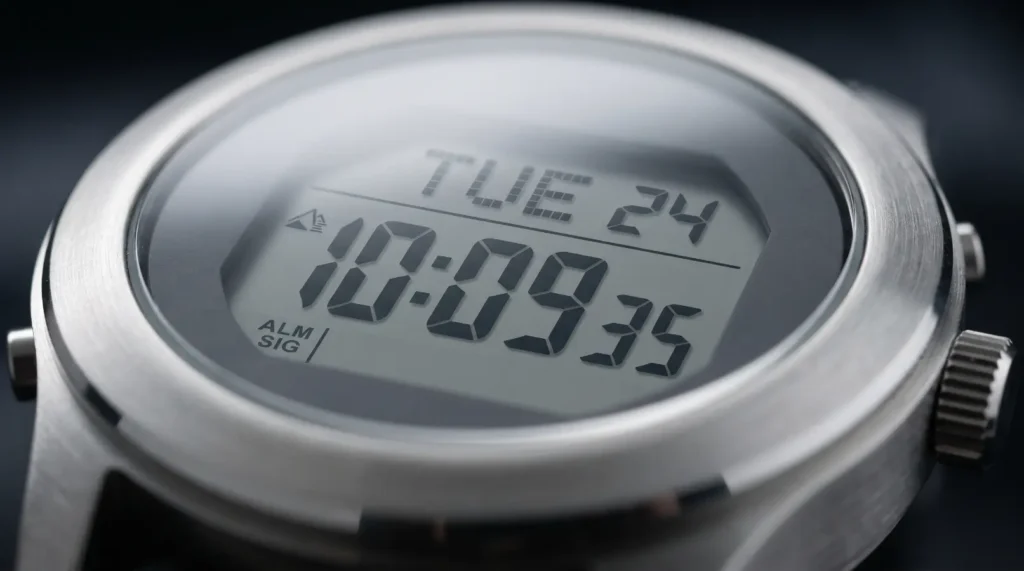
A digital watch displays time using numerals or other electronic indicators rather than traditional analog hands. Most traditional digital watches use quartz-based electronic timekeeping, although the category now includes everything from simple LCD models to highly advanced connected watches.
The biggest advantage is readability. You can glance at the display and immediately see the hour and minute without interpreting hands. Many models also provide useful functions that would otherwise require a separate device.
Common features include:
- LCD or LED time display
- Alarm and hourly signal
- Stopwatch or chronograph
- Countdown timer
- Calendar
- Backlight or illumination
- Multiple time zones
- World-time functions
- Water resistance
- Solar charging on some models
A traditional digital watch is also different from a smartwatch. It can provide electronic timekeeping and useful functions without requiring apps, notifications, cellular service, or a smartphone connection.
Why Do People Still Buy Digital Watches?
The appeal is simple: function comes first.
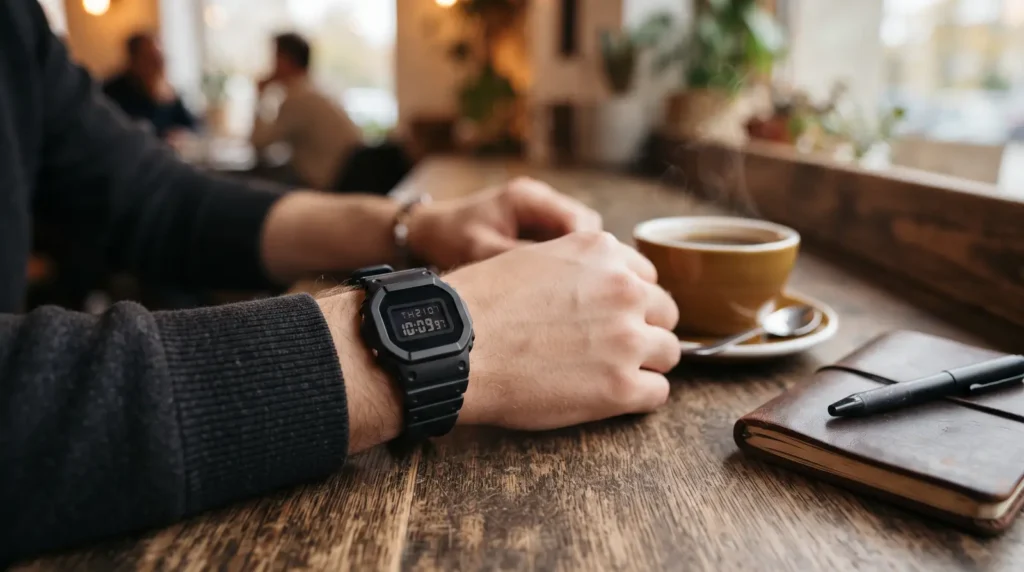
A good electronic watch can be inexpensive, lightweight, highly readable, and remarkably durable. That makes it useful for school, work, travel, exercise, hiking, swimming, or everyday casual wear.
There is also a design argument. Retro digital watches have returned to fashion because their rectangular cases, segmented displays, and simple bracelets offer something very different from the increasingly common smartwatch.
For many buyers, the decision comes down to three things:
- Practicality: alarms, timers, stopwatch functions, and calendars are genuinely useful.
- Durability: rugged models can handle conditions that would make a dress watch uncomfortable.
- Simplicity: there is no charging dock, app setup, or notification management on a conventional quartz digital model.
7 Digital Watches Worth Considering
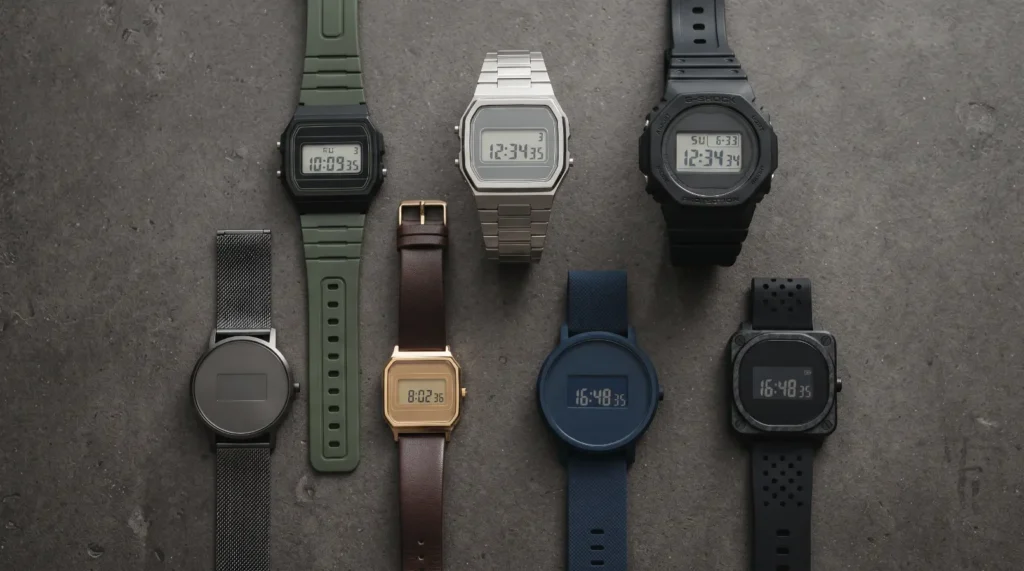
There is no single model that fits everyone. A compact retro watch makes sense for casual wear, while a G-Shock is a better choice for someone who expects impacts, outdoor use, or rough conditions.
The following picks cover different needs rather than simply listing seven similar watches.
1. Casio G-Shock DW-5600 — Best Rugged Classic
The DW-5600 is one of the clearest examples of why the digital format remains relevant. Its square case, familiar display, shock-resistant construction, and straightforward functionality make it particularly useful for everyday and outdoor wear.
Spec snapshot: Digital quartz movement | 200m water resistance | compact square case | typically affordable to mid-budget pricing depending on configuration
The display is easy to understand, and the buttons give you direct access to the stopwatch, countdown timer, alarm, and other functions. It is the kind of watch that makes sense when durability matters more than luxury finishing.
The main drawback is styling. Its utilitarian appearance will not work with every outfit, particularly formal clothing.
Best for: Outdoor use, casual wear, travel, and anyone who wants a durable traditional watch without smartwatch complications.
2. Casio F-91W — Best Budget Option
The F-91W proves that a useful watch does not have to cost much. Its small rectangular case, lightweight construction, simple LCD display, alarm, stopwatch, and backlight have made it one of Casio’s most recognizable inexpensive designs.
Spec snapshot: Digital quartz movement | basic water resistance | compact resin case and strap | typically very low-cost
Its greatest strength is the lack of unnecessary complexity. You get the information you need, the watch is easy to wear, and replacing it is relatively painless if it eventually gets damaged or lost.
It is not the right choice for serious swimming or demanding outdoor work, though. Its water resistance is intended for everyday exposure rather than deep-water activity.
Best for: Students, casual wear, travel, and anyone looking for a simple inexpensive watch.
3. Timex Ironman Classic — Best for Training
Timex’s Ironman range takes the traditional digital sports watch in a more fitness-focused direction. Large numerals, stopwatch functionality, timers, alarms, and an athletic design make it more appropriate for running and training than a basic retro model.
Spec snapshot: Digital quartz movement | sports-oriented construction | model-dependent water resistance | affordable to mid-range pricing
The important distinction is usability. During exercise, you do not want to hunt through menus just to start a timer or read elapsed time. A dedicated sports watch keeps those functions close at hand.
Some versions also offer different layouts and features, so checking the exact reference is worthwhile before purchasing.
Best for: Running, training, gym sessions, and active everyday wear.
4. Casio AE-1200 — Best for Travel
The Casio AE-1200 is a particularly useful choice for travelers because its display combines conventional time information with multiple time-zone functionality and a distinctive world-map design.
Spec snapshot: Digital quartz movement | 100m water resistance | resin case and strap | affordable pricing
Its display is busier than the F-91W or DW-5600, but that is intentional. The additional information becomes useful when you regularly move between time zones or need to track another location.
It is also relatively inexpensive for the amount of functionality it provides.
Best for: Travelers, students studying abroad, frequent flyers, and anyone who regularly tracks more than one time zone.
5. Casio A168 — Best Retro Style
If the goal is less about ruggedness and more about vintage character, the A168 is an easy model to understand. Its compact case, metallic-looking bracelet, classic digital display, and illuminated display give it a distinctly retro personality.
Spec snapshot: Digital quartz movement | basic water resistance | compact case | typically low-cost
It works particularly well with casual clothing because it does not try to imitate a modern sports watch. The relatively small proportions also make it a useful option for people who dislike oversized cases.
The trade-off is that it is primarily an everyday fashion and utility watch rather than a serious outdoor instrument.
Best for: Retro styling, smaller wrists, casual outfits, and affordable everyday wear.
6. Casio Pro Trek PRW Series — Best for Outdoor Use
For serious outdoor activities, the Pro Trek family moves considerably beyond basic timekeeping. Depending on the model, the range can include sensors and outdoor-oriented functions designed around hiking, trekking, and adventure use.
Spec snapshot: Digital/advanced quartz platform | model-dependent water resistance | rugged outdoor case | mid- to higher-price range
Some Pro Trek models use features such as a compass, altimeter, barometer, thermometer, and solar charging. Exact specifications vary substantially across references, so the individual model number matters.
That complexity is also its weakness. If you simply need a watch for the office or weekend errands, paying for specialized outdoor sensors makes little sense.
Best for: Hiking, trekking, camping, and outdoor navigation.
7. Casio Vintage A700 — Best Slim Retro Design
The A700 takes the classic Casio digital formula and gives it a thinner, more refined appearance. Its slim profile and metallic styling make it particularly attractive for someone who wants retro electronics without the chunkier proportions of a rugged sports watch.
Spec snapshot: Digital quartz movement | basic water resistance | slim case | affordable pricing
This is a style-first choice, but that does not make it impractical. The digital display remains straightforward, and the thin case can disappear comfortably under a shirt cuff.
Just remember that slim retro watches are not substitutes for rugged outdoor models.
Best for: Office-casual wear, retro enthusiasts, slimmer wrists, and minimalist outfits.
Digital Watch Comparison
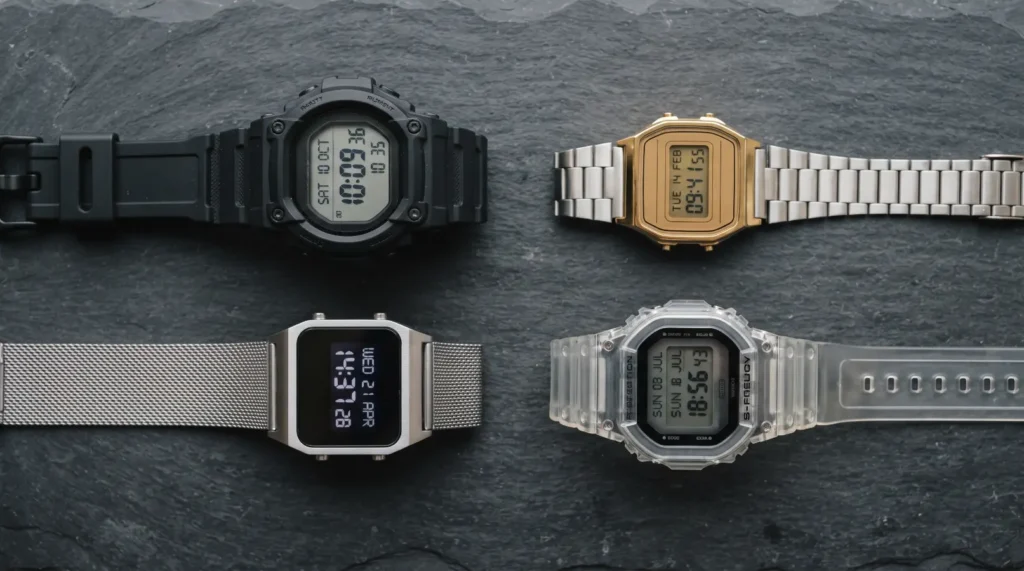
| Model | Best For | Movement | Water Resistance | Main Strength |
|---|---|---|---|---|
| Casio G-Shock DW-5600 | Rugged everyday use | Quartz | 200m | Shock resistance |
| Casio F-91W | Budget buyers | Quartz | Basic | Low cost and simplicity |
| Timex Ironman Classic | Training | Quartz | Model dependent | Sports functions |
| Casio AE-1200 | Travel | Quartz | 100m | World-time features |
| Casio A168 | Retro style | Quartz | Basic | Classic appearance |
| Casio Pro Trek PRW Series | Outdoor activities | Quartz/solar depending on model | Model dependent | Outdoor sensors |
| Casio A700 | Slim retro wear | Quartz | Basic | Thin profile |
Specifications can vary between individual references and regional versions, particularly within larger collections such as Pro Trek and Ironman.
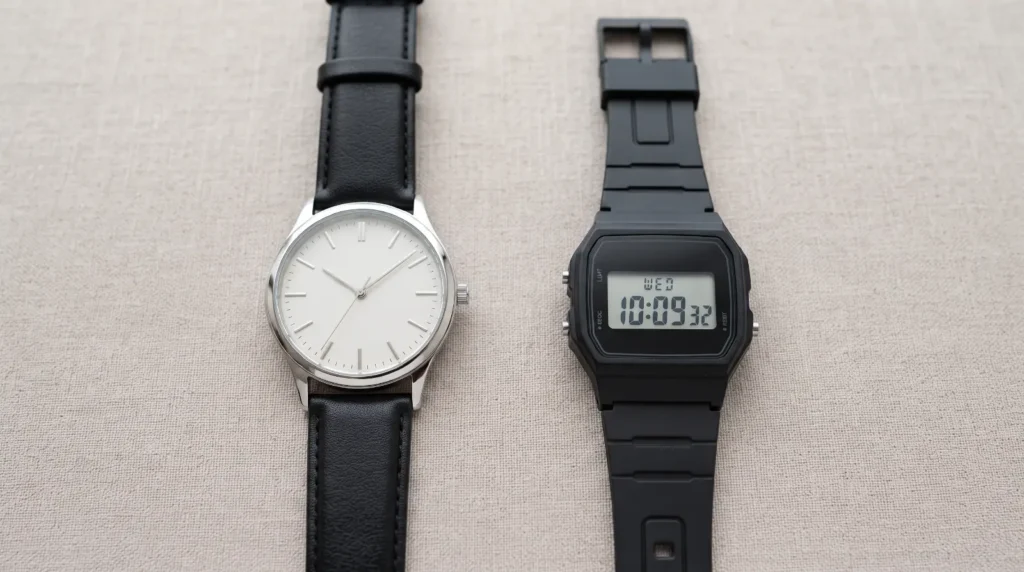
Digital vs Analog Watches: Which Should You Choose?
The choice is less about which technology is superior and more about what information you want at a glance.
Digital displays are particularly strong for precise numerical readability and practical functions. Analog watches, however, provide a more traditional visual experience and can work better with formal clothing.
| Feature | Digital | Analog |
|---|---|---|
| Exact time reading | Excellent | Requires reading hands |
| Stopwatch/timer | Often built in | Depends on model |
| Retro styling | Strong | Broad range |
| Formal wear | Model dependent | Usually easier |
| Outdoor utility | Often excellent | Depends on watch |
| Simplicity | Excellent | Excellent |
| Smart features | Usually absent | Usually absent |
A small digital watch can also be easier to wear than a large mechanical watch because many models are lightweight and compact.
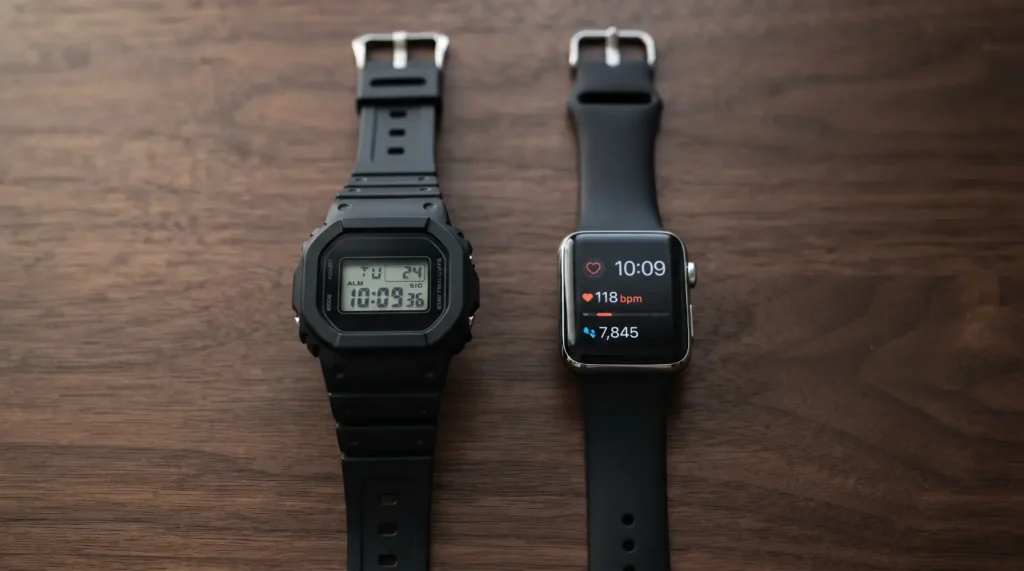
Digital Watches vs Smartwatches
A smartwatch and a conventional digital watch may look similar from a distance, but they serve very different purposes.
A smartwatch is essentially a wearable computer. It can display notifications, track health and fitness information, run apps, use GPS, and communicate with a phone. A conventional digital watch focuses on timekeeping and a fixed collection of built-in functions.
That difference affects ownership.
A traditional model normally offers longer battery life and less maintenance. A smartwatch provides considerably more functionality but introduces charging, software updates, phone compatibility, and other considerations.
If you only need the time, alarm, stopwatch, and timer, a conventional digital model can be the more practical tool.
What Should You Look for When Buying One?
The display is only the starting point. Case size, buttons, illumination, water resistance, strap comfort, and battery technology can make a bigger difference after several months of ownership.
Display Readability
Look at the watch from different angles rather than only from directly above. Some negative LCD displays look excellent in photographs but can be less legible in certain lighting conditions.
For everyday use, clear numerals and effective illumination are more valuable than an overly complicated display.
Battery or Solar Power
Basic quartz models can run for a long time on a conventional battery. Solar-powered models reduce the need for regular battery replacement and can be particularly convenient for people who wear their watch frequently.
Smartwatches are a different category because their rechargeable batteries generally require much more frequent charging.
Water Resistance
Do not assume every digital watch is suitable for swimming.
A model with stronger water resistance is better suited to water exposure, while basic retro watches should generally be treated as everyday watches rather than dedicated swimming instruments. Always check the manufacturer’s rating for the exact reference.
Case Size and Weight
Large sports watches can look impressive but may become annoying on smaller wrists.
A compact digital watch often works better for all-day wear because it is light, sits close to the wrist, and is less likely to catch on clothing.
Buttons and Controls
A sports watch with excellent specifications is not particularly useful if its controls are difficult to operate.
Look for clearly marked buttons and functions that can be accessed without navigating through several confusing screens.
Common Mistakes to Avoid
Buying a digital watch is straightforward, but a few mistakes can turn an inexpensive purchase into an annoying one.
First, do not buy based solely on photographs. Case dimensions and wrist proportions matter, especially with oversized sports models.
Second, do not confuse water resistance with complete waterproofing. A rating should be interpreted according to the manufacturer’s guidance and the intended activity.
Third, avoid paying for features you will never use. A basic everyday wearer does not necessarily need atmospheric sensors, multiple alarms, or extensive world-time functions.
Finally, check the exact reference before buying. Large watch families often contain models that look nearly identical while having different displays, materials, power systems, or water-resistance ratings.
Are Digital Watches Still Worth Buying?
Yes, particularly if you value straightforward timekeeping, low maintenance, and useful built-in functions over smartphone connectivity.
The category has also become more interesting because buyers can choose between inexpensive retro watches, rugged outdoor models, sports timers, travel watches, and solar-powered designs. You do not have to treat a digital watch as a cheaper substitute for an analog watch; it can be the better tool for a completely different job.
The Final Talk
The right digital watch can do more than tell time it can make everyday life a little easier.A rugged G-Shock fits outdoor use, the AE-1200 makes sense for frequent travelers, while a slim Casio Vintage model works well for retro everyday style.
Focus on readability, comfort, durability, functions, and water resistance rather than simply choosing the watch with the longest feature list.
FAQs
Most traditional digital watches use quartz timekeeping, which is generally very accurate for everyday use. Accuracy varies by movement and model, so check the manufacturer’s stated tolerance when precision matters.
A compact Casio or similar quartz model is often the easiest everyday choice because it is lightweight, simple, and inexpensive. A G-Shock is more appropriate if durability is a priority.
Yes. Rugged models can be excellent outdoor tools, particularly when they offer strong water resistance, shock resistance, illumination, timers, or sensor functions.
Some can, but the answer depends on the exact water-resistance rating. A basic retro model should not automatically be treated as suitable for swimming simply because it has some water resistance.
A conventional digital watch uses electronic timekeeping and built-in functions such as alarms and timers. A smartwatch adds computing features such as notifications, apps, GPS, fitness tracking, and smartphone connectivity.
Discover More,
Rosefield Watches Review: 7 Best Styles Worth Buying in 2026
Coach Watches for Men: 7 Standout Styles Worth Buying in 2026
G Shock Watches for Women: 7 Stunning Picks
[author box]