
A Swiss pocket watch is a portable timepiece traditionally carried in a waistcoat or trouser pocket and powered by a mechanical movement. Swiss examples are known for their long watchmaking tradition, carefully finished components and wide range of designs. However, not every Swiss pocket watch belongs to a famous luxury manufacturer. Some carry the names of retailers, importers or smaller workshops. Understanding the case style, movement, maker’s marks and condition helps distinguish an ordinary vintage watch from a collectible piece. The three main case styles are open-face, hunter and half-hunter. Their differences are easy to recognise once you know where to look.
Swiss Pocket Watches at a Glance
- Definition: A pocket-sized timepiece made in Switzerland or fitted with a Swiss-made movement, depending on the specific claim.
- Main case types: Open-face, full hunter and half-hunter.
- Most important distinction: Case construction and movement quality are separate characteristics.
- Common misconception: Every watch marked Swiss Made is automatically an expensive antique or a luxury collectible.
What Makes a Pocket Watch Swiss?
Swiss describes the watch’s manufacturing origin, but the exact meaning depends on what part of the watch carries that designation.
A genuinely Swiss-made watch is different from a watch that simply contains a Swiss movement. Some manufacturers sourced movements from Swiss workshops and assembled or sold the finished watches under another company name. Others produced complete watches in Switzerland for international retailers.
Historically, Swiss watchmaking developed through specialised workshops. One business might produce movement components, another might finish the movement, and another might assemble the complete timepiece. This system helped create a large variety of manufacturers and trade names.
A Swiss pocket watch can therefore feature:
- A mechanical movement with manual winding.
- A traditional enamel or metal dial.
- A brass, silver, gold or gold-plated case.
- Roman numerals, Arabic numerals or decorative hour markers.
- A small subsidiary seconds dial.
- A hinged protective cover or an uncovered crystal.
The words on the dial do not always identify the actual movement manufacturer. Collectors should examine the movement and case markings separately.
[readmore url=”https://wristaurahub.com/versace-watches/”]
The Main Types of Pocket Watches Compared
Three traditional case designs account for most of the familiar pocket-watch styles. Their main difference is how they protect the dial and crystal.
| Feature | Open-Face | Full Hunter | Half-Hunter |
|---|---|---|---|
| Front cover | No | Full metal cover | Cover with viewing window |
| Dial visibility | Always visible | Visible when opened | Visible through the window |
| Protection | Lower | Higher | Moderate to high |
| Appearance | Traditional and simple | Decorative and formal | Distinctive and practical |
| Common feature | Exposed crystal | Hinged lid | Glass aperture in lid |
1. Open-Face Pocket Watches

An open-face pocket watch has no protective metal lid over its front crystal. The dial remains visible, allowing the wearer to check the time without opening anything.
Most traditional examples have the winding crown positioned at 12 o’clock, although other configurations exist. The design is straightforward and makes the watch easy to read.
Open-face models often feature enamel dials, Roman numerals, subsidiary seconds displays and polished metal cases. They are particularly useful for understanding traditional pocket-watch construction because the dial and hands remain exposed.
Limitation: The exposed crystal can collect scratches and is more vulnerable to accidental damage than a covered design.
2. Full Hunter Pocket Watches
A full hunter pocket watch has a hinged metal cover that closes over the dial. The wearer presses a release mechanism to open the lid and read the time.
This design became popular because the front cover offered additional protection against scratches, dust and everyday contact. Manufacturers also used the metal surface for engraving, decorative patterns and personal inscriptions.
Gold, silver and gold-plated examples are common in historical collections. The Metropolitan Museum of Art documents a Swiss hunter-case watch from Geneva dating to approximately 1844, demonstrating how established this design was.
Limitation: Opening the cover adds an extra step when checking the time. The hinge and release mechanism can also require repair on older watches.
3. Half-Hunter Pocket Watches

A half-hunter, sometimes called a demi-hunter, combines a protective front cover with a small opening or glazed window.
The wearer can read the time through the window without fully opening the case. Some designs also place hour markings around the outer cover, making the display easier to read.
This construction offers a compromise between the exposed dial of an open-face watch and the full protection of a hunter case.
Limitation: The smaller viewing window can make the dial less convenient to read, particularly in poor lighting.
How to Identify a Genuine Swiss Pocket Watch
Identifying an old pocket watch requires more than reading the name printed on its dial. Several details help establish its origin, age and originality.
Examine the Dial and Signature
Start with the dial. Look for a manufacturer name, retailer signature, country marking or other inscription.
A Swiss-made marking can be useful, but it does not establish the identity of the movement maker by itself. Some historical watches were sold under retailer names even when their movements came from separate Swiss workshops.
Check whether the lettering appears original. Uneven printing, unusual fonts and inconsistent signatures can indicate a replacement dial or later restoration.
Inspect the Movement
The movement is often the most useful part of an antique watch for identification.
Look for:
- Manufacturer signatures and movement numbers.
- Jewelling information.
- Engraved markings and decorative finishing.
- Winding and setting mechanisms.
- The condition of gears, bridges and balance components.
A signed movement can provide stronger identification evidence than a dial name alone.
Check the Case Material
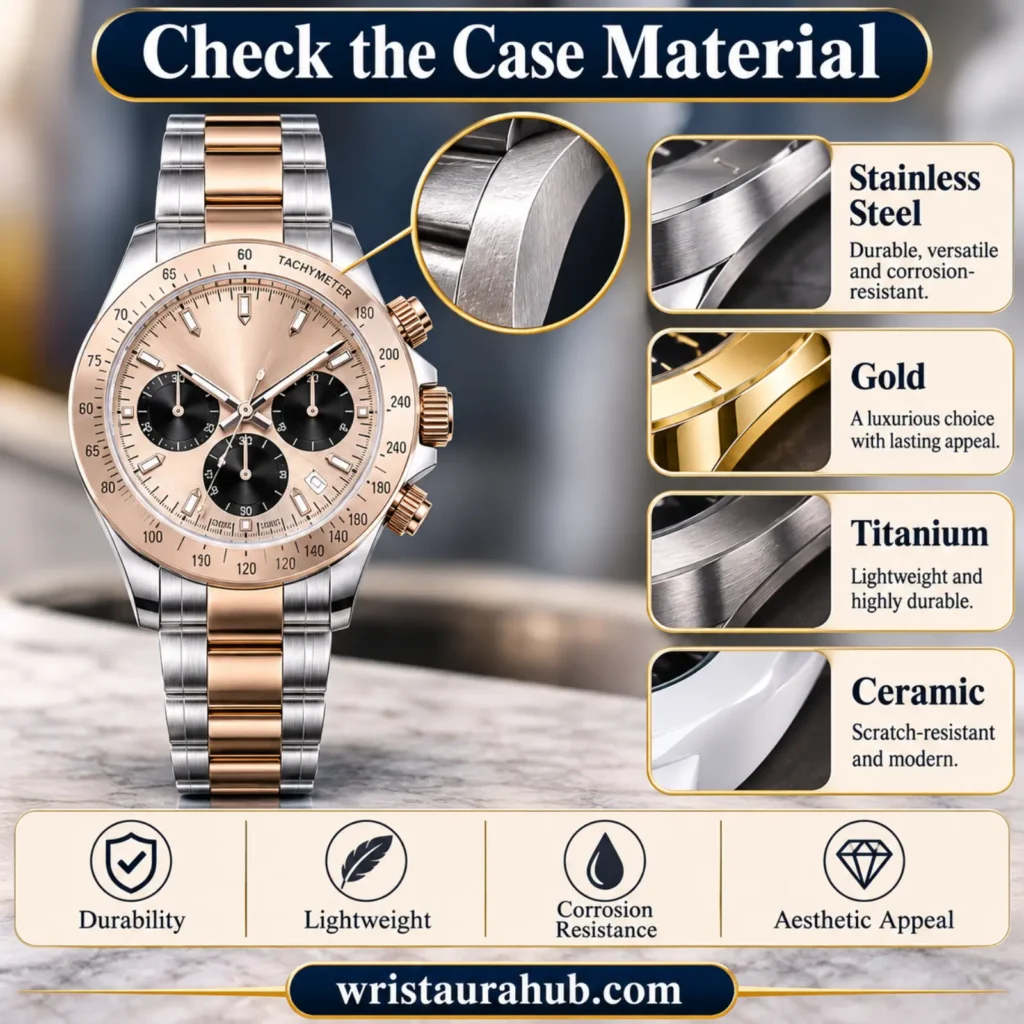
Pocket-watch cases were produced in different materials, including:
- Solid gold.
- Sterling silver.
- Gold-filled metal.
- Gold-plated metal.
- Base metal and other alloys.
Do not assume a gold-coloured case is solid gold. Hallmarks, metal stamps and professional testing can help establish its actual composition.
Consider Age and Condition
Scratches, dents, damaged enamel, replacement hands and worn hinges can affect a watch’s condition.
Originality also matters. A well-preserved watch with its original movement, dial and case may be more desirable than a heavily restored example.
Swiss Pocket Watch Brands and Makers Worth Knowing
Swiss watchmaking has produced many important manufacturers, but not every historical maker specialised exclusively in pocket watches.
Here are several established names worth researching when exploring vintage Swiss timepieces.
[readmore url=”https://wristaurahub.com/best-men-luxury-watches/”]
Patek Philippe
Patek Philippe has a long association with traditional Swiss horology. Its historical pocket watches include finely finished mechanical movements and complicated timekeeping functions.
Its vintage pocket watches are particularly interesting to collectors who value craftsmanship, provenance and historical significance.
Breguet
Breguet is associated with classical watchmaking, refined movement construction and traditional complications.
Historical pocket watches bearing the Breguet name can feature elegant dials, intricate cases and sophisticated mechanical features.
Vacheron Constantin
Founded in Geneva in 1755, Vacheron Constantin has a substantial history of producing fine mechanical timepieces.
Its historical pocket watches demonstrate traditional Swiss finishing and decorative craftsmanship.
Longines
Longines produced numerous historical pocket watches, including examples with elegant dials and mechanical movements.
Collectors may encounter both relatively straightforward timepieces and more elaborate historical pieces under this name.
Omega
Omega has a significant history of pocket-watch production. Its older mechanical timepieces can offer useful examples of traditional Swiss movement design and precision timekeeping.
Other Historical Swiss Makers
Other names worth investigating include Zenith, Tissot, Cyma, Eterna, Cortébert and Jaeger-LeCoultre. Their historical production includes different types of mechanical watches, although not every model or period involved pocket watches.
The important distinction is between a recognised watch brand and the actual company that manufactured a particular movement.
Juran Sweet Swiss Pocket Watch: What Should You Know?
The name Juran Sweet Swiss pocket watch deserves separate attention because it is one of the more specific search phrases associated with this topic.
However, the available historical and museum references do not establish Juran Sweet as a documented major Swiss watch manufacturer. The name could represent a retailer’s signature, a private-label brand or a marking on a particular vintage watch. It would be misleading to assign it a manufacturing history without examining the actual piece.
If you own one, check these details:
- Dial inscription: Photograph the complete name and any Swiss-made marking.
- Movement signature: Open the case carefully through a qualified watchmaker and inspect the movement markings.
- Serial number: Record any numbers stamped inside the case or on the movement.
- Case material: Look for silver, gold or gold-plated markings.
- Condition: Check whether the watch runs, winds and keeps time consistently.
What Is the Juran Sweet Swiss Pocket Watch Price?
There is no sufficiently verified price range that I can confidently assign to this particular name.
Its value would depend on the movement manufacturer, case material, originality, working condition and collector demand. A watch with a solid gold case and a well-preserved mechanical movement could be worth considerably more than a similar-looking gold-plated example.
For a realistic valuation, compare completed sales of watches with the same movement, case material and condition. Asking prices alone do not establish market value.
How Swiss Pocket Watches Work
Most traditional Swiss pocket watches use mechanical movements. Unlike modern battery-powered watches, these timepieces store energy in a tightly wound mainspring.
The basic mechanism works through several connected components.
- Mainspring: Stores energy when the watch is wound.
- Gear train: Transfers energy through a series of wheels.
- Escapement: Releases energy in controlled intervals.
- Balance wheel: Regulates the timing of those releases.
- Hands: Display the hours, minutes and sometimes seconds.
Most traditional examples use manual winding. The wearer turns the crown to tighten the mainspring and provide energy for the movement.
Manual-Winding vs. Automatic Movements
Manual-winding movements are especially common in historical pocket watches. They require regular winding, depending on their power reserve.
Automatic movements use a rotating weight to wind the mainspring through wrist or body movement. They became more associated with wristwatches, although automatic pocket watches also exist.
Neither system is automatically superior. Manual winding suits traditional pocket-watch construction, while automatic winding reduces the need for daily manual winding.
How Pocket Watches Were Traditionally Worn
A pocket watch was traditionally attached to a chain to prevent it from falling or getting lost.
One well-known accessory is the Albert chain, named after Prince Albert. It typically features a T-bar that attaches to a waistcoat buttonhole, with the watch secured at the other end.
Common carrying arrangements include:
- Waistcoat pocket: A traditional choice for formal clothing.
- Trouser pocket: A practical option with suitable pocket depth.
- Jacket pocket: Useful when wearing a tailored jacket.
- Watch chain: Provides security and adds a decorative element.
The chain is not merely an ornament. It helps secure the watch while allowing the wearer to remove it conveniently for reading the time.
How to Choose a Quality Vintage Example
A good-looking exterior does not guarantee a mechanically sound watch. Before purchasing an antique Swiss pocket watch, examine the following factors.
Movement condition: Ask whether the watch has been serviced and whether it keeps time consistently. A watch that runs briefly is not necessarily in good mechanical condition.
Original components: Check whether the dial, hands, movement and case belong together. Replaced parts do not always make a watch undesirable, but they can affect originality.
Case material: Distinguish solid gold and sterling silver from plated alternatives. Hallmarks and professional testing are useful.
Crystal condition: Look for cracks, chips and loose fittings. Replacing an old crystal may be straightforward, but damaged enamel dials can be more difficult to restore.
Service history: Mechanical pocket watches need periodic maintenance. Dried lubricants, worn pivots and damaged components can affect performance.
Provenance: Original receipts, family records, service documents and historical ownership details can strengthen a watch’s appeal.
Avoid buying solely because the dial says Swiss Made. The movement and case deserve equal attention.
What Collectors Commonly Get Wrong
Every Swiss-Signed Watch Is a Luxury Timepiece
Not true. Switzerland produced watches across different price and quality levels. A Swiss marking does not automatically indicate luxury positioning.
Gold-Coloured Cases Are Solid Gold
A gold-coloured finish may come from plating or gold-filled construction. Always check the hallmarks and material specifications.
An Expensive Brand Guarantees a Valuable Watch
Brand recognition matters, but originality, condition, rarity and provenance also influence collector interest.
All Antique Pocket Watches Are Accurate
Age does not guarantee accuracy. Mechanical wear, poor servicing and magnetism can affect timekeeping.
A Watch That Runs Does Not Need Servicing
An old watch can continue running while suffering from worn components or insufficient lubrication. Professional inspection is sensible before regular use.
[readmore url=”https://wristaurahub.com/quartz-vs-mechanical-watch/”]
Are Swiss Pocket Watches Practical Today?
Swiss pocket watches are less convenient than wristwatches for everyday timekeeping. They require a suitable pocket, careful handling and, in many cases, regular manual winding.
However, they still have a place as historical objects, personal accessories and mechanical collectibles.
Their strongest appeal is the combination of traditional craftsmanship, visible mechanical heritage and distinctive case designs. If you want a practical daily timepiece, a wristwatch is usually easier. If you appreciate traditional horology, a well-preserved pocket watch can offer something quite different.
The Final Talk
A Swiss pocket watch should be judged by more than its dial inscription or country marking. Its movement, case construction, originality and condition tell a much more complete story. Open-face, hunter and half-hunter designs each offer a different approach to traditional timekeeping. For collectors, researching the actual maker is especially important when dealing with lesser-known names such as JURAN Sweet. A careful identification is more useful than assuming every vintage Swiss watch carries the same history or value.
Frequently Asked Questions
Some are valuable, particularly examples from recognized manufacturers with original movements, precious-metal cases, rare complications or documented history. Others have modest collector value.
Check the dial signature, movement engraving, serial numbers and case hallmarks. The movement often provides more reliable information about the manufacturer than the dial alone.
Their collectability depends on identifying the actual manufacturer, movement and case. More historical documentation is needed before assigning the name a particular collector reputation.
Prices vary significantly according to brand, age, material, condition and originality. Compare completed sales rather than relying on seller asking prices.
Yes, traditional pocket watches remain part of specialist horology, although they are a much smaller category than modern wristwatches.
An open-face watch has no protective front lid. A hunter watch has a hinged metal cover that protects the dial and crystal.
Discover More to Learn
Best Luminous Watches for Low-Light Visibility and Outdoor Use
Bangle Watches for Women: Elegant Styles and Designs (2026)
[authorbox]
Pingback: Are Tom Ford Watches Good? Quality, Design & Value