
A $300–$500 dive watch can look far more expensive than its price tag suggests when the design, movement, and finishing are right. Phoibos watches have earned attention by combining distinctive cases, Japanese and Swiss movements, sapphire crystals, strong lume, and serious water resistance without entering luxury-watch territory.
The brand stands out if you want a mechanical diver that feels less predictable than another Seiko or Orient. Still, the collection has trade-offs: some models wear large, certain designs are intentionally bold, and owner feedback suggests buyers should consider quality control and after-sales support before placing an order.
What Is Phoibos Known For?
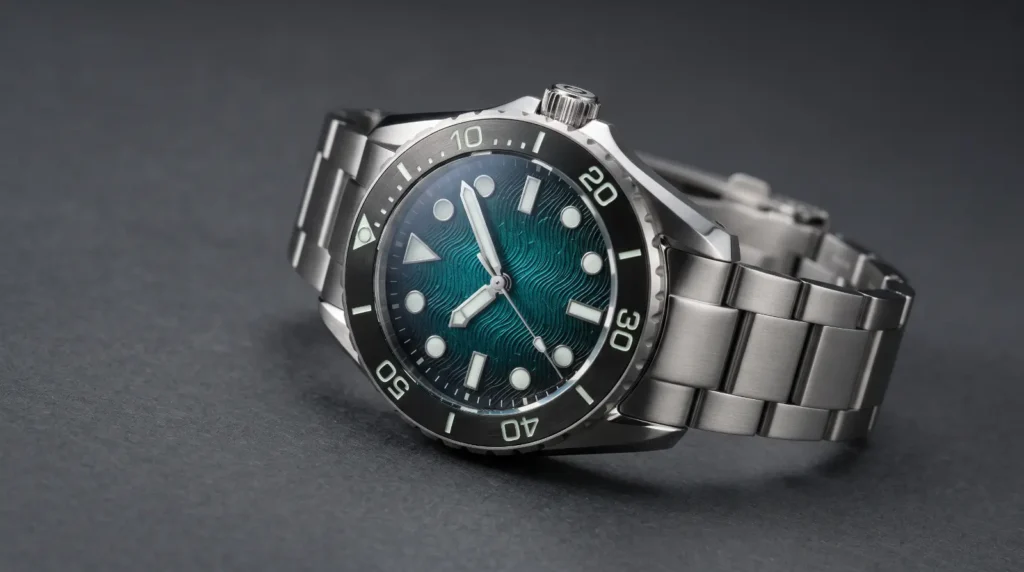
Phoibos is a watch company founded by Ethan and Emily. According to the brand’s own history, the story began in 2014 in Greece, while Phoibos itself was established in 2016. The name comes from the Ancient Greek epithet associated with Apollo and means “Bright, Shining One.”
Today, the collection is heavily focused on sports and dive watches. The brand offers automatic watches using Japanese movements from Seiko Instruments and Miyota, as well as Swiss quartz and automatic options. Its current catalog includes everything from compact 38mm divers to larger 40mm-plus tool watches.
What makes the brand stand out is the combination of strong specifications and distinctive dial designs. Aventurine, agate, malachite, meteorite and textured dials appear across current models, giving some watches considerably more personality than their prices suggest.
Are Phoibos Watches Good?
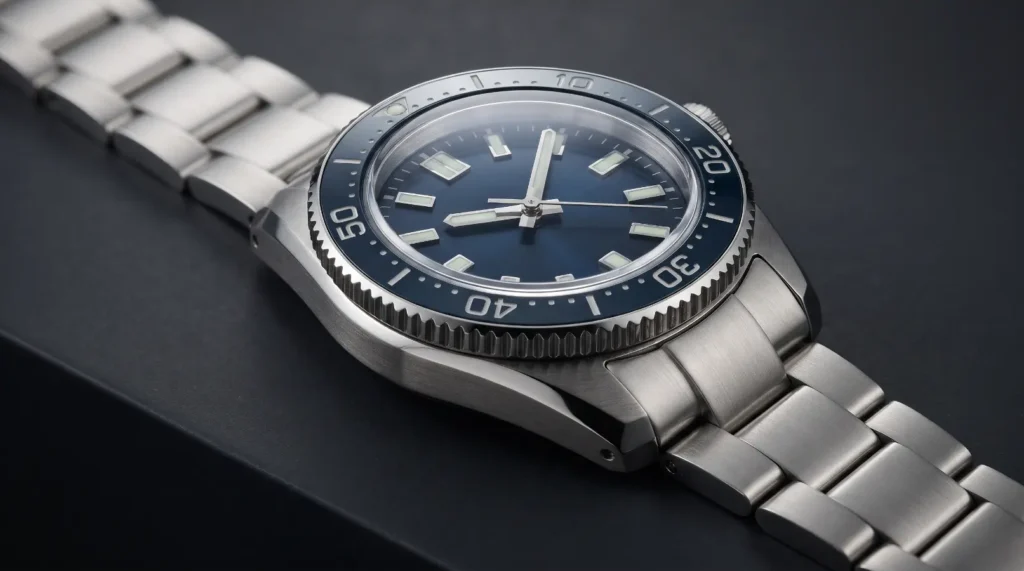
Yes, Phoibos generally offers strong specifications for the money, particularly if you want an affordable automatic dive watch. Current models commonly combine 316L stainless steel, sapphire crystal, Japanese automatic movements and 200m or 300m water resistance.
The more complicated answer is that good specifications do not automatically mean better ownership. Enthusiast feedback is mostly positive about design, lume, bracelets and overall value, but there are also reports of individual failures and complaints about customer service. Recent discussions show owners disagreeing about finishing compared with brands such as San Martin and Cronos.
So the brand makes the most sense for someone who prioritizes design, specifications and mechanical value, while accepting that it does not have the service infrastructure or decades-long track record of Seiko, Citizen or Orient.
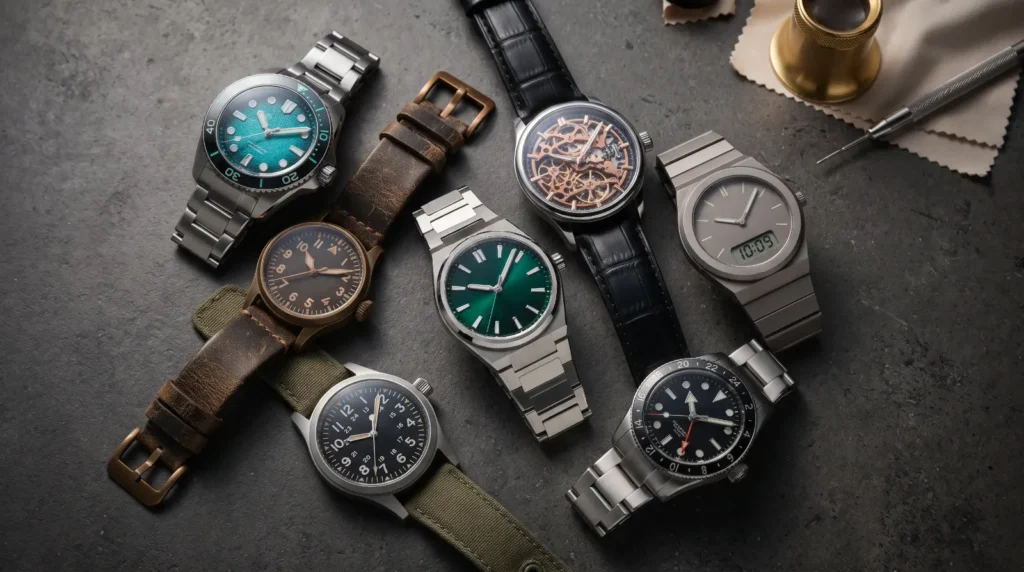
7 Phoibos Models Worth Knowing
The easiest way to understand the brand is through its individual watches. The following models cover different case sizes, movements, dial styles and use cases.
1. Phoibos Narwhal
The Narwhal is one of the most interesting recent choices because it moves away from the oversized proportions found on some older Phoibos divers.
The current Narwhal measures 38mm across, 46mm lug-to-lug and 11.5mm thick, with 200m water resistance. Depending on the version, it uses a Miyota 9015 or 9039 and pairs the steel case with a sapphire crystal and ceramic unidirectional bezel.
Specs: Miyota 9015/9039 • 200m • 38mm • sapphire crystal • around $509 MSRP
The real attraction is the dial selection. Natural aventurine, malachite and agate versions give the watch a decorative character without abandoning the basic diver format.
Best for: Smaller wrists and buyers who want a distinctive everyday diver.
2. Phoibos Eagle Ray
The Eagle Ray is a strong example of the brand’s current approach to sports-watch design. Current versions use a 40mm case with a 46mm lug-to-lug measurement, 12mm thickness and 200m water resistance. Miyota 9015 and 9039 movements are used depending on the date configuration.
Specs: Miyota 9015/9039 • 200m • 40mm • sapphire crystal • around $480 MSRP
Stone dials are central to the collection, including orange agate, black aventurine, lapis lazuli and green jade. That makes the Eagle Ray more visually expressive than a conventional black-and-blue diver.
Best for: Someone who wants a mechanical diver that attracts attention without relying on a luxury-brand aesthetic.
3. Phoibos Kraken
The Kraken sits firmly in the tool-watch side of the collection. Its 40mm case stretches to roughly 47.5mm lug-to-lug and measures about 11.5mm thick, while the automatic movement is the Miyota 9015.
Specs: Miyota 9015 • 200m • 40mm • approximately 47.5mm lug-to-lug • around $499 MSRP
Its fume-style dials and radial hydraulic pattern give it more visual depth than a plain matte diver.
The important point is fit. At nearly 48mm lug-to-lug, this is not automatically a small-wrist watch just because the diameter says 40mm.
Best for: Everyday sports-watch wearers who like substantial wrist presence.
4. Phoibos Depth Hunter
The Depth Hunter is for buyers who want a more serious-looking dive watch. The current automatic version uses a 40mm case, 48mm lug-to-lug measurement and 11mm thickness, with 300m water resistance and a Miyota 9015.
Specs: Miyota 9015 • 300m • 40mm • 48mm lug-to-lug • around $470 MSRP
There are also DLC-coated versions. DLC, or diamond-like carbon, gives the case a darker surface treatment and changes the visual character considerably.
This is the kind of Phoibos that makes sense if you actually want the rugged dive-watch look rather than something that simply borrows the appearance.
Best for: Buyers who prefer a rugged 300m diver and larger wrist presence.
5. Phoibos Argo
The Argo takes a more sculpted approach to the traditional diver. The current steel version measures 40.5mm by 48mm, is around 12.5mm thick and uses a Seiko Instruments NH35 automatic movement. Water resistance is rated at 200m.
Specs: SII NH35 • 200m • 40.5mm • 48mm lug-to-lug • around $345 MSRP
Its embossed spiral sunray dial is the main attraction. There is also a bronze version using a CuSn8 bronze case and Miyota 9015.
Best for: Enthusiasts who want an unusual case and dial rather than a conservative diver.
6. Phoibos Voyager
The Voyager is one of the more straightforward choices in the lineup. The current PY026G uses an SII NH35, a 39mm stainless-steel case, 45mm lug-to-lug measurement and 13.5mm thickness, with 200m water resistance. Its listed MSRP is around $299.
Specs: SII NH35 • 200m • 39mm • 45mm lug-to-lug • around $299 MSRP
That 45mm lug-to-lug measurement is worth highlighting because it helps the watch wear more compactly than its thickness might suggest.
Best for: Buyers looking for a relatively affordable automatic diver with manageable lug-to-lug dimensions.
7. Phoibos Sea Nymph
Not every Phoibos needs to be a large automatic diver. The Sea Nymph provides a smaller quartz option with a 36mm case, 42mm lug-to-lug measurement and 9.8mm thickness. It uses a Swiss Ronda 705 quartz movement and offers 300m water resistance.
Specs: Swiss Ronda 705 quartz • 300m • 36mm • 42mm lug-to-lug • around $240 MSRP
At just 56g, it is also dramatically lighter than many of the brand’s steel automatic divers.
Best for: Smaller wrists, quartz fans and anyone who wants a compact dive-style watch.
Phoibos Watches Compared
The specifications explain why the brand attracts enthusiasts, but choosing between models is easier when you can see the differences together.
| Model | Movement | Water Resistance | Case Size | Lug-to-Lug | Approx. MSRP |
|---|---|---|---|---|---|
| Narwhal | Miyota 9015/9039 | 200m | 38mm | 46mm | $509 |
| Eagle Ray | Miyota 9015/9039 | 200m | 40mm | 46mm | $480 |
| Kraken | Miyota 9015 | 200m | 40mm | 47.5mm | $499 |
| Depth Hunter | Miyota 9015 | 300m | 40mm | 48mm | $470 |
| Argo | SII NH35 | 200m | 40.5mm | 48mm | $345 |
| Voyager | SII NH35 | 200m | 39mm | 45mm | $299 |
| Sea Nymph | Ronda 705 quartz | 300m | 36mm | 42mm | $240 |
Prices are based on current manufacturer-listed MSRPs and can vary with promotions, availability and regional shipping.
What Do You Actually Get for the Money?
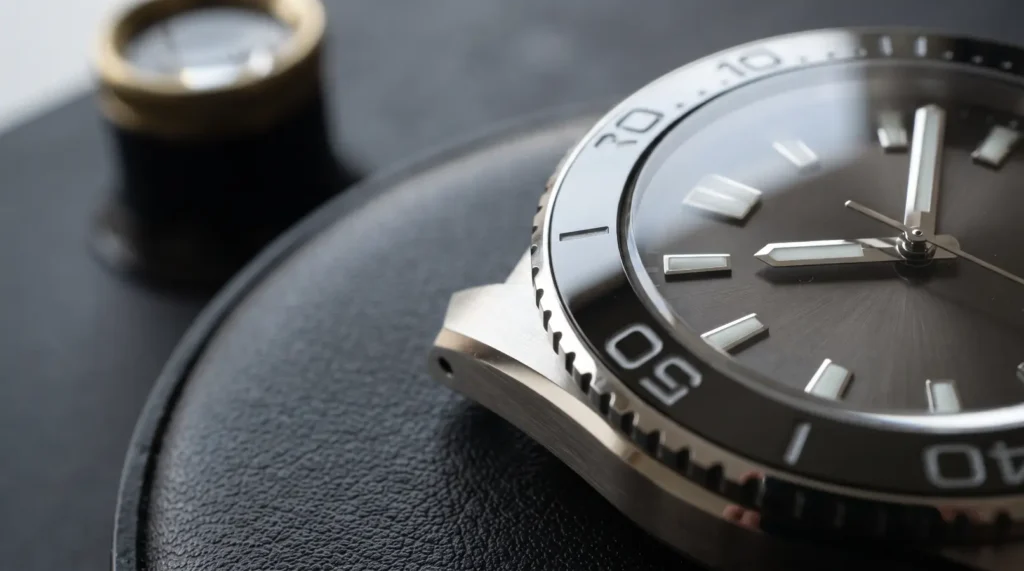
The biggest appeal is specification density. Depending on the model, you can get a Japanese automatic movement, sapphire crystal, ceramic bezel, stainless-steel case and 200m or 300m water resistance without approaching traditional Swiss luxury pricing.
The bracelets are another area enthusiasts frequently mention positively. Community discussions have highlighted solid end links, screw construction and adjustable clasps on some models, although experiences naturally vary between references.
Lume is also a recurring positive in owner discussions. One long-running enthusiast comment about the Wave Master, for example, specifically praised its lume and overall value.
The compromise is refinement.Phoibos puts more emphasis on specifications and distinctive design than on the finishing depth, brand heritage, or secondary-market strength associated with more established watchmakers.
Phoibos vs. San Martin: What’s the Difference?
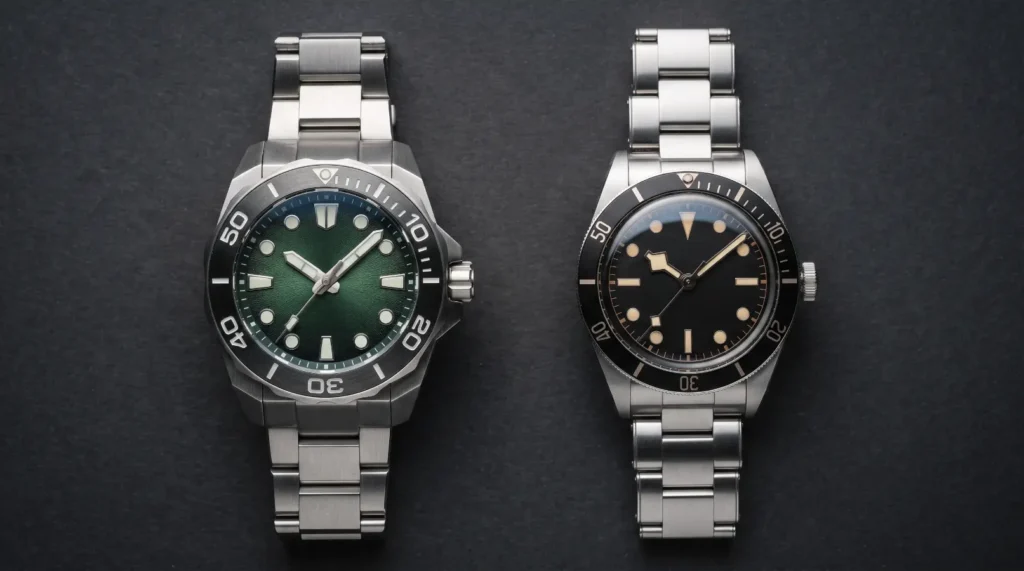
Both Phoibos and San Martin compete in the same enthusiast-focused space, offering specification-heavy mechanical watches for buyers who want more features for their money. Their approaches differ, however, particularly in design language, finishing, and the overall character of their collections.
The distinction is less straightforward than saying one brand is universally better. Recent enthusiast discussions include owners who prefer Phoibos for its original designs, while others consider San Martin’s finishing stronger on certain models.
Phoibos also has a recognizable design language built around its octopus logo and aggressive dive-watch styling. San Martin has a broader reputation for watches influenced by familiar classic designs, although its catalog has expanded considerably.
For a buyer, the more useful question is:
Do you want a specific Phoibos design, or are you simply shopping for the highest specification-to-price ratio?
If you already love the Narwhal, Kraken or Eagle Ray, the design itself can justify choosing Phoibos. If you are comparing purely on finishing, bracelet execution or movement options, compare the exact references rather than judging either brand as a whole.
What Are the Downsides?
The biggest weakness is that the brand’s aggressive specifications can distract from the ownership questions that matter after purchase.
Phoibos says its automatic models carry a two-year manufacturer warranty and that it works with Time-Tec in Los Angeles for North American servicing.
However, independent owner reports are mixed. Many enthusiasts report excellent experiences, while older posts describe problems involving individual watches and customer-service frustrations. More recently, one owner reported a Sea Nymph failure and condensation issue after the warranty period. That is an individual experience, not evidence that the entire range is unreliable, but it is worth knowing before buying.
Other practical drawbacks include:
- Some models have nearly 48mm lug-to-lug dimensions.
- Many designs are visually busy rather than understated.
- Resale demand is unlikely to match established Japanese brands.
- Model availability can change as collections rotate.
- A good movement does not guarantee perfect regulation or long-term ownership experience.
How to Choose the Right Model
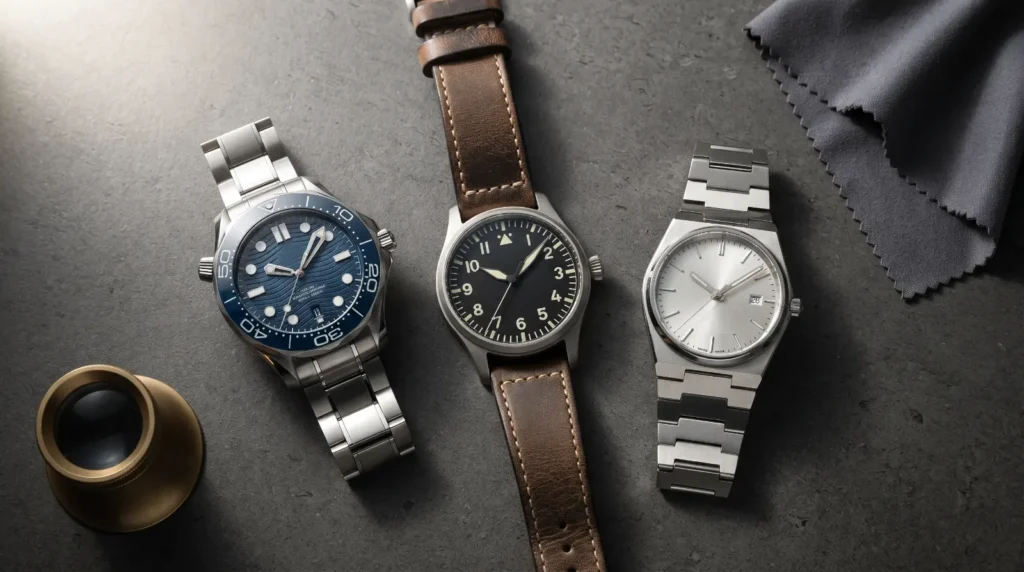
Start with your wrist rather than the dial. A 40mm case with a 48mm lug-to-lug measurement can feel considerably larger than a 40mm watch with shorter lugs.
For smaller wrists, the Narwhal and Sea Nymph are the easier starting points. The Voyager also deserves attention because its 45mm lug-to-lug dimension is relatively compact for the category.
For a more traditional rugged diver, look toward the Kraken or Depth Hunter. If dial personality matters most, the Eagle Ray and Narwhal offer some of the most distinctive choices.
Before buying, check:
- Lug-to-lug measurement, not just case diameter.
- Movement type and whether you prefer automatic or quartz.
- Crystal material, especially sapphire versus mineral.
- Water resistance appropriate for your actual use.
- Bracelet adjustment and wrist comfort.
- Warranty and service arrangements for your country.
- Return terms before removing protective film or wearing the watch.
Common Mistakes to Avoid
Buying an affordable mechanical watch based only on its specification sheet is the easiest mistake to make. A 200m rating does not automatically make every model the right choice for serious diving, and a sapphire crystal does not tell you how comfortable the bracelet will be.
The same applies to case size. Don’t assume a 40mm watch will wear small; lug-to-lug length and case thickness can change the experience dramatically.
Also avoid treating online owner opinions as laboratory reliability data. Enthusiast forums are useful for spotting recurring complaints and long-term experiences, but isolated failures should not be treated as a statistical failure rate.
The Final Talk
A great watch does not need a famous name on the dial. Phoibos proves that a relatively young microbrand can combine distinctive designs, Japanese and Swiss movements, sapphire crystals, strong water resistance, and unusual dial materials into watches that feel genuinely different from the usual budget divers.The Narwhal is the easiest entry point if you prefer compact proportions, while the Eagle Ray and Kraken bring more wrist presence and bolder styling. For a lower-priced mechanical option, the Voyager remains an appealing choice.
The key is to choose the specific model that fits your wrist, style, and expectations. Phoibos is not trying to replace established Japanese or Swiss brands; it offers something different: spec-heavy mechanical watches with a distinctive microbrand personality.
FAQs
Phoibos offers strong specifications for its price, including Japanese automatic movements, sapphire crystals and substantial water resistance on many models. Owner feedback is generally positive, although there are also reports of individual quality and customer-service problems.
Phoibos is associated with Hong Kong Phoibos Watch Limited, and its official company information lists a Hong Kong address. The brand uses Swiss and Japanese movements across its range.
Phoibos is commonly discussed by enthusiasts as a microbrand, although the term itself does not have one universal industry definition. Its relatively focused collection and enthusiast-oriented business model fit how the term is commonly used in watch communities.
The brand uses several movement families, including SII NH35/NH38, Miyota 8215, Miyota 9015/9039, Swiss automatic movements and Swiss quartz movements. The exact caliber depends on the model.
Some are. The 38mm Narwhal has a 46mm lug-to-lug measurement, while the 36mm Sea Nymph measures 42mm lug-to-lug, making both considerably easier starting points for smaller wrists than the brand’s 47–48mm lug-to-lug divers.
Discover More,
Olivia Burton Watches: 7 Gorgeous Picks You’ll Want in 2026
Minimalist Watches: 7 Stunning Picks Worth Buying in 2026
Best Seiko Watches: 7 Top Picks You Shouldn’t Miss in 2026
[author box]