
Surprisingly tough, seriously capable, and far more affordable than you might expect do you really need a Swiss luxury name on the dial?Deep Blue watches take a different approach, packing oversized tool-watch cases, strong lume, sapphire crystals, automatic movements, and impressive water resistance into relatively accessible price points. The brand has been around since 2007 and built its identity around the “Precision Diver” concept.
That spec-heavy approach is what makes the brand surprisingly compelling, but it is not perfect. Some models are genuinely huge, and finishing can vary across collections. So, which models are actually worth your money? Here’s where Deep Blue shines, where it falls short, and which divers deserve a closer look.
What Are Deep Blue Watches Known For?
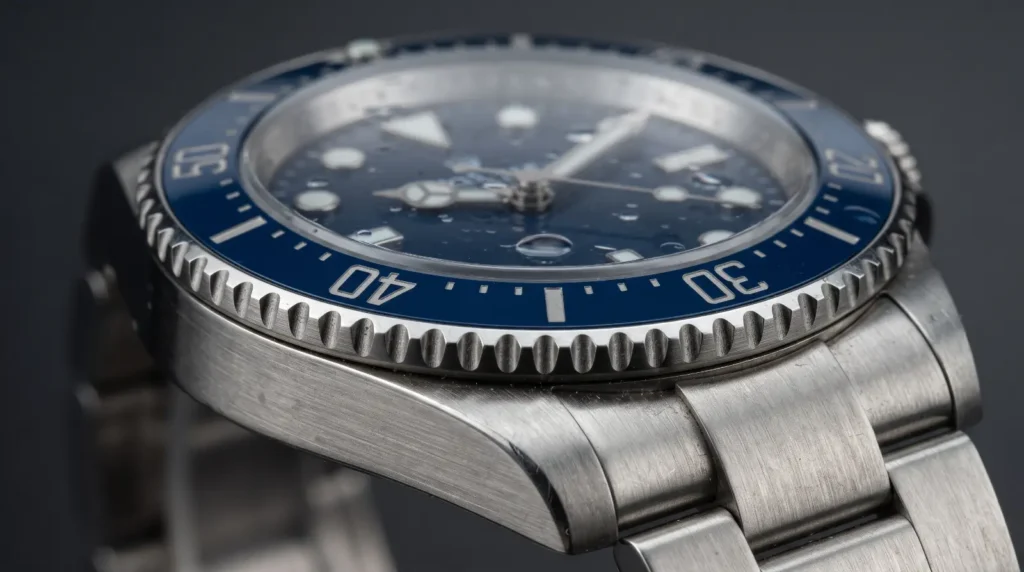
Deep Blue Watches is an American watch company focused heavily on dive watches and tool-watch functionality. Its catalog includes everything from straightforward 200-meter divers to oversized professional-style models rated for 1,000 meters or more.
The brand’s formula is easy to recognize: large cases, screw-down crowns, rotating dive bezels, sapphire crystals, automatic Japanese movements, and aggressive lume. Some collections add another major selling point: tritium gas tubes that provide continuous illumination without needing to be charged by light.
That makes Deep Blue particularly interesting for buyers who care more about specifications and practicality than brand status.
The trade-off is equally obvious. Many models are big and thick. A 45mm case with a long lug-to-lug measurement can wear substantially larger than its diameter suggests. That is one of the most consistent criticisms found in enthusiast discussions and older reviews.
Best Deep Blue Watches to Consider
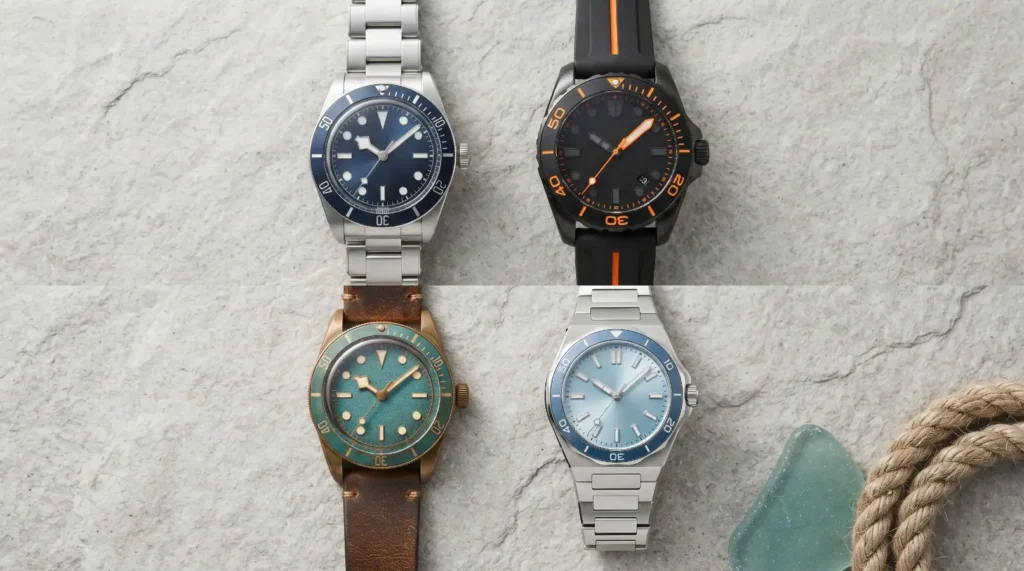
Deep Blue’s catalog changes frequently, with some models appearing as limited runs, sale items, or archived references. Rather than pretending every current reference is equally easy to buy, these are the families and models that best illustrate what the brand does well.
| Model | Movement | Water Resistance | Case | Crystal | Best For |
|---|---|---|---|---|---|
| Pro Diver 200 Automatic | TMI NH35 | 200m | 42.5mm | Sapphire | Everyday diving |
| DayNight Patriot | Seiko NH35 | 300m | 44–45mm | Sapphire | Tritium enthusiasts |
| Master Diver 1000 | Miyota 9015 | 1000m | 45mm | Sapphire | Maximum dive specs |
| Depthmeter Ana/Digi | Digital/analog dive system | 200m | 45mm | Sapphire | Dive instrumentation |
| Depth Star 3000 | Miyota 9015 | 3000m | 45mm | Sapphire | Extreme-depth tool watch |
Specifications can vary by exact reference and production run; check the individual listing before buying.
1. Pro Diver 200 Automatic
If you want the most sensible starting point, the Pro Diver 200 Automatic is where I would look first.
The current 42.5mm version uses a TMI NH35 automatic movement, has a 12mm-thick 316L stainless-steel case, sapphire crystal with AR coating, a ceramic bezel, screw-down crown and caseback, and 200 meters of water resistance. Deep Blue currently lists several dial variations around the same specification.
Specs: NH35 automatic / 200m / 42.5mm / sapphire / ceramic bezel / approximately $300 at current listed sale pricing.
The important detail is the 49mm lug-to-lug measurement. That makes the watch more wearable than some of Deep Blue’s enormous 45mm divers, although it is still not a small watch.
The Pro Diver 200 makes the most sense as a daily mechanical diver. You get the familiar NH35, good water resistance, sapphire, a ceramic bezel, and a conventional steel bracelet without paying luxury-brand money.
Best for: Buyers wanting one affordable automatic diver for everyday use.
2. DayNight Patriot
The DayNight Patriot is where Deep Blue gets much more interesting.
This collection combines a large automatic dive-watch case with T-100 tritium tubes, sapphire crystal, a ceramic bezel, and 300 meters of water resistance. One current reference measures 44mm wide, 52mm lug-to-lug and 15mm thick, while another listed configuration measures 45mm across.
Specs: Seiko NH35 automatic / 300m / 44–45mm / sapphire / ceramic bezel / T-100 tritium.
The tritium setup is the reason to buy it. Instead of relying solely on conventional photoluminescent paint, the tubes provide constant illumination. Enthusiast owners regularly praise the brightness of Deep Blue’s tritium models, although user experiences naturally vary by tube color and reference.
The downside is size. A 52mm lug-to-lug measurement is substantial, and the watch will feel like a serious piece of equipment on a smaller wrist.
If you like the idea of a Luminox-style illuminated tool watch but want an automatic movement and more aggressive dive-watch specifications, this is one of the brand’s strongest propositions.
Best for: Tritium fans and buyers with medium-to-large wrists.
3. Master Diver 1000 Automatic
The Master Diver 1000 is Deep Blue without much restraint.
The current blue-dial version measures 45mm wide, 52mm lug-to-lug and 16mm thick. It uses a Miyota 9015 automatic movement and is rated to 1,000 meters, with a helium escape valve, screw-down crown, sapphire crystal and 120-click unidirectional bezel.
Specs: Miyota 9015 automatic / 1000m / 45mm / 16mm thick / sapphire / helium escape valve.
This is not the watch I would recommend simply because it has a huge water-resistance number. Almost nobody needs 1,000 meters of resistance for normal recreational diving.
Instead, the appeal is the character. It looks and feels like a dedicated tool watch. The case is substantial, the bezel is designed to be operated with wet hands, and the luminous treatment is deliberately prominent.
There is also a practical question: can your wrist comfortably carry 45mm by 52mm and 16mm thickness?
If yes, the Master Diver 1000 can be an entertaining beater. If not, the Pro Diver 200 is the smarter purchase.
Best for: Large-wristed enthusiasts who specifically want an extreme-specification diver.
4. Depthmeter Ana/Digi
The Depthmeter is arguably the most unusual watch in the lineup.
Rather than simply displaying time, it incorporates an electronic diving system capable of measuring present depth, maximum depth, water temperature and diving time. The official specifications list a 45mm stainless-steel case, sapphire crystal with AR coating and 200 meters of water resistance.
Specs: Analog/digital dive computer / 200m / 45mm / sapphire / depth and temperature functions.
This is less about traditional watchmaking and more about instrument functionality.
The watch automatically enters diving mode when it senses water, according to Deep Blue’s description. It also includes a dive log and dive alarm.
That makes it difficult to compare directly with a standard automatic diver. If you want mechanical charm, choose the Pro Diver or Master Diver. If you want something genuinely different on the wrist, the Depthmeter is much more compelling.
Best for: Divers, gadget enthusiasts and collectors who like unusual tool watches.
5. Depth Star 3000
At the extreme end sits the Depth Star 3000.
Deep Blue lists a 45mm 316L stainless-steel case, 50mm lug-to-lug measurement, 16mm thickness and 3,000 meters of water resistance. Inside is a Miyota 9015 automatic movement, while the front gets a domed sapphire crystal and a luminous 120-click bezel.
Specs: Miyota 9015 automatic / 3000m / 45mm / 16mm / sapphire.
This is the kind of watch that makes sense because you enjoy the engineering story rather than because you need the specification.
At 50mm lug-to-lug, it is enormous by normal wristwatch standards. The 3,000-meter rating is also far beyond what most divers will ever use.
But that is precisely why enthusiasts buy watches like this. It is an unapologetic mechanical instrument designed around extreme depth rather than elegance.
Best for: Collectors who specifically enjoy oversized professional-style divers.
How Good Is Deep Blue Watch Quality?
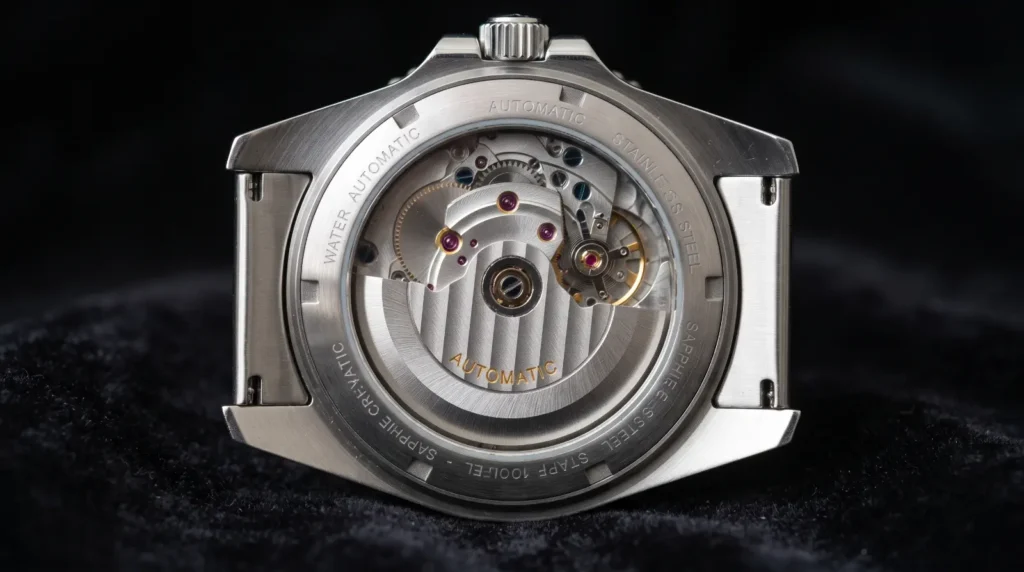
The short answer is: good for the money, but not uniformly exceptional across every model.
Deep Blue’s strongest value proposition is the specification sheet. Sapphire crystals, automatic Japanese movements, ceramic bezels, substantial water resistance and strong lume are common features at prices that can fall well below traditional Swiss tool-watch competitors. Current Pro Diver 200 automatic listings, for example, show sapphire, ceramic, NH35 and 200-meter water resistance at around $300 on sale.
Enthusiast feedback is broadly positive about value. Owners describe older Deep Blue divers as dependable beaters and repeatedly point to the amount of hardware offered for the money.
But there are caveats.
Recent community discussions also include criticism of individual models, particularly bracelets and finishing on some inexpensive references. One 2025 owner specifically criticized the bracelet and dial finishing on a Pro Diver 200 while saying their older Deep Blue watches had been better.
That is why I would judge Deep Blue model by model, not simply by the logo on the dial.
Deep Blue vs Luminox: Which Should You Buy?
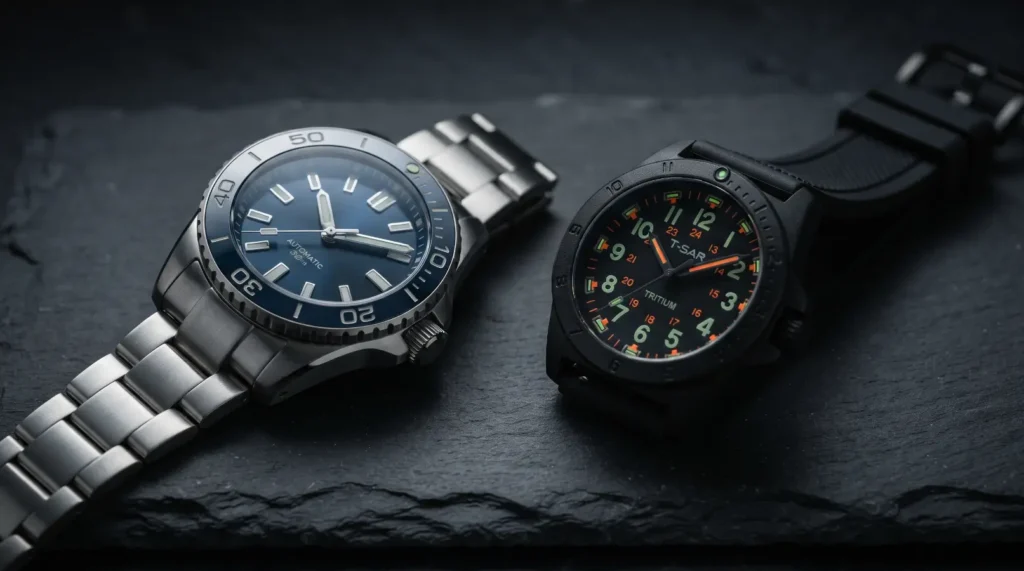
Deep Blue and Luminox overlap most clearly around rugged dive and tactical-style watches with strong low-light visibility.
The major difference is the value strategy.
Deep Blue frequently pairs tritium with automatic movements, sapphire crystals and substantial dive specifications at relatively low prices. Luminox has stronger mainstream brand recognition and a much broader public profile around its tactical/outdoor positioning.
Community comparisons often favor Deep Blue on raw specifications-per-dollar, particularly when Deep Blue watches are heavily discounted. Owners have specifically praised their tritium brightness and value compared with Luminox.
| Factor | Deep Blue | Luminox |
|---|---|---|
| Main appeal | Specs and value | Brand recognition and tactical heritage |
| Automatic options | Strong presence | More limited depending on collection |
| Tritium | Major feature on several models | Core part of brand identity |
| Sapphire | Common on many divers | Depends on model |
| Case sizes | Often very large | Broader range |
| Value | Excellent on sale | Usually higher price |
| Style | Serious, oversized tool-watch | Tactical/outdoor |
Choose Deep Blue if your priority is maximum hardware for the money.
Choose Luminox if brand recognition, a more established mainstream identity, or a particular Luminox design matters more than getting the longest specification sheet for your dollar.
Are Deep Blue Watches Too Big?
For some wrists, yes.
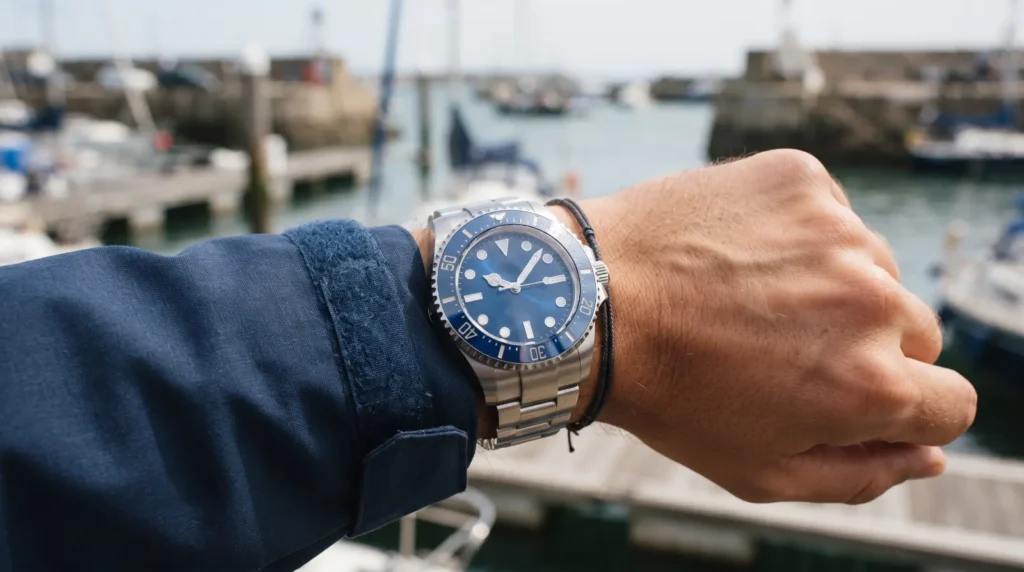
This is probably the single biggest issue to consider before buying. The brand has several 44mm and 45mm watches with lug-to-lug measurements around 51–52mm, while some extreme models reach 50mm lug-to-lug and 16mm thickness.
Diameter alone does not tell the whole story.
A 42.5mm Pro Diver 200 with a 49mm lug-to-lug measurement is considerably easier to live with than a 45mm model stretching beyond 52mm across the wrist.
If you have a smaller wrist, look at lug-to-lug and thickness first. A watch can technically fit around your wrist but still overhang the sides or sit awkwardly under a shirt cuff.
The brand’s own enthusiast history reinforces this point. Older Deep Blue owners repeatedly praised the quality but complained that certain oversized models received less wrist time because of their dimensions.
What Makes These Divers Good Value?
The value equation becomes clear when you ignore the brand name and compare components.
A typical Deep Blue automatic diver can combine:
- Japanese automatic movement
- Sapphire crystal
- Ceramic or luminous dive bezel
- Screw-down crown
- 200m or greater water resistance
- Stainless-steel case
- Strong conventional lume or tritium
- Solid bracelet or rubber strap
That is a compelling checklist at the lower end of the market.
The NH35 is not an exotic movement, and that is actually part of the appeal. It is a widely used, serviceable automatic platform rather than an expensive proprietary caliber.
Deep Blue’s best watches therefore make sense for someone who wants to wear the watch hard rather than admire its prestige.
Deep Blue Watches: Pros and Cons
The brand’s strengths are easiest to understand when separated from its weaknesses.
Pros
- Excellent specifications for the money
- Strong selection of automatic dive watches
- Sapphire crystals on many models
- Numerous high water-resistance options
- Tritium models offer constant illumination
- Japanese movements are familiar and serviceable
- Distinctive oversized tool-watch designs
- Frequent discounts can make the value proposition even stronger
Cons
- Many models are genuinely large
- Bracelet quality can vary between references
- Some designs are more tool-like than refined
- Resale value is not a major selling point
- Huge water-resistance ratings are unnecessary for most owners
- Sale pricing can make official MSRP comparisons misleading
The last point matters. Deep Blue frequently sells watches at substantial discounts, so I would judge the actual purchase price rather than assuming the stated retail price represents what the watch is worth on the broader market. Current listings show several models discounted from their stated regular prices.
Common Mistakes to Avoid
Buying one of these divers is relatively straightforward, but a few mistakes can turn a bargain into an awkward purchase.
1. Buying by diameter alone.
Check lug-to-lug and thickness. A 45mm watch with a 52mm span is a very different proposition from a compact 45mm case.
2. Paying extra for water resistance you will never use.
A 1,000m or 3,000m rating is impressive, but a good 200m diver is already more than capable for most recreational use.
3. Assuming every Deep Blue model has the same finishing quality.
The catalog is broad. Judge the exact reference, especially the bracelet and clasp.
4. Ignoring movement choice.
If you prefer low-maintenance accuracy, quartz may suit you better. If you want mechanical ownership, the NH35 and Miyota-powered models make more sense.
5. Buying purely because the discount looks huge.
Compare the actual street price with competing microbrands. The question is not whether $400 became $200; it is whether the $200 watch is the best $200 watch for your wrist.
Are Deep Blue Watches Worth Buying?
Yes, if you value specifications over prestige.
The strongest reason to buy one is not the brand name. It is the combination of automatic Japanese movements, sapphire crystals, serious water resistance and unusually strong lume at relatively accessible prices. Enthusiast feedback supports that value argument, although it also shows that individual models can differ in execution.
For most buyers, I would start with the Pro Diver 200 Automatic. It offers the most balanced combination of size, 200-meter water resistance, NH35 movement, sapphire and ceramic bezel.
Move to the DayNight Patriot if tritium is the main attraction. Choose the Master Diver 1000 or Depth Star 3000 only if you genuinely enjoy oversized, extreme-specification dive watches.
The brand’s sweet spot is simple: buy the watch for the hardware, not the prestige.
The Final Talk
Big, bold, and built to be noticed that is exactly why Deep Blue stands out. These watches are not trying to compete on prestige; they win with serious dive specifications, strong lume, sapphire crystals, and automatic movements at prices that make them surprisingly easy to consider.For most buyers, the Pro Diver 200 is the smartest all-round choice. Want something more distinctive?
The DayNight Patriot brings constant tritium illumination, while the Master Diver and Depth Star are better suited to enthusiasts who actually enjoy oversized, extreme-specification dive watches.If you can handle the size, Deep Blue offers a simple proposition: more tool-watch hardware, less money spent on the name.
FAQs
Yes, the better models offer very good specifications for their prices, including sapphire crystals, Japanese automatic movements and substantial water resistance. Quality can vary between references, particularly in bracelet and finishing details, so the exact model matters.
Deep Blue Watches is an American watch company that has been operating since 2007 and focuses heavily on dive-oriented timepieces. The brand’s own site describes its watches around the “Precision Diver” concept.
Not all of them. The brand uses Japanese movements in many models, including Seiko/TMI NH35 and Miyota calibers, while some collections have used Swiss movements such as Ronda or Swiss automatic calibers.
Yes. Several DayNight models use T-100 tritium tubes, including configurations with colored tubes on the dial, hands and bezel. Tritium is one of the brand’s most distinctive features.
The current 42.5mm automatic Pro Diver 200 uses the Japanese TMI NH35 automatic movement. Deep Blue lists approximately 40 hours of power reserve, along with sapphire crystal and 200-meter water resistance.
Discover More,
Citizen Automatic Watches: 7 Best Models Worth Buying
Cartier Watches for Men: 7 Icons Worth Buying
Dan Henry Watches: Best Models & Honest Review
[author box]