
Want a luxury watch that looks as impressive on the wrist as it does on paper?A great Piaget does something most luxury watches cannot: it makes serious technical watchmaking look almost effortless. The brand combines ultra-thin mechanical movements with bold gold cases, integrated bracelets, and extravagant jewelry-inspired designs without losing its horological credibility.
Piaget watches are best known for ultra-thin Swiss craftsmanship, distinctive use of precious metals and gemstones, and iconic collections such as Altiplano and Polo. In this guide, I’ll break down Piaget’s history, the best models to consider, realistic pricing, who each collection suits, and where the brand may fall short compared with more conventional luxury-watch choices.
What Is Piaget Known For?
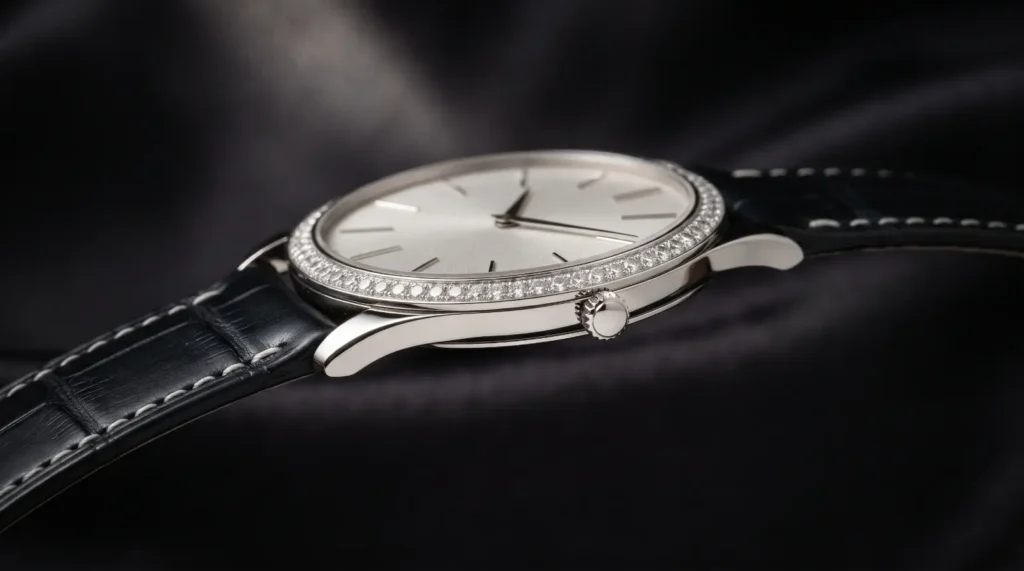
Piaget occupies an unusual position in Swiss watchmaking. It is both a serious manufacture and a jewelry maison, and its watches often sit directly between traditional horology and high fashion.
The company traces its roots to 1874, when Georges-Édouard Piaget established a workshop in La Côte-aux-Fées in Switzerland. Piaget initially concentrated on high-precision movements before gradually becoming a complete luxury watchmaker. The brand was officially registered as a trademark in 1943 and later became particularly famous for thin mechanical movements and precious-metal watches.
The real turning point came in 1957 with the manually wound Caliber 9P. At only 2mm thick, it established ultra-thin construction as one of Piaget’s defining strengths. Three years later, the brand introduced the 12P, an ultra-thin automatic movement that continued the same pursuit of mechanical slimness.
That heritage still explains much of the modern catalog.
Piaget is particularly strong in:
- Ultra-thin mechanical movements
- Gold cases and integrated bracelets
- High-jewelry watchmaking
- Distinctive luxury sports watches
- Minimalist dress watches
- Diamond and gemstone setting
- Unusual complications and movement architecture
The important point is that Piaget is not simply a jewelry brand that happens to sell watches. Its ultra-thin movement history is legitimate and unusually deep.
Are Piaget Watches Good?
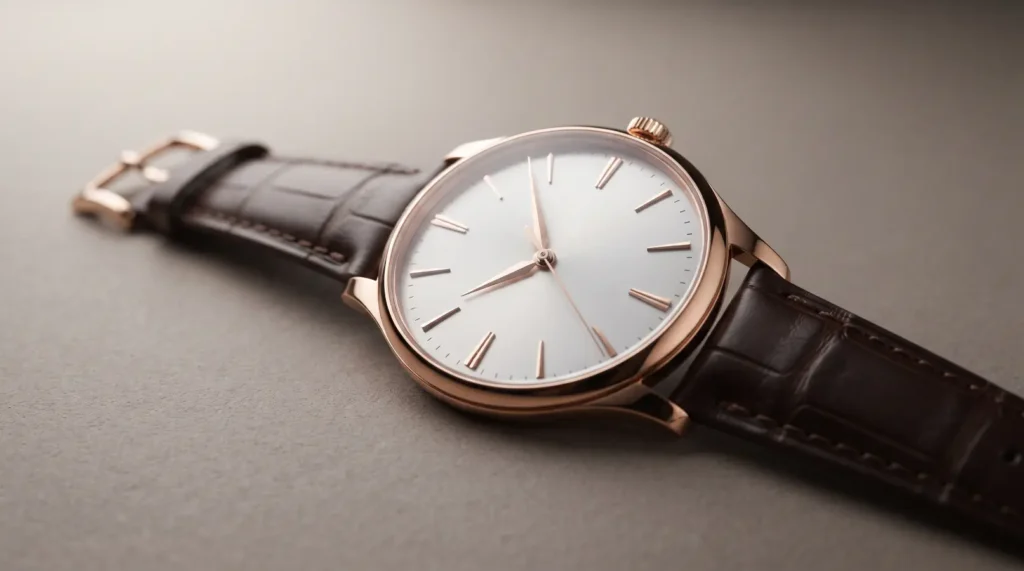
Yes. Piaget makes genuinely high-end Swiss watches, but they appeal to a different buyer than a typical Rolex or Omega customer.
The strongest reason to buy one is not brand recognition alone. It is the combination of movement engineering, precious-metal craftsmanship, elegant proportions, and designs that are immediately recognizable without relying on a conventional dive-watch or chronograph formula.
The weakness is value.
A Piaget can cost substantially more than a technically comparable watch from a mainstream luxury competitor. Some models also have narrower resale demand, especially highly stylized or jewelry-heavy references. That makes Piaget a better choice for someone who genuinely likes Piaget’s design language than for someone shopping purely by specifications.
Best Piaget Watches to Consider in 2026
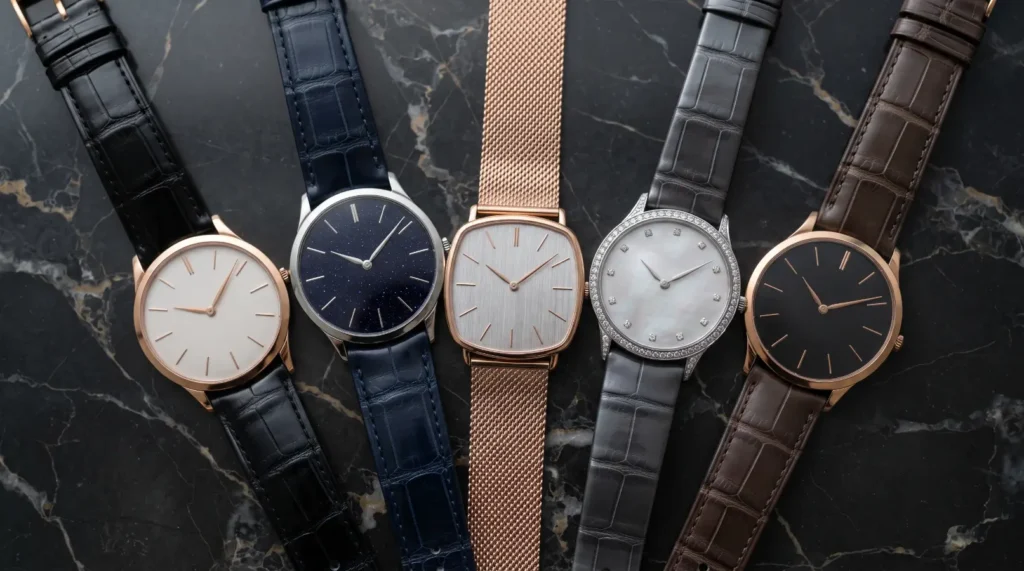
Piaget’s current catalog spans everything from ultra-thin dress watches to sporty steel models and elaborate diamond-set creations. The official collection includes Polo, Altiplano, Limelight Gala, Possession and other specialized lines.
Here are the models and families that deserve the most attention.
1. Piaget Polo Signature Date
Best for: Everyday luxury and a versatile sports-watch style
Movement: Automatic mechanical
Case: Steel versions available
Water resistance: Varies by reference
Price: Around the mid-$10,000s for current steel examples
The Polo is probably the most important Piaget for buyers who want something more relaxed than an ultra-thin dress watch.
The original Polo debuted in 1979 and became closely associated with Piaget’s glamorous lifestyle image. The modern collection retains the central design idea: a round case surrounding a cushion-shaped dial, with an integrated bracelet or interchangeable strap creating a continuous visual flow.
The steel Polo Signature Date is the sensible entry point into modern Piaget.
It has enough visual presence for casual clothing but remains polished enough for business or evening wear. Current authorized-retailer listings put steel Polo Signature Date references around $14,000, while more elaborate versions climb considerably higher.
Why I like it: It gives you genuine Piaget identity without forcing you into yellow gold or diamonds.
Potential drawback: If your priority is maximum movement sophistication per dollar, there are stronger value propositions elsewhere.
2. Piaget Polo Field
Best for: A sportier everyday Piaget
Movement: Automatic mechanical
Case: Steel
Style: Luxury sports watch
Price: Around the mid-$10,000s
The Polo Field takes the basic Polo concept in a more casual direction.
It makes sense for someone who likes the integrated-bracelet sports-watch category but finds the typical choices from Rolex, Audemars Piguet or Patek Philippe too predictable.
The design remains recognizably Polo, but the watch is easier to imagine with jeans, knitwear or casual tailoring than an elaborate gold Piaget.
Current authorized-retailer listings place a 42mm Polo Field around $15,800.
Why it made the list: It is one of the more practical ways to experience Piaget’s sports-watch personality without buying a heavily jeweled piece.
3. Piaget Polo 79
Best for: Collectors who want Piaget at its most extravagant
Movement: Piaget 1200P1 automatic micro-rotor
Case: 18-karat yellow gold
Size: 38mm
Water resistance: 50m
Price: $73,000 MSRP at launch
If the modern Polo is the practical interpretation of Piaget’s sports-watch heritage, the Polo 79 is the theatrical one.
Released as a modern revival of the original 1979 Polo, it uses a 38mm yellow-gold case and integrated bracelet covered with Piaget’s signature horizontal gadroons. The watch weighs close to 200 grams because of its extensive use of 18-karat gold.
Inside is the 1200P1 automatic micro-rotor movement, measuring just 2.35mm thick and offering approximately 44 hours of power reserve. The watch is 7.35mm thick and rated to 50 meters of water resistance.
The catch is obvious: $73,000 is serious money.
This is not the Polo to buy because you want the most practical luxury sports watch. Buy it because the combination of gold, bracelet design, heritage and ultra-thin mechanics is exactly what attracts you to Piaget.
And it is large in personality even though the diameter is only 38mm.
4. Piaget Altiplano Origin
Best for: Traditional dress-watch buyers
Movement: Ultra-thin mechanical/automatic depending on reference
Materials: Gold versions
Style: Ultra-thin dress watch
Price: Typically five-figure pricing
The Altiplano is the collection that most directly represents Piaget’s technical identity.
Its design is deliberately restrained. Thin case. Minimal dial. Precious-metal construction. Very little visual clutter.
That simplicity is deceptive because the engineering underneath it is the reason the collection exists.
Piaget describes the Altiplano as a continuation of its ultra-thin expertise dating to 1957, while modern versions include both manual-winding and automatic constructions.
For someone who wears tailored clothing regularly, an Altiplano can be much more interesting than a conventional luxury dress watch. It does not need a complicated dial to demonstrate technical achievement.
The secondary market also makes this family worth researching. WatchCharts currently places several Altiplano references in roughly the $5,000–$19,000 market range, depending heavily on model and condition.
Why I like it: It is one of the clearest expressions of Piaget’s actual watchmaking DNA.
5. Piaget Altiplano Ultimate
Best for: Enthusiasts fascinated by ultra-thin engineering
Movement: Ultra-thin mechanical
Style: High horology
Price: High-luxury pricing; varies significantly by version
This is where Piaget stops trying to make an ordinary thin watch and starts treating thinness as the entire engineering problem.
The Altiplano Ultimate Concept integrates the movement, case and other structural elements into an extraordinarily thin architecture. Piaget’s official material identifies the Ultimate Concept as a 2mm-thick construction, developed through years of research and development.
Piaget pushed the idea even further with the Altiplano Ultimate Concept Tourbillon. That 2024 creation measures just 2mm thick and incorporates a peripheral one-minute tourbillon through the manually wound Caliber 970P-UC.
This is not the model I would recommend to someone who simply wants a comfortable luxury watch.
It is the model to study if you care about what happens when Swiss watchmakers remove almost every conventional constraint from mechanical watch construction.
6. Piaget Polo Skeleton
Best for: Movement enthusiasts who prefer sporty styling
Movement: Automatic mechanical skeletonized
Style: Luxury sports watch
Price: Roughly $30,000–$50,000+ depending on reference
The Polo Skeleton combines two sides of Piaget that do not always appear together: sporty integrated-bracelet styling and high-end movement finishing.
Instead of hiding the movement beneath a conventional dial, the skeletonized construction makes the mechanism part of the visual experience.
Current authorized-retailer listings show Polo Skeleton references ranging from roughly $32,700 to $51,000.
That price puts it firmly into serious luxury territory, but the appeal is obvious if you want something more technically expressive than the standard Polo Date.
Best reason to buy: The watch looks like a mechanical object rather than simply a luxury accessory.
Reason to hesitate: Skeleton watches are polarizing. If you prefer maximum legibility and understatement, choose an Altiplano or standard Polo instead.
7. Piaget Limelight Gala
Best for: High-jewelry watch buyers
Movement: Automatic or mechanical depending on reference
Materials: Precious metals, diamonds and gemstones
Style: Jewelry watch
Price: Often $50,000+, with high-jewelry versions considerably higher
The Limelight Gala shows why reducing Piaget to “ultra-thin watchmaker” misses half the story.
Its curved, asymmetrical case and sweeping diamond-set design put jewelry craftsmanship at the center of the experience. The collection is aimed primarily at buyers who want a watch to function as part of a larger jewelry wardrobe.
Current authorized-retailer examples include Limelight Gala models around $60,500 and $64,500, with more elaborate versions climbing higher.
This is not a competitor to a minimalist steel sports watch.
It is closer to wearable haute joaillerie that happens to contain serious Swiss watchmaking.
Piaget Watch Prices: What Should You Expect?
Piaget pricing is difficult to summarize with one number because the catalog stretches from relatively accessible pre-owned examples to watches costing tens or even hundreds of thousands of dollars.
For a new watch, a realistic starting point is generally in the five-figure luxury category, with steel Polo models sitting around the mid-$10,000 range and gold, skeletonized, diamond-set and high-complication pieces moving dramatically higher.
The secondary market is much broader.
Recent market data shows a median observed Piaget listing price around $10,950, although that number combines vintage, discontinued, modern and highly complicated models.
| Piaget family | Typical positioning | Approx. current price picture | Best for |
|---|---|---|---|
| Polo Signature Date | Modern luxury sports | ~$14,000+ new | Everyday luxury |
| Polo Field | Sportier Polo | ~$15,000+ | Casual wear |
| Polo Skeleton | High-end sports | ~$30,000–$50,000+ | Movement enthusiasts |
| Polo 79 | Gold heritage icon | $73,000 MSRP at launch | Collectors |
| Altiplano Origin | Ultra-thin dress | Five-figure new; lower used | Formal wear |
| Altiplano Ultimate | Technical high horology | High luxury | Thin-watch enthusiasts |
| Limelight Gala | Jewelry watch | ~$60,000+ examples | High jewelry |
These figures should be viewed as market-positioning estimates rather than universal prices. Because Piaget updates collections, references, and regional pricing, the cost of a specific model can vary over time. Secondary-market prices may differ even more depending on condition, provenance, rarity, and configuration.
Piaget vs Cartier: Which Is Better?
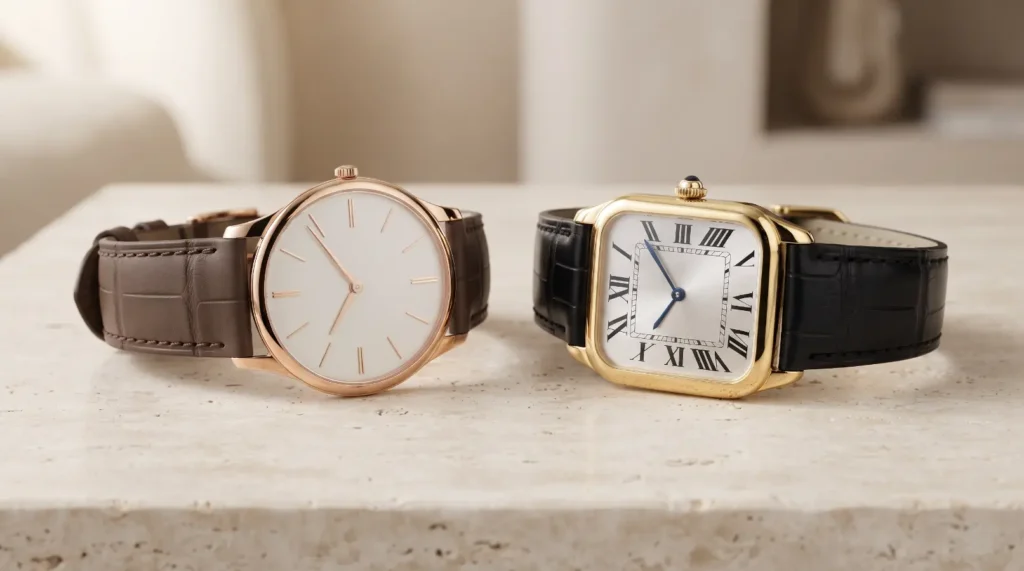
Piaget and Cartier overlap heavily in luxury watches, precious metals and jewelry-driven design, but they excel in different areas.
Choose Piaget if ultra-thin mechanical watchmaking, integrated gold designs and unusual movement architecture are your priorities.
Choose Cartier if iconic case shapes, broad design recognition and a stronger emphasis on timeless jewelry-watch silhouettes matter more.
Piaget’s technical identity is especially strong in thin mechanical construction. Cartier, meanwhile, has an enormous advantage in instantly recognizable shapes such as the Tank and Santos.
Neither is objectively better.
For a watch enthusiast who wants something less predictable, I would lean Piaget. For someone buying a first luxury watch that needs to work equally well as a watch and jewelry statement, Cartier may be easier to live with.
What Makes Piaget Different From Other Swiss Luxury Brands?
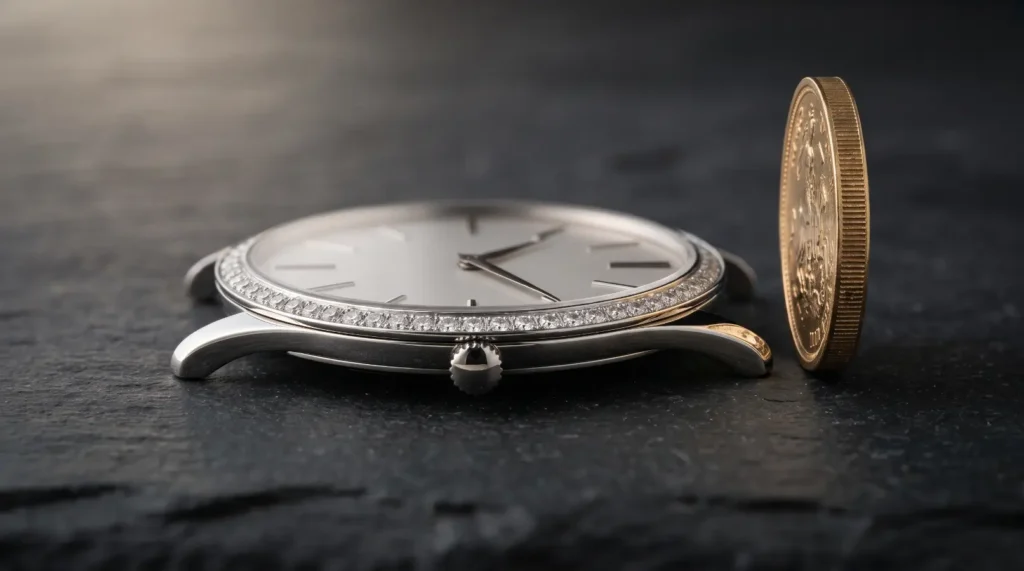
Piaget’s biggest advantage is that its design and engineering history are closely connected.
The brand did not simply decide to make thin watches because minimalism became fashionable. Ultra-thin construction has been part of its identity since the 1950s. The original 9P and later 12P movements established that reputation decades before today’s interest in thin mechanical watches.
Its other distinction is the relationship between watchmaking and jewelry.
Gold bracelets, diamonds, colored stones and unusual dial materials are not peripheral products at Piaget. They are fundamental to the Maison’s identity.
That gives the brand a visual language that is difficult to confuse with a conventional tool-watch manufacturer.
Who Should Buy a Piaget?
A Piaget makes the most sense when you value design, craftsmanship and individuality at least as much as raw specifications.
Consider one if:
- You want a luxury watch that is less common than a Rolex or Omega.
- Ultra-thin mechanical movements genuinely interest you.
- You appreciate gold and jewelry-style finishing.
- You want an integrated luxury sports watch with a different personality.
- You regularly wear formal or tailored clothing.
- You care about horological history and movement architecture.
- You are comfortable buying for personal enjoyment rather than maximum resale value.
A Piaget is less convincing if your priorities are ruggedness, easy servicing, strong water resistance or maximum resale liquidity.
There are better brands for those jobs.
Buying Pre-Owned: Where Piaget Gets Interesting
The pre-owned market is one of the strongest arguments for researching Piaget beyond current retail collections.
Older Altiplano, Polo and other references can trade substantially below their original retail prices. Recent market data for Altiplano references, for example, shows several models trading around the mid-four figures to low five figures depending on the reference.
That does not mean every discounted Piaget is a bargain.
Before buying, check the exact reference, movement, case material, bracelet condition, service history and whether the watch has been polished heavily. Vintage gold watches can also have worn or stretched bracelets, which can materially affect both appearance and value.
For expensive examples, provenance matters.
Buy from a reputable dealer or established marketplace, verify serial/reference information where possible, and have the watch inspected if the transaction involves significant money. A luxury watch that looks inexpensive compared with retail is not automatically a good deal.
Common Mistakes to Avoid
Buying Piaget is less about finding the “best” model and more about avoiding the wrong one for your lifestyle.
Buying purely for the discount
A large gap between retail and secondary-market pricing can look tempting. But if you do not actually like the design, the discount is irrelevant.
Ignoring case proportions
Ultra-thin watches often wear differently from their diameter suggests. Conversely, something like the Polo 79 may be only 38mm across but can feel substantial because of its gold construction.
Treating every Polo as the same watch
The Polo family ranges from relatively practical steel Date models to skeletonized and precious-metal versions. Movement, finishing, weight and price can differ enormously.
Buying a jewelry watch as if it were a tool watch
Diamond-set Limelight and heavily jeweled Piaget pieces are about luxury and visual impact. If you need rugged everyday functionality, choose accordingly.
Overlooking servicing and provenance
With expensive mechanical watches, the purchase price is only part of ownership. Condition, service history and seller reputation deserve serious attention.
The Final Talk
Want a luxury watch that feels different from the crowd?Piaget stands out by combining ultra-thin mechanical watchmaking with bold gold designs and unmistakable Swiss character. The Altiplano is the purist’s choice for exceptional thinness and movement craftsmanship, while the Polo offers a more versatile blend of sporty styling and everyday luxury. For maximum glamour, the Polo 79 and Limelight Gala showcase Piaget’s jewelry-driven personality.
If your priority is the safest resale-focused purchase, Piaget may not be the automatic choice, but if you want something distinctive, technically credible, and genuinely different from mainstream luxury watches, Piaget is a brand that deserves serious attention.
FAQs
Yes. Piaget is a high-end Swiss watchmaker and jeweler with roots dating to 1874. Its modern catalog includes ultra-thin mechanical watches, precious-metal sports watches, complications and high-jewelry pieces.
The price reflects factors such as precious metals, hand finishing, complicated movements, ultra-thin engineering, diamonds and the manufacturing expertise behind the watches. Some Piaget models are essentially high jewelry combined with mechanical watchmaking.
Some are. Steel Polo models are considerably more practical for everyday use than highly jeweled or ultra-thin dress watches. Your choice should depend on water resistance, case material, strap or bracelet, and how carefully you want to treat the watch.
Piaget is particularly famous for ultra-thin mechanical watchmaking. Its 1957 Caliber 9P was only 2mm thick, while the later 12P helped establish the brand’s reputation for ultra-thin automatic movements.
Yes, especially if you want a distinctive luxury sports watch rather than a conventional tool-watch design. The Polo combines an integrated-bracelet aesthetic with Piaget’s movement and finishing expertise, and the collection now spans Date, chronograph, skeleton and complicated models.
Discover More,
QUARTZ WATCHES: 7 BRILLIANT MODELS TO BUY IN 2026
Versace Watches: 5 Iconic Picks to Know in 2026
Chronograph Watches: 7 Brilliant Picks for 2026
[author box]