
A $10,000 watch can lose more time than a watch costing a fraction of the price and that’s where precision gets interesting.Precision watches are not simply about luxury or an expensive movement; they are about how consistently a watch keeps time. If accuracy is your top priority, quartz generally beats mechanical movements, with high-end technologies pushing that advantage even further.
Citizen’s Caliber 0100, for example, is rated to an extraordinary ±1 second per year, while Bulova’s high-frequency Precisionist technology offers impressive accuracy at a much more accessible level. But if you want precision without giving up mechanical craftsmanship, chronometers and Spring Drive make the decision far more interesting.
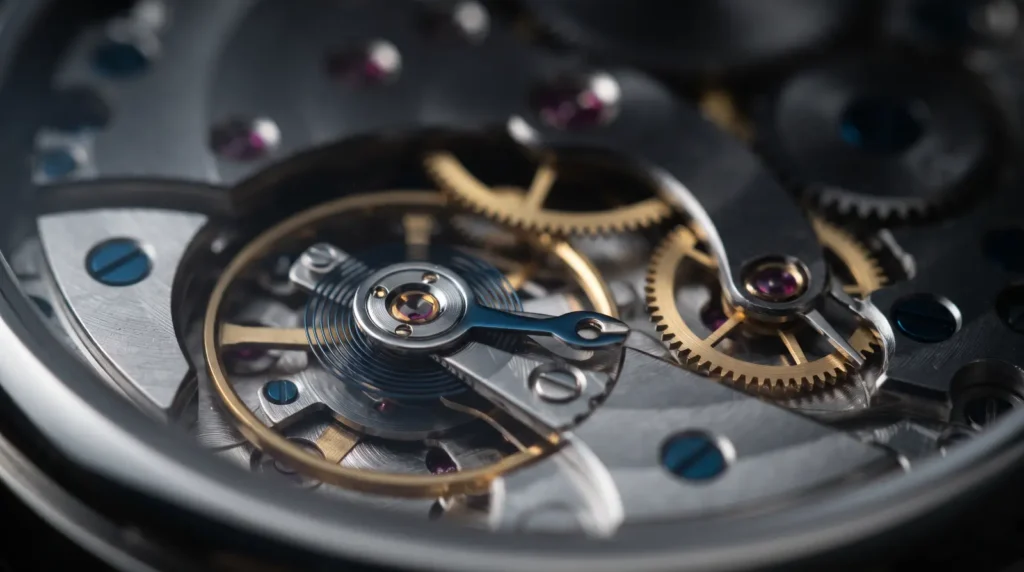
What Makes a Watch Highly Precise?
A precise watch is one that consistently keeps time close to a known reference. That sounds simple, but the technology behind it varies dramatically depending on the movement.
Quartz watches generally have the advantage because an electronic circuit regulates the movement using a vibrating quartz crystal. Mechanical watches instead depend on a balance wheel, hairspring, escapement, and mainspring, making them more vulnerable to position, temperature, magnetism, and other variables.
For buyers, accuracy should therefore be judged alongside the type of movement and the certification behind it.
Accuracy vs. precision
These terms are often used interchangeably, but they are not quite the same.
Accuracy describes how close a watch is to the correct time. Precision describes how consistently it performs that way over repeated measurements.
A watch that gains exactly five seconds every day is highly consistent but not perfectly accurate. A watch that varies unpredictably is both harder to regulate and less useful for someone who cares about exact timekeeping.
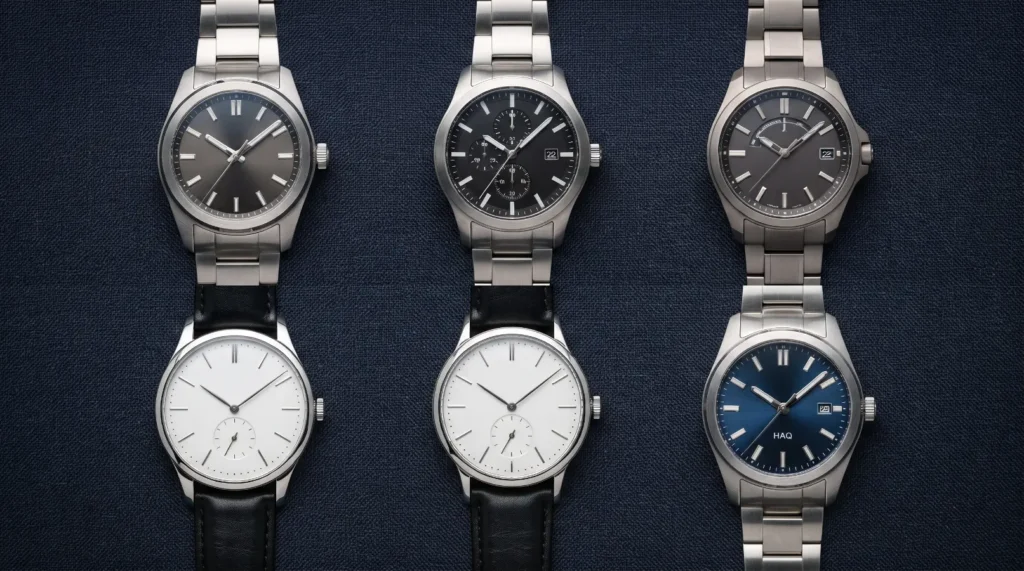
The Most Accurate Watches Worth Considering
There is no single winner for every buyer. A ±1-second-per-year quartz watch is in a different category from a COSC-certified mechanical chronometer, even though both represent serious efforts to improve timekeeping.
Here are seven options that illustrate the strongest approaches to precision, from affordable high-frequency quartz to high-end mechanical certification.
| Watch | Movement type | Stated accuracy | Best for | Approx. price tier |
|---|---|---|---|---|
| Citizen Caliber 0100 | Eco-Drive quartz | ±1 sec/year | Maximum practical accuracy | Luxury |
| Grand Seiko 9F | High-accuracy quartz | ±10 sec/year | Luxury quartz craftsmanship | Luxury |
| Bulova Precisionist | High-frequency quartz | Seconds/year | Value-focused accuracy | Mid-range |
| Omega Master Chronometer | Mechanical | 0/+5 sec/day certification | Luxury mechanical precision | Luxury |
| Grand Seiko Spring Drive | Hybrid mechanical/electronic | Quartz-like precision | Horological innovation | Luxury |
| Bulova Jet Star Precisionist | High-frequency quartz | Seconds/year | Everyday precision | Mid-range |
| Omega Constellation Observatory | Mechanical | Master Chronometer certified | High-end precision and design | Luxury |
Accuracy figures are manufacturer-stated or certification criteria and should not be interpreted as a guarantee of identical real-world performance on every wrist.
1. Citizen Caliber 0100
Best for: maximum accuracy without a battery
Citizen’s Caliber 0100 is the obvious choice if raw timekeeping performance is your first priority. Citizen rates the Eco-Drive movement at ±1 second per year, an extraordinary figure for a wristwatch. It is light-powered rather than conventionally battery-powered, and the current limited edition uses a Super Titanium case and sapphire crystal.
The clever part is that this accuracy does not come from radio or GPS synchronization. The movement itself is designed for extremely stable timekeeping.
Why it stands out: ±1 second per year is difficult to beat without moving into specialized technologies.
Best for: Buyers who care about accuracy above almost everything else.
Skip it if: You want the mechanical interaction and traditional movement architecture of a luxury mechanical watch.
2. Grand Seiko 9F Quartz
Best for: luxury quartz with serious watchmaking
Grand Seiko’s 9F is where the usual “quartz is cheap” argument falls apart. Current 9F movements are rated at ±10 seconds per year, while the architecture adds features such as a Twin Pulse Control Motor, backlash compensation, and servicing regulation.
The appeal is not simply the accuracy figure. Grand Seiko treats the quartz movement as a piece of serious horological engineering, pairing it with the finishing, dial work, and case quality expected from the brand.
The 9F85 also allows the hour hand to be adjusted without stopping the seconds hand, which is genuinely useful when traveling.
Best for: Someone who wants luxury finishing but has no interest in pretending a mechanical movement is inherently more accurate.
3. Bulova Precisionist
Best for: high accuracy at a more accessible price
Bulova takes a very different route. Its Precisionist movement uses an 8-jewel quartz mechanism vibrating at 262 kHz, considerably higher than the frequency used by conventional quartz movements. Bulova describes the resulting accuracy in seconds per year and highlights its continuously sweeping seconds hand.
That sweeping hand is one of the movement’s most recognizable visual traits. It gives the watch a mechanical-looking motion without actually sacrificing quartz’s accuracy advantage.
Current Precisionist models also span very different designs, from the vintage-inspired Jet Star to the Super Seville and sportier collections.
Best for: Buyers who want exceptional accuracy without entering Grand Seiko or Citizen Caliber 0100 territory.
Watch out for: Some Precisionist cases are relatively large, so check the case dimensions before buying if you have a smaller wrist.
4. Omega Master Chronometer
Best for: precision without giving up mechanical watchmaking
This is where the definition of “accurate” becomes more interesting.
Omega’s Master Chronometer certification is not trying to compete with ±1-second-per-year quartz. Instead, it proves that a mechanical watch can deliver unusually strong and independently verified performance while also resisting magnetism and meeting other performance requirements.
Omega says Master Chronometer watches undergo eight tests over 10 days, with METAS certification using a 0/+5 seconds-per-day accuracy criterion for the complete watch.
That certification also evaluates magnetic resistance, water resistance, and power reserve rather than looking at rate accuracy in isolation.
Best for: Luxury buyers who want mechanical character with independently certified performance.
5. Grand Seiko Spring Drive
Best for: the most fascinating mechanical-electronic compromise
Spring Drive is difficult to categorize because it does not fit neatly into the quartz-versus-mechanical argument.
A mainspring provides the energy, but an electronic regulator controls the release of that energy. Seiko developed Spring Drive as a third approach combining mechanical power with electronic regulation.
That is why Spring Drive appeals so strongly to enthusiasts. Precision watches using this technology offer the physical energy storage and mechanical architecture associated with traditional watchmaking, while the regulation system moves accuracy much closer to quartz territory.
The seconds hand also glides across the dial rather than making the familiar mechanical ticking motion, giving precision watches powered by Spring Drive a distinctive visual character.
Best for: Enthusiasts who want cutting-edge horology without abandoning the emotional appeal of mechanical power.
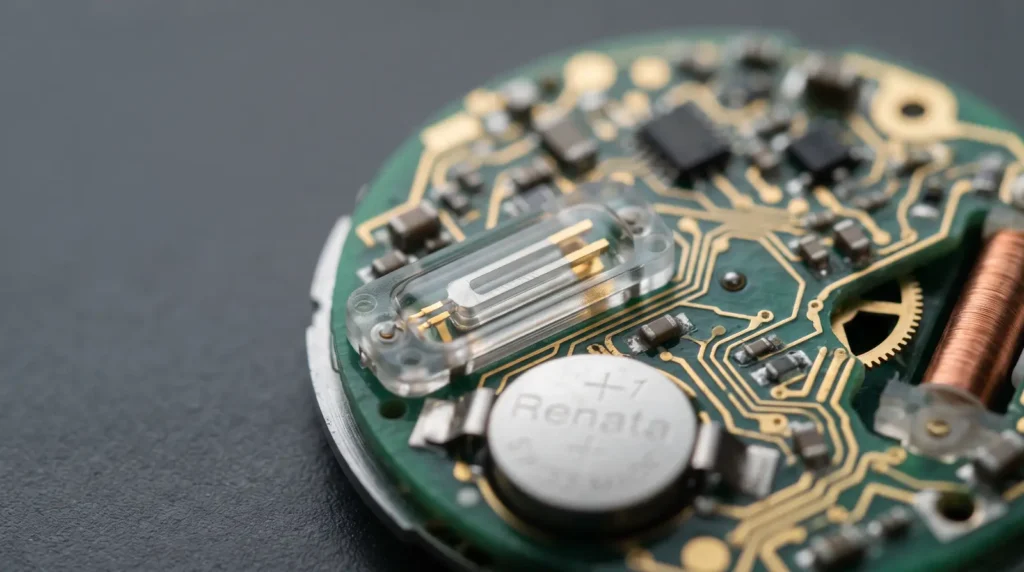
Why Quartz Usually Wins on Accuracy
If your only question is, “Which movement keeps the correct time best?” quartz is normally the easy answer.
Mechanical watches are fascinating precisely because they achieve impressive results using physical components that are constantly affected by their environment. Position, temperature, magnetism, shocks, and the amount of mainspring torque can influence their rate.
Quartz removes many of those variables.
That does not make mechanical watches inferior. It simply means the two technologies are solving different problems.
| Priority | Best movement choice |
|---|---|
| Maximum everyday accuracy | High-accuracy quartz |
| Low-effort ownership | Quartz or solar quartz |
| Mechanical craftsmanship | Automatic or manual-wind |
| Accuracy + mechanical experience | Spring Drive |
| Certified mechanical performance | Chronometer/Master Chronometer |
| Long-term practicality | Quartz, solar, or robust mechanical |
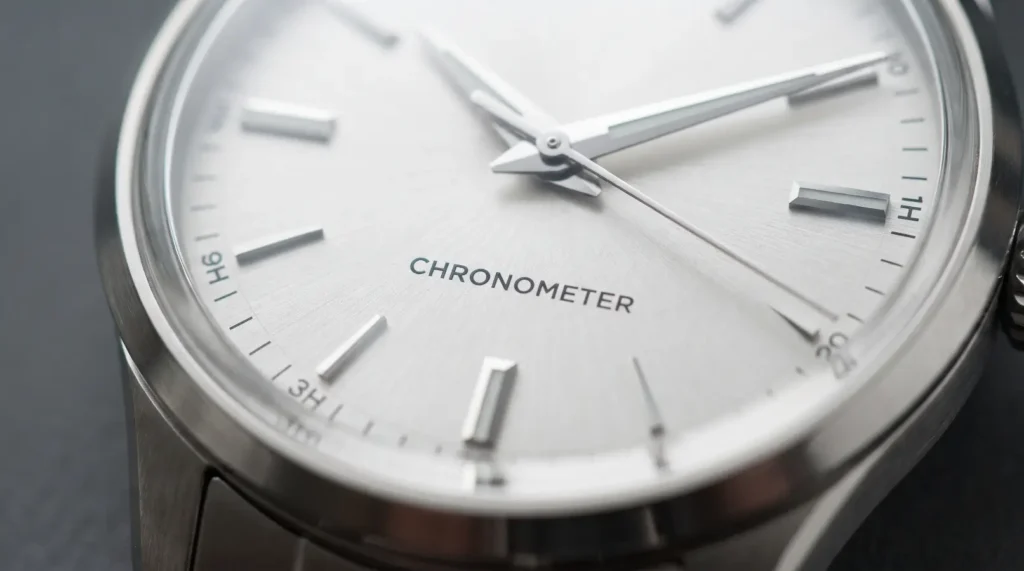
What Does Chronometer Mean?
A chronometer is not a type of movement. It is a certification indicating that a watch or movement has passed defined accuracy tests.
This distinction matters because “chronometer” and “chronograph” are often confused. A chronograph is a stopwatch complication. A chronometer is about tested timekeeping performance.
COSC certification, for example, is associated with a mechanical accuracy range of -4/+6 seconds per day. Breitling describes this as the COSC standard for mechanical movements.
Omega’s Master Chronometer goes further by testing the complete watch under additional conditions, including magnetic exposure.
So when shopping, don’t assume that a watch labeled “chronometer” is automatically more accurate than every quartz watch. Certification is meaningful, but movement technology still matters.
How to Choose the Right High-Accuracy Watch
The right choice depends less on the biggest accuracy number and more on what you actually expect from the watch.
Do you want accuracy above all else?
Choose high-accuracy quartz. Citizen Caliber 0100 is the extreme example, while Grand Seiko 9F and Bulova Precisionist offer different interpretations of premium quartz.
Do you want mechanical craftsmanship?
Accept that you are giving up some absolute accuracy. A well-regulated mechanical watch can be impressively precise, but it will not normally compete with the best quartz movements.
Do you want both?
Spring Drive is arguably the most compelling answer. It offers mechanical energy storage and a sophisticated electronic regulator rather than forcing you to choose one side completely.
Do you care about independent testing?
Look for certification such as COSC or Master Chronometer. These labels give you something more useful than a manufacturer’s vague claim that a movement is “high precision.”
Common Mistakes When Buying for Accuracy
Accuracy-focused buyers can still make some surprisingly poor choices.
First, don’t compare seconds-per-year and seconds-per-day figures without converting the units. A mechanical watch rated to a few seconds per day and a quartz watch rated to a few seconds per year operate on completely different scales.
Second, don’t confuse a chronograph with a chronometer. One describes a stopwatch function; the other concerns timekeeping certification.
Third, don’t assume expensive automatically means accurate. Much of a luxury watch’s price can come from finishing, materials, complications, heritage, and handwork rather than raw timekeeping performance.
Finally, don’t ignore servicing and environment. Magnetism, shocks, temperature changes, and an aging movement can all affect real-world performance.
Precision vs. Practicality: What Actually Matters?
A watch gaining one second per year sounds incredible, but most people do not need that level of performance.
If you spend every day checking your watch against your phone, even a conventional quartz watch may already be accurate enough. The difference between a few seconds per month and a few seconds per year becomes more interesting to enthusiasts than it is to most everyday users.
The more useful question is therefore: what kind of accuracy do you need?
For an office watch, ordinary quartz is already extremely practical. Collectors may prefer a Grand Seiko 9F or Omega Master Chronometer, where precision becomes part of the watch’s engineering story. Those fascinated by technology may find Citizen Caliber 0100 and Spring Drive far more interesting than simply buying the most expensive mechanical watch available.
The Final Talk
The most accurate watch isn’t always the most expensive one sometimes, the smartest choice is the one that simply refuses to lose time.Citizen Caliber 0100 is the standout for extreme accuracy, while Grand Seiko 9F proves that quartz can deliver genuine luxury and serious horological engineering. Bulova Precisionist offers a more accessible route to high-frequency accuracy, making it one of the most interesting choices for buyers who care about performance without spending a fortune.
If mechanical watchmaking matters as much as raw accuracy, Omega’s Master Chronometer models and Grand Seiko’s Spring Drive are harder to ignore. Choose quartz if every second matters, mechanical if craftsmanship matters more, and Spring Drive if you want an impressive balance of both. The best watch is ultimately the one whose idea of precision fits the way you actually wear it.
FAQs
The most accurate conventional wristwatches include high-accuracy quartz models such as Citizen Caliber 0100, Grand Seiko 9F, and Bulova Precisionist. These precision watches stand out for their exceptional timekeeping performance, with Citizen rating Caliber 0100 at ±1 second per year. For buyers focused on extreme accuracy, precision watches like these offer an impressive alternative to traditional mechanical timepieces.
Yes, generally. Quartz movements are typically more accurate because electronic regulation is less affected by positional changes and other variables that influence mechanical movements.
Not necessarily. Chronometer certification establishes that a movement has passed defined accuracy tests, but precision watches with high-accuracy quartz movements can outperform certified mechanical movements by a substantial margin.
Among Grand Seiko’s current conventional quartz offerings, the 9F family makes precision watches especially compelling, with current 9F calibers such as the 9F51 and 9F85 rated at ±10 seconds per year.
Yes. Precision watches such as those powered by Bulova’s Precisionist movement use a 262 kHz quartz resonator designed to deliver accuracy measured in seconds per year, while also producing a continuously sweeping seconds hand.
Discover More,
Dan Henry Watches: Best Models & Honest Review
TOMMY HILFIGER WATCHES: 7 GREAT PICKS BEFORE YOU BUY
HELM WATCHES: 7 SURPRISINGLY TOUGH WATCHES UNDER $400
[author box]