
A child may understand that they need to use the toilet but still forget to stop playing and go at the right time. This is one reason parents explore a potty watch for kids during toilet training. Unlike an ordinary wristwatch, this child-friendly device uses timed reminders, music, flashing lights or other alerts to encourage regular bathroom visits. It gives toddlers a simple signal to pause their activities and try using the potty.
However, a reminder device does not teach bladder control on its own. Children still need encouragement, a consistent routine and time to recognise their body’s signals. Understanding how these watches work, which features matter and when they are useful can help parents decide whether one belongs in their toilet-training routine.
Potty Training Watches at a Glance
- Definition: A wearable timer that reminds children when it is time to try using the potty.
- Main types: Musical timer watches, light-up reminder watches, vibration-based devices and simple timer alternatives.
- Key distinction: These devices encourage regular bathroom visits; they do not detect a full bladder.
- Common misconception: Wearing a reminder watch does not automatically make a child toilet-trained.
How a Potty Watch for Kids Works
A potty-training watch works by using a countdown timer to remind a child to visit the bathroom at selected intervals. A parent sets the reminder, places the device on the child’s wrist and helps the child respond when the alert activates.
Many traditional designs offer intervals such as 30, 60 or 90 minutes. When the countdown finishes, the watch may play a short tune, flash its lights or produce another noticeable alert. Some devices automatically restart the countdown after the reminder.
For example, the original Potty Watch uses music and flashing lights to signal bathroom time. Its instructions describe 30-, 60- and 90-minute countdown settings. pottywatch+1
The basic process looks like this:
- A parent chooses a suitable reminder interval.
- The child wears the device during daytime activities.
- The watch signals when the countdown ends.
- The parent encourages the child to try using the potty.
- The routine continues while the child gradually learns to recognise natural bathroom signals.
The purpose is to build consistency, not to make children follow an alarm without understanding why they need the toilet.
Different Types of Reminder Devices
Not every toilet-training reminder works in the same way. Some devices use entertainment to attract a toddler’s attention, while others focus on quiet alerts or simple timekeeping.
| Type | How It Works | Main Advantage | Limitation |
|---|---|---|---|
| Musical timer watch | Plays a tune at set intervals | Makes reminders engaging | Music may distract some children |
| Light-up reminder watch | Flashes when the timer ends | Provides a visual signal | Less useful if the child ignores lights |
| Vibration reminder | Uses a gentle wrist vibration | Quiet and less disruptive | Younger children may not understand it |
| Digital timer watch | Displays a countdown | Makes time easier to follow | Requires parental explanation |
| Phone or household timer | Uses an external alarm | No wearable device needed | The child may not notice it |
[readmore url=”https://wristaurahub.com/best-men-luxury-watches/”]
Musical Reminder Watches
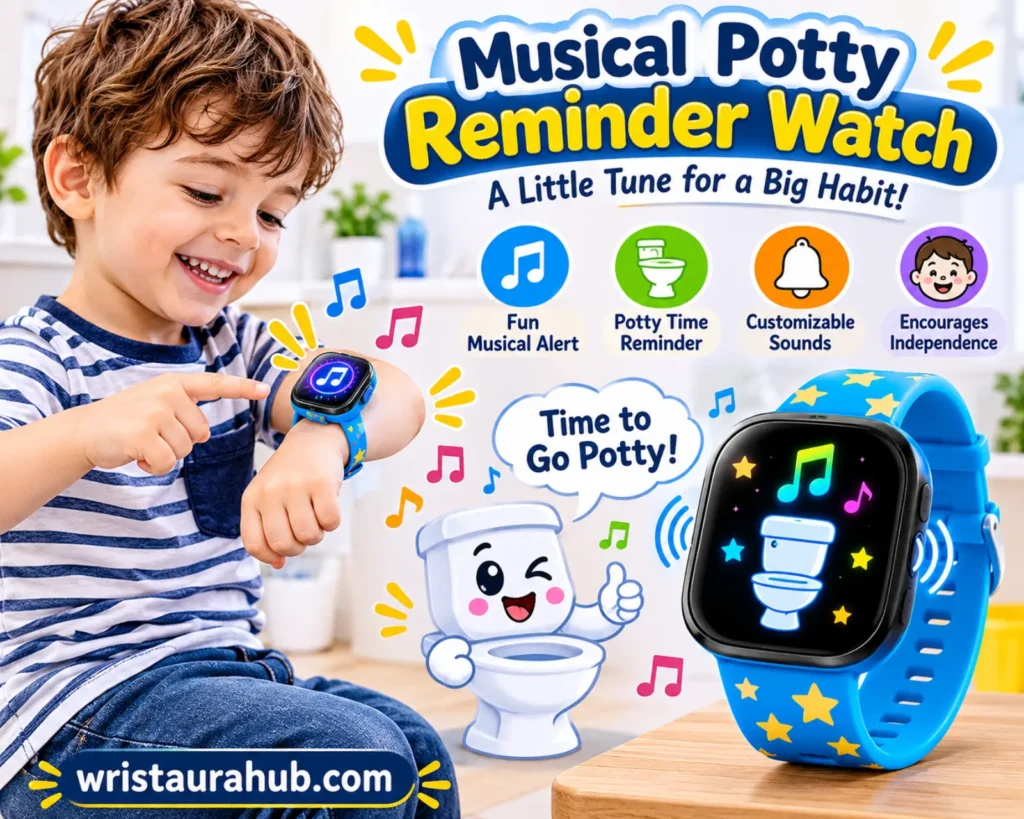
Musical watches use short songs or familiar sounds to tell children that it is time to visit the bathroom.
This approach can make the experience feel more like a game than a task. A tune also gives parents a consistent signal without repeatedly interrupting their child’s play.
However, loud or repetitive music may become irritating. Check whether the sound is comfortable and whether the device offers a way to turn it off.
Light-Up Devices
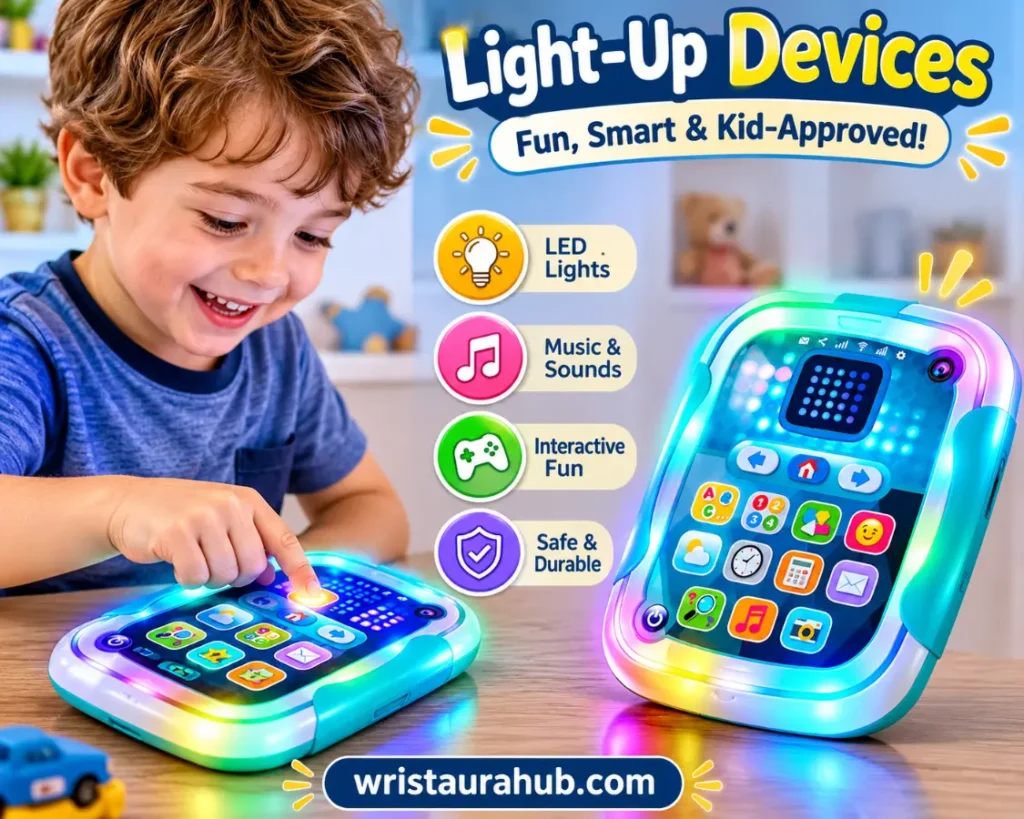
Some reminder watches use flashing lights alongside their countdown alarms. These visual signals can attract a toddler’s attention, especially when the child is busy playing.
A simple display can also help parents explain that the lights mean it is time to try the potty.
The main limitation is that a child may become interested in the lights without understanding the reminder itself. Parents should explain what happens next rather than expecting the device to communicate everything.
Vibration-Based Reminders
Vibration-based devices provide a quieter alternative to musical alarms. They may suit families who prefer fewer sounds around the house or need a less noticeable reminder.
However, vibration is not automatically better. A toddler must recognise the sensation and understand what action to take when it happens.
Digital Timer Alternatives
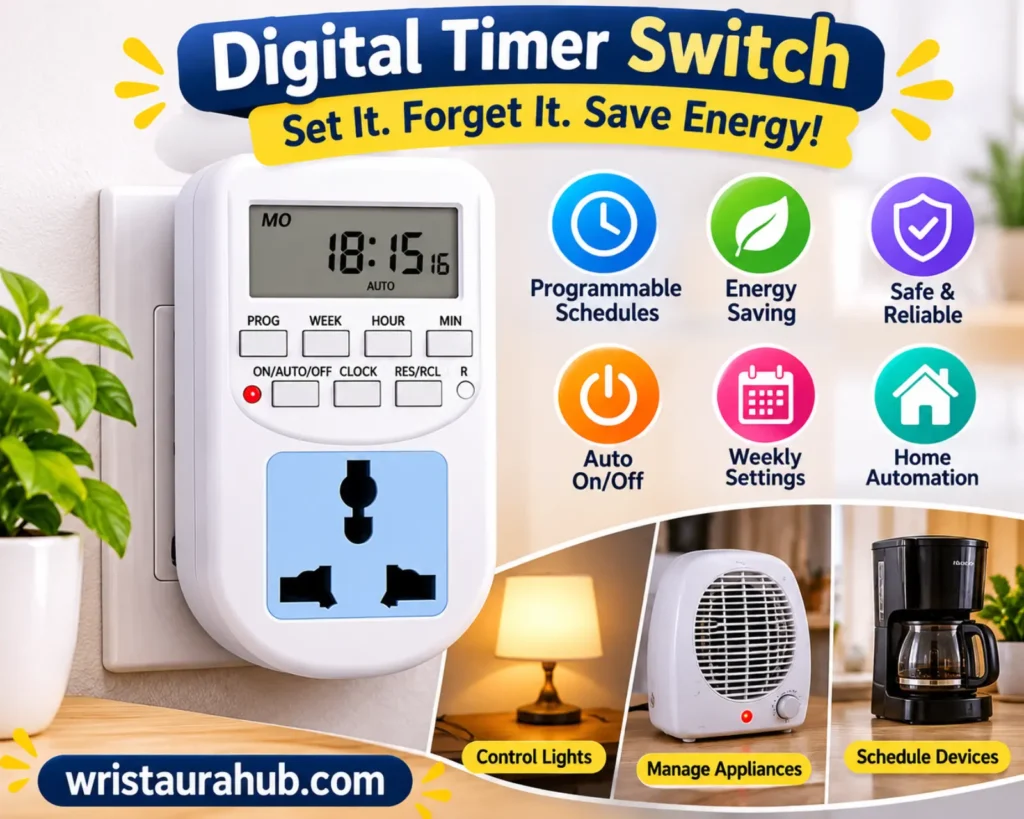
A digital timer, kitchen clock or phone alarm can provide the same basic reminder function without requiring a wearable device.
This can be a sensible starting point if parents are unsure whether their child will enjoy wearing a watch. The important part is maintaining a predictable routine.
When Is the Right Time to Introduce One?
Readiness matters more than the child’s exact age. Some toddlers show signs of toilet-training readiness around 18–24 months, while others need longer.
The American Academy of Pediatrics explains that children need physical awareness, communication skills and the ability to understand instructions as part of learning to use the toilet. HealthyChildren.org+1
Look for signs such as:
- Staying dry for around two hours during the day.
- Showing discomfort when wearing a wet or dirty diaper.
- Following simple instructions.
- Walking to the bathroom with some assistance.
- Showing interest in using the potty or wearing underwear.
- Communicating when they need to pee or poop.
A reminder watch may be useful once a child has started practising toilet use but regularly forgets to take bathroom breaks.
It is less useful when a child is not yet comfortable sitting on the potty or does not understand the purpose of the reminders.
Features Parents Should Check Before Choosing
A colourful design may attract a toddler, but practical features determine whether the device is comfortable and useful.
Comfortable and Adjustable Strap
Choose a strap that fits securely without squeezing the wrist. The material should feel comfortable during everyday movement.
Avoid sharp edges, rough surfaces or closures that irritate the skin.
Adjustable Reminder Intervals
Different children need different routines. Adjustable intervals allow parents to change reminders as the child becomes more familiar with bathroom visits.
A shorter interval may help during the early learning stage, while longer intervals may become appropriate as the child recognises the need to go.
Do not assume that every child needs reminders every 30 minutes.
Clear and Simple Alerts
The reminder should be easy to recognise. Music, flashing lights and vibration can all work, depending on the child’s preferences.
A complicated interface with too many buttons can make a simple device unnecessarily difficult to use.
Easy-to-Understand Controls
Parents should be able to set, pause and restart the timer without struggling with complicated instructions.
Check whether the watch automatically resets after an alert. This feature can reduce the need to adjust the device throughout the day.
Battery and Cleaning Requirements
Check the battery type, expected battery life and replacement process before purchasing.
Also review the manufacturer’s cleaning instructions. A device worn by a toddler should be easy to keep clean, particularly during the occasional toilet-training accident.
Do not assume that a product is waterproof simply because it is advertised as water-resistant.
How to Use a Reminder Watch Without Creating Pressure
The most useful approach is to make the device part of a wider bathroom routine.
- Explain its purpose: Tell your child that the sound or light means it is time to try the potty.
- Start with a manageable routine: Set reminders around familiar daily activities rather than constantly changing the schedule.
- Encourage without forcing: Invite your child to sit on the potty, but do not insist if they become distressed.
- Praise the effort: Recognise attempts and progress, even when nothing happens.
- Watch for natural signals: Encourage bathroom visits when your child starts fidgeting, becoming quiet or showing other signs of needing to go.
- Adjust the interval: Change the timing when the routine becomes easier or reminders seem unnecessary.
- Keep expectations realistic: Accidents are a normal part of learning.
The NHS also recommends building regular bathroom opportunities into everyday routines, such as after waking, after meals and before leaving home. NHS
[readmore url=”https://wristaurahub.com/fossil-watches-for-men/”]
When a Potty Watch May Not Be Helpful
A reminder device is not suitable for every child or every stage of toilet training.
Consider another approach if:
- Your child becomes upset whenever the alarm sounds.
- The watch interrupts play too frequently.
- Your toddler does not understand what the alert means.
- The strap feels uncomfortable or causes skin irritation.
- Your child already recognises bathroom signals without reminders.
There is also an important difference between reminding a child to try and detecting when their bladder is full. Most ordinary potty watches are timers, not sensors.
If a child regularly avoids bowel movements, experiences painful stools or has persistent constipation, discuss the issue with a healthcare professional. A watch cannot resolve an underlying physical problem.
Common Mistakes Parents Should Avoid
Expecting Immediate Results
A reminder watch is a supporting tool, not a shortcut. Children need time to understand bodily signals and develop independent bathroom habits.
Setting Reminders Too Frequently
Constant alerts can interrupt play and make toilet training feel like an unwanted activity. Choose a routine that gives the child enough time between attempts.
Treating Every Accident as a Failure
Accidents happen during toilet training. Avoid punishment, embarrassment or negative comments. Calmly help your child clean up and continue the routine.
Ignoring the Child’s Natural Signals
A timer should not replace attention to body language. Children gradually need to learn when their bodies are telling them to use the bathroom.
Using the Device Without Explaining It
A toddler may hear music or notice flashing lights without understanding their meaning. Explain the purpose in simple language and demonstrate what to do when the reminder sounds.
[readmore url=”https://wristaurahub.com/quartz-vs-mechanical-watch/”]
Choosing the Right Reminder Approach for Your Child
A musical watch may work well for a toddler who enjoys songs and playful alerts. A light-up device may suit a child who responds better to visual reminders, while a quiet timer may be preferable in a less noisy environment.
Parents should also consider comfort, ease of cleaning, battery requirements and adjustable timing.
There is no need to purchase an expensive device to begin toilet training. A simple household timer and a consistent bathroom routine can provide similar reminders.
The best choice is the one your child can understand and comfortably use without turning toilet training into a stressful experience.
The Final Talk
A wearable timer can make bathroom routines easier to remember, particularly when toddlers become distracted by play. However, successful toilet training depends on much more than an alarm. Children need encouragement, patience and opportunities to recognize their own body signals. Start with a simple routine, observe how your child responds and adjust the reminders when needed. The goal is not to make a child dependent on a timer but to help them gradually recognize when it is time to use the bathroom independently.
FAQs
There is no fixed age for introducing one. Parents can consider it when a child is beginning toilet training and can understand simple reminders. Readiness varies, so developmental signs matter more than age alone.
There is no universal interval. Some devices offer 30-, 60- and 90-minute settings, but the best schedule depends on the child’s routine and needs. Parents should adjust it rather than follow a rigid timer.
They can help children remember regular bathroom visits and make routines more engaging. However, they do not guarantee success or teach bladder control. Consistent guidance and body awareness remain essential.
A child may wear one during suitable daytime activities if it is comfortable and used according to the manufacturer’s instructions. Remove it when necessary for bathing, sleeping or skin irritation.
Not necessarily. Water resistance varies by device, and parents should check the manufacturer’s instructions before allowing contact with water. Avoid assuming that a reminder watch is suitable for bathing or swimming.
Explain the alert again and connect it with a familiar bathroom routine. If the sound causes frustration or the child repeatedly ignores it, try a different reminder method instead of increasing pressure.
Discover More to Learn
Movado Watches for Men: Best Collections, Styles & Value
Independent Watch Brands: 20 Best Names to Know
[authorbox]