
The best field watches are built to be worn, not admired from a distance.Field watches do not try to impress you they earn your trust every time you wear them. A great field watch should be easy to read, comfortable on the wrist, and tough enough for everyday use without constant care. Clear numerals, useful lume, sensible proportions, and a durable case remain the essentials.
Today, field watches range from affordable Seiko models to military-spec Marathon watches and refined Hamilton pieces. This guide breaks down what makes a genuine field-style watch, which features actually matter, and the best models worth considering in 2026.
What Are Field Watches?
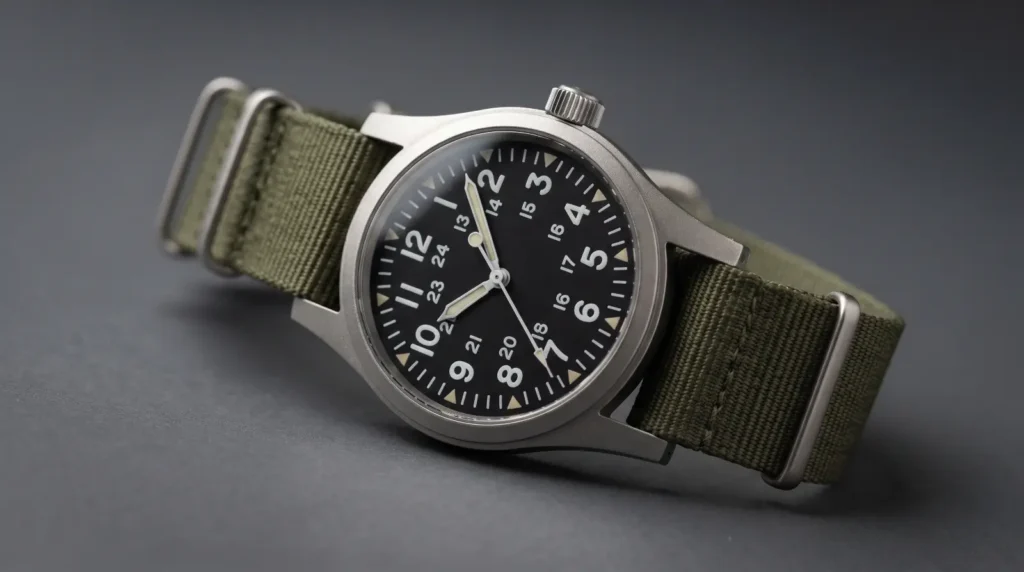
A field watch is a practical wristwatch designed around legibility, durability, simplicity, and easy time reading. Traditional examples typically use Arabic numerals, a minute track, luminous hands and markers, modest case dimensions, and a straightforward three-hand layout.
The design comes from military and outdoor requirements rather than luxury watch fashion. The result is a watch that works equally well with a hiking jacket, jeans, workwear, or a casual office outfit.
Modern examples do not need to be military-issued to qualify. A Seiko 5 Sports Field, for example, is explicitly positioned for outdoor leisure and everyday use, while Marathon’s General Purpose watches follow military specifications much more closely.
The common thread is function before decoration.

Why These Watches Still Work So Well
There is a reason the basic field-watch formula has survived for decades. It solves a simple problem extremely well: telling the time quickly without making the wearer think about the watch.
A strong example normally gives you:
- Large, readable Arabic numerals
- High contrast between dial and hands
- Luminous hands and hour markers
- A compact or moderate case
- A simple three-hand layout
- A durable strap or bracelet
- Enough water resistance for everyday exposure
- A movement chosen for reliability rather than unnecessary complexity
The best models also have restrained designs. You can wear them hiking on Saturday and with a button-down shirt on Monday without looking as if you forgot to change watches.
A Short History of the Military Watch
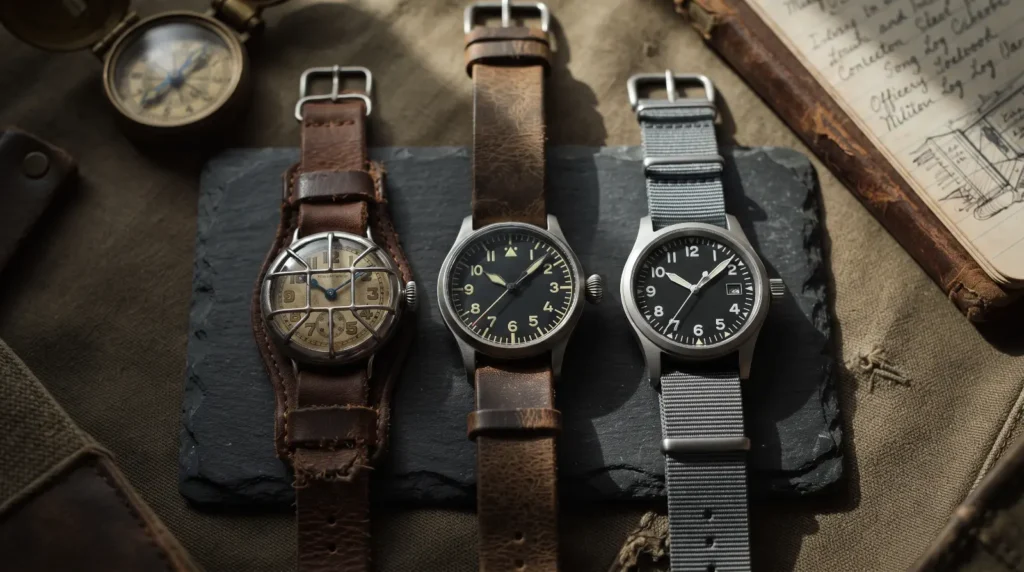
The modern military field-watch look owes much to watches commissioned for practical military service. During World War II, British requirements for the famous WWW watches called for waterproof construction, shock resistance, accuracy, black dials, Arabic numerals, nighttime readability, a railroad-style minute track, and a shatter-resistant crystal.
That philosophy established many of the visual cues collectors now associate with military watches.
Hamilton later became particularly associated with military-inspired watches, and its current Khaki Field Mechanical remains deliberately close to the appearance and proportions of its historical predecessors. Hamilton describes the current 38mm model as a recreation of its 1960s forebear.
Seiko followed a somewhat different path. Its Alpinist began in 1959 as the company’s first sports watch, created for mountain climbers and outdoor activities. That history eventually evolved into today’s more polished Alpinist family.
So while “field watch” is now a broad category, its DNA is still remarkably consistent.
Key Features That Define a Good Field Watch
Not every watch with Arabic numerals is automatically a good field watch. The details matter more than the marketing label.
Legibility Comes First
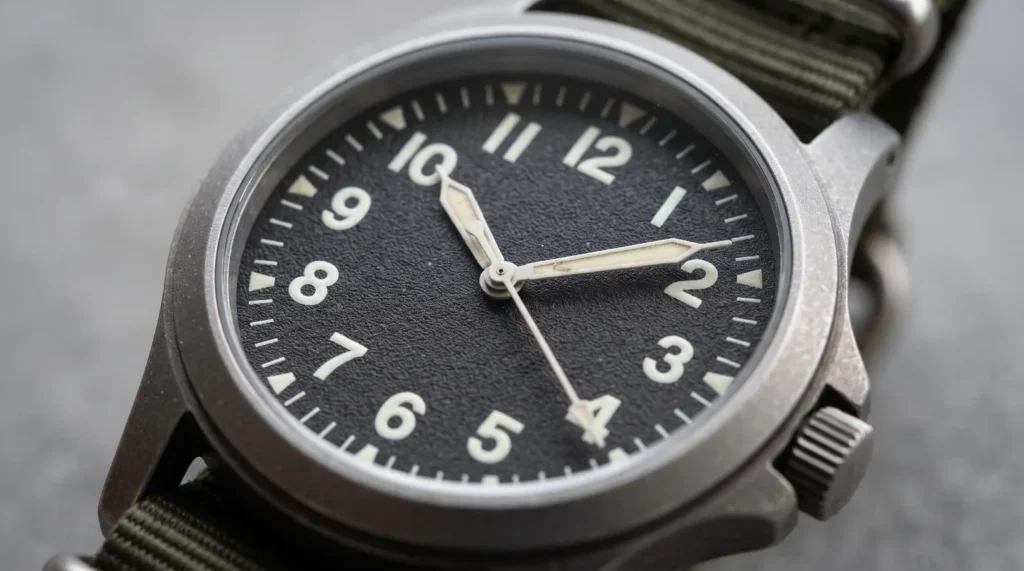
The dial should make reading the time almost automatic. Large Arabic numerals, strong contrast, a clear minute track, and sensible handset proportions are more useful than elaborate finishing.
This is also where dial clutter can hurt. A date window, GMT hand, inner scale, or decorative text can be useful, but each extra element has to justify its presence.
Case Size and Thickness
Field watches generally benefit from moderate dimensions. A 36–40mm case is a sensible range for many wrists, although larger models can work if their lug-to-lug measurement is controlled.
Thickness matters too. A 38mm watch that is 9.5mm thick will feel very different from a 38mm watch measuring nearly 13mm.
The Hamilton Khaki Field Mechanical illustrates the compact approach particularly well: its current 38mm version is 9.5mm thick with a 47mm lug-to-lug measurement.
Crystal
Sapphire crystal is the preferred choice if scratch resistance matters. Mineral or Hardlex crystal can still make sense on less expensive watches because it helps keep the price down.
For a watch intended to see rough daily use, I would prioritize sapphire over decorative dial details.
Movement
There is no single “correct” movement.
Manual-wind mechanical watches offer the most traditional experience. You wind them regularly and get a direct connection with the movement.
Automatic watches are easier for people who wear the same watch frequently because wrist movement helps keep the watch running.
Quartz is often the smartest choice for someone who wants accuracy, low maintenance, and a grab-and-go watch.
Solar movements can also be excellent for outdoor use because they reduce the need for regular battery replacement.
Water Resistance
Water resistance is frequently misunderstood.
A 50-meter rating is not the same thing as a watch being designed as a dive watch. It can handle everyday moisture, but buyers who regularly swim, kayak, or spend significant time around water may prefer a field-style watch with substantially higher resistance.
This is one area where models in the category vary dramatically.
5 Field Watches Worth Considering in 2026
There is no single winner because these watches solve slightly different problems. The right choice depends on whether you prioritize traditional military design, automatic winding, outdoor durability, price, or versatility.
1. Hamilton Khaki Field Mechanical 38mm — Best Traditional Pick
The Hamilton Khaki Field Mechanical is probably the clearest modern expression of the classic field-watch formula.
Its 38mm stainless-steel case, 9.5mm thickness, sapphire crystal, black dial, luminous numerals, and NATO strap keep the design focused on utility. The H-50 hand-wound movement provides up to 80 hours of power reserve. Water resistance is 50 meters.
Specs: H-50 manual-wind movement | 38mm | 9.5mm thick | sapphire crystal | 50m water resistance | 80-hour power reserve | around $675 in the U.S.
Best for: buyers who want the most traditional military-inspired experience.
The catch is the winding. You have to accept that ritual. For some owners, that is part of the appeal; for others, an automatic is simply more convenient. Hamilton’s own customer feedback includes multiple owners praising the simplicity, legibility, thinness, and winding ritual.
2. Hamilton Khaki Field Auto 38mm — Best Everyday Option
If you like the Hamilton design but do not want to wind your watch, the Khaki Field Auto makes more sense.
The 38mm version uses Hamilton’s H-10 automatic movement, offers an 80-hour typical power reserve, sapphire crystal, and 100-meter water resistance. It is also only 11mm thick, which keeps the proportions manageable.
Specs: H-10 automatic | 38mm | 11mm thick | sapphire crystal | 100m water resistance | 80-hour power reserve | roughly $800–$850 depending on configuration.
Best for: someone wanting one versatile mechanical watch for work, weekends, and travel.
This is the safer recommendation if you want a field watch but do not want the daily responsibility of hand-winding.
3. Seiko 5 Sports Field SRPG35 — Best Value
The Seiko 5 Sports Field series is where the category becomes especially accessible.
The SRPG35 uses Seiko’s 4R36 automatic movement with manual winding, a 39.4mm stainless-steel case, 13.2mm thickness, Hardlex crystal, 100-meter water resistance, and approximately 41 hours of power reserve. Its current U.S. list price is $315.
Specs: 4R36 automatic/manual-wind | 39.4mm | 13.2mm thick | Hardlex | 100m water resistance | ~41-hour reserve | $315.
Best for: buyers who want an affordable mechanical everyday watch.
The compromise is thickness. It does not wear as slim as the Hamilton. But the price makes the Seiko unusually easy to recommend as a first mechanical watch.
The Field series was specifically designed to bridge outdoor use and everyday urban wear, with its prominent crown, Arabic numerals, 24-hour scale, and lightweight strap.
4. Marathon General Purpose Mechanical 34mm — Best Military-Spec Choice
If the military connection matters more to you than dressy versatility, Marathon is the interesting choice.
The 34mm General Purpose Mechanical is manufactured to MIL-PRF-46374G, Type II, Class 4. It uses a Seiko NH35A automatic movement with manual winding, a high-impact composite fibreshell case, sapphire crystal, and tritium gas tubes for nighttime visibility. Water resistance is 3 ATM.
Specs: Seiko NH35A automatic/manual-wind | 34mm | 12.5mm thick | sapphire | 3 ATM | tritium illumination | about $575.
Best for: buyers who care about authentic military specifications and compact dimensions.
The low water-resistance rating is the obvious limitation. This is not the watch I would choose for swimming. Its strength is its lightweight, purpose-built military construction.
5. Seiko Alpinist — Best Rugged Everyday Alternative
The Seiko Alpinist occupies an interesting position. It is rooted in outdoor and mountaineering history, but modern versions are noticeably more sophisticated than a bare-bones military watch.
Seiko traces the Alpinist lineage back to 1959 and describes the modern collection as combining outdoor capability with a design suitable for city wear. Current U.S. Alpinist models include options around the $900–$1,150 range.
Specs: automatic mechanical movement | roughly 39–40mm on many current models | sapphire crystal on many modern versions | model-dependent water resistance | approximately $900–$1,150 for current U.S. models.
Best for: buyers who want field-watch DNA with a more distinctive, dressier personality.
The Alpinist is not as pure a military field watch as the Hamilton. That’s actually its appeal. Enthusiast discussions frequently contrast its richer dial and more versatile personality with the simpler Khaki Field, while opinions vary on which movement and design offer better value.
Field Watch Comparison
| Model | Movement | Size | Crystal | Water Resistance | Approx. U.S. Price | Best For |
|---|---|---|---|---|---|---|
| Hamilton Khaki Field Mechanical | Manual wind | 38mm | Sapphire | 50m | ~$675 | Classic military design |
| Hamilton Khaki Field Auto | Automatic | 38mm | Sapphire | 100m | ~$800–$850 | Everyday wear |
| Seiko 5 Sports SRPG35 | Automatic + hand-wind | 39.4mm | Hardlex | 100m | $315 | Value |
| Marathon GPM 34mm | Automatic + hand-wind | 34mm | Sapphire | 3 ATM | ~$575 | Military authenticity |
| Seiko Alpinist | Automatic | ~39–40mm | Sapphire on many models | Model-dependent | ~$900–$1,150 | Outdoor-to-office versatility |
Prices are approximate U.S. manufacturer-listed prices and can change with model, strap, retailer, and availability. Specs also vary between references, so buyers should check the exact reference before purchasing.
How to Choose the Right One
The biggest mistake is choosing a field watch based only on its appearance. Two watches can both look military-inspired while behaving very differently on the wrist.
Start with these questions:
- Do you want manual or automatic?
Choose manual winding if you enjoy interacting with the watch. Choose automatic if convenience matters more. - How much water exposure will it see?
For mostly dry land use, 50m can be perfectly adequate. For frequent swimming and wet outdoor activities, look for a model designed with substantially greater water resistance. - What case size actually fits your wrist?
Do not judge only by diameter. Lug-to-lug distance and thickness have a major effect on how a watch wears. - Do you want military authenticity or everyday versatility?
Marathon leans heavily toward military purpose. Hamilton sits closer to traditional military styling with modern usability. Seiko’s Alpinist moves further toward versatile outdoor sports-watch territory. - How much do you care about crystal durability?
If scratches bother you, sapphire is worth prioritizing.
Are Field Watches Good for Everyday Wear?
Yes. In fact, everyday wear is where this category makes the most sense.
The combination of moderate dimensions, simple dials, useful lume, and interchangeable straps makes a field-style watch unusually flexible. Put it on a NATO or nylon strap for casual use, switch to leather for the office, and the personality changes without needing another watch.
The key is choosing the right level of ruggedness. A 34mm military-spec watch can be brilliant outdoors but may not offer the water resistance some people expect from a modern sports watch. Conversely, a more elaborate automatic model can look fantastic but lose some of the simplicity that makes the category attractive.
Field Watches vs. Dive Watches
A field watch and a dive watch can both be rugged, but they are designed around different priorities.
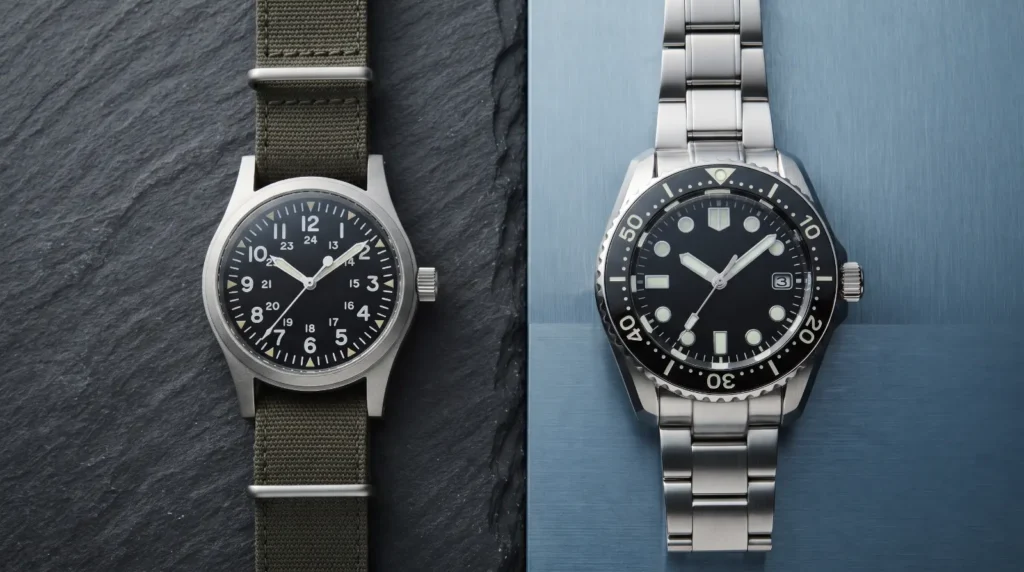
Field watches emphasize legibility, lightness, compactness, and simplicity. Dive watches prioritize water resistance, rotating timing bezels, stronger underwater legibility, and construction intended for aquatic use.
If your weekend involves hiking, camping, travel, and general outdoor activity, a field watch can be the more comfortable option.
If your weekend involves actual diving or frequent swimming, choose a purpose-built dive watch instead.
Common Mistakes to Avoid
A field watch looks simple, but buying the wrong one is surprisingly easy.
Buying the Largest Case
More size does not automatically mean more toughness. A compact case with sensible proportions can be more comfortable and easier to wear all day.
Confusing Water Resistance With Dive Capability
A 100m-rated field watch is not automatically a dive watch. Water-resistance ratings should be considered alongside the manufacturer’s intended use.
Ignoring Thickness
A 40mm watch can wear beautifully if it is thin. A similar-diameter watch can feel bulky if it is thick and has long lugs.
Choosing Appearance Over Legibility
A complicated dial may look impressive in photographs. In actual use, a clean high-contrast dial is usually more useful.
Paying Extra for Features You Will Never Use
GMT hands, internal bezels, elaborate finishing, exhibition backs, and additional complications can be fun. But if you simply want a reliable outdoor watch, they are not necessarily improvements.
The Final Talk
The right field watch can become the one watch you never want to take off.The best field watch is not necessarily the most expensive or complicated. Hamilton’s Khaki Field Mechanical remains the top pick for classic field-watch appeal, while the Khaki Field Auto makes more sense as an everyday one-watch option. Seiko 5 Sports Field stands out for value, Marathon suits military-spec enthusiasts, and the Alpinist adds a more refined outdoor character.
Before you buy, think about how you will actually wear the watch. Choose the size, movement, durability, and style that fit your daily routine not simply the model that looks best in a product photo. That approach makes finding the right field watch much easier.
FAQs
A field watch is a practical, highly legible wristwatch traditionally influenced by military and outdoor requirements. It typically features Arabic numerals, luminous markers, a simple dial, and a durable case and strap.
Yes. Their compact proportions, simple styling, and strong legibility make them excellent everyday watches. Many modern examples can move easily between outdoor activities and casual office wear.
Around 36–40mm works well for many wrists, but diameter alone does not determine comfort. Lug-to-lug length and thickness can make an equally sized watch wear very differently.
They are water-resistant, but the level varies significantly between models. Always check the specific watch’s water-resistance rating and intended use rather than assuming every field-style watch is suitable for swimming.
Yes, if you appreciate traditional military styling and do not mind manually winding the watch. Its 38mm case, 9.5mm thickness, sapphire crystal, and 80-hour power reserve make it one of the strongest modern interpretations of the classic formula.
Discover More,
Automatic Watches for Men: Best Self-Winding Watches
Bulova Watches Men: Top Models for Every Budget
Digital Watches That Deserve a Place on Your Wrist
[author box]