
Some watches follow trends. The great ones become the trend.A watch does not need a huge case, a complicated dial, or the latest design to make an impression. The best classic watches earn their reputation by looking right year after year, thanks to balanced proportions, readable dials, useful complications, and designs that remain relevant as tastes change.
From the affordable Seiko Presage to the unmistakable Cartier Tank, we’ve rounded up 7 timeless watches worth knowing in 2026. You’ll also find practical buying tips to help you choose a watch that fits your style, wrist, and daily routine—not simply the biggest name on the dial.
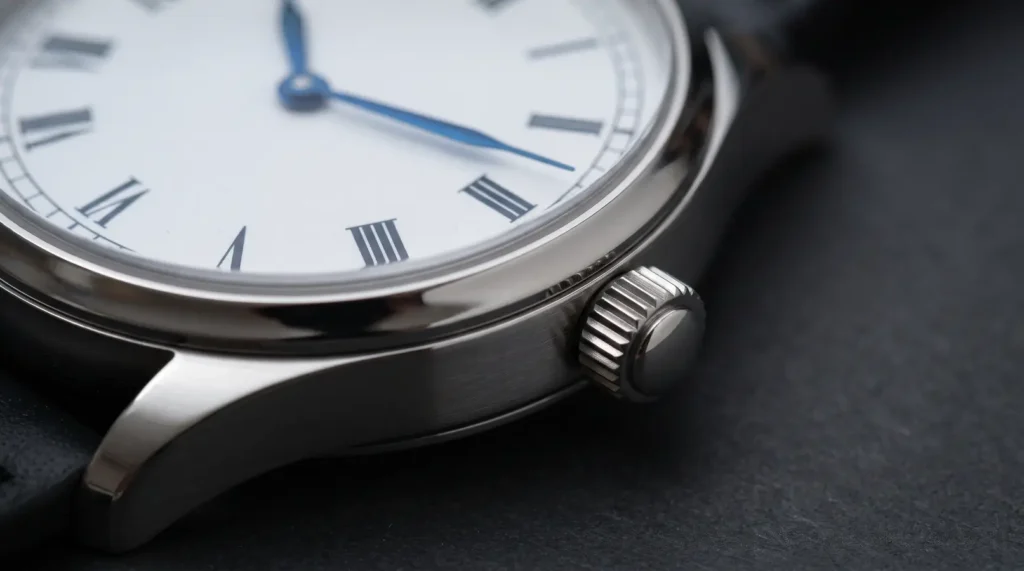
What Makes a Watch Truly Classic?
A classic watch is usually defined by longevity rather than age. It can be a decades-old model such as the Rolex Datejust or a modern watch deliberately built around traditional proportions and styling.
The strongest designs tend to have balanced cases, readable dials, versatile straps or bracelets, and enough personality to remain recognizable without looking tied to one particular fashion cycle. The Rolex Datejust is a useful example: Rolex describes it as its archetypal classic watch, and the design has continued from its 1945 introduction while receiving modern technical updates.
For practical buying purposes, look at:
- Case proportions: Diameter matters, but lug-to-lug length and thickness matter just as much.
- Dial design: Clean markers, restrained text, and balanced spacing tend to age well.
- Movement: Automatic and hand-wound calibers add mechanical appeal, while quartz prioritizes convenience.
- Materials: Sapphire crystal is a useful modern upgrade, while steel keeps many traditional designs practical.
- Versatility: A watch that works with a shirt, jeans, and business-casual clothing has a better chance of staying in rotation.
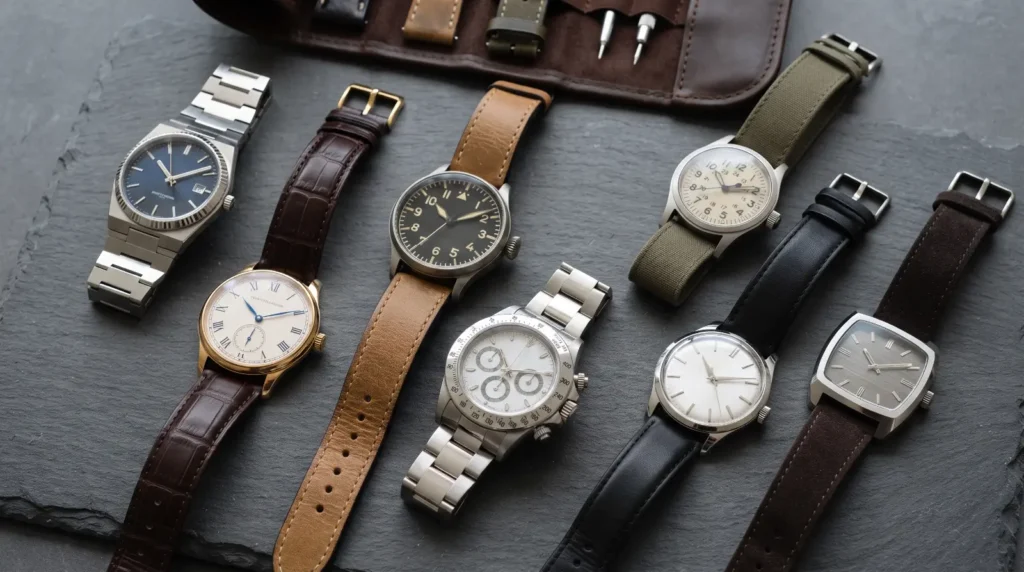
7 Timeless Watches Worth Considering
The best choice depends heavily on your budget and how you plan to wear it. Rather than treating every classic design as interchangeable, these seven watches cover different styles, price levels, and reasons to buy.
1. Seiko Presage Cocktail Time — Best Affordable Dress Classic
The Seiko Presage Cocktail Time is a strong entry point if you want traditional watch styling without jumping into luxury-watch pricing. Its dial is the star: textured, reflective, and more visually interesting than the typical plain dress watch.
The SRPD37, for example, uses Seiko’s automatic Caliber 4R35 with manual winding, approximately 41 hours of power reserve, a 40.5mm stainless-steel case, and 5-bar water resistance. It uses Hardlex rather than sapphire, which is one of the compromises at this price. Seiko lists the model at $450 on its U.S. site.
Specs at a glance:
| Specification | Seiko Presage Cocktail Time SRPD37 |
|---|---|
| Movement | Automatic 4R35 |
| Case size | 40.5mm |
| Power reserve | Approx. 41 hours |
| Crystal | Box-shaped Hardlex |
| Water resistance | 5 bar |
| Approx. U.S. price | $450 listed by Seiko |
| Best for | Affordable dress wear |
Why buy it: You get mechanical-watch character and a distinctive dressy dial at a relatively accessible price.
Watch-out: The 40.5mm case and 47.5mm lug-to-lug length can feel larger than expected on a smaller wrist.
2. Tissot Gentleman Powermatic 80 — Best Everyday Classic
If you want one traditional-looking watch that can handle much more than office wear, the Tissot Gentleman makes a strong case. Its design is deliberately restrained, but it has enough water resistance and modern construction to function as a genuine daily watch.
The current 40mm Gentleman Powermatic 80 uses a Swiss automatic movement, sapphire crystal, a 316L stainless-steel case, and 100-meter water resistance. Tissot also lists up to 80 hours of power reserve for the Powermatic 80 movement.
Why buy it: It sits between a dress watch and a sports watch, making it especially useful if you do not want separate watches for work and weekends.
Watch-out: Its understated design is a strength for versatility, but collectors looking for a highly distinctive silhouette may find it too conservative.
3. Hamilton Khaki Field Mechanical — Best Vintage-Inspired Field Watch
Classic does not have to mean formal. The Hamilton Khaki Field Mechanical brings the same timeless philosophy into a military field-watch format.
The current 38mm version uses Hamilton’s hand-wound H-50 movement, an 80-hour power reserve, sapphire crystal, and 50-meter water resistance. Hamilton describes the model as a faithful recreation of its 1960s forebear and connects the collection to its military-watch heritage.
The appeal is the simplicity. The dial is highly legible, the case is compact, and the hand-wound movement makes wearing the watch feel more interactive.
Why buy it: It is a classic field-watch formula without unnecessary decoration.
Watch-out: Manual winding is part of the charm, but it is not ideal if you want a completely hands-off ownership experience.
4. Cartier Tank Must — Best Dress Classic
Few watches have a silhouette as immediately recognizable as the Cartier Tank. Cartier traces the Tank design to 1917, and its rectangular geometry has remained remarkably consistent through more than a century of variations.
The small Tank Must is particularly interesting because it shows how a classic dress watch does not need a mechanical movement. The current small steel version uses high-autonomy quartz, measures 29.5mm by 22mm, is 6.6mm thick, and has approximately 30 meters of water resistance.
Why buy it: The proportions, Roman numerals, sword-shaped hands, and rectangular case give it a visual identity that very few watches can replicate.
Watch-out: The small Tank is a dress watch, not a sports watch. Its modest water resistance means swimming is not the right use case.
5. Rolex Datejust 36 — Best All-Round Luxury Classic
The Datejust is arguably the clearest example of how a watch can evolve without losing its identity. Introduced in 1945, it combined self-winding, waterproof construction, chronometer certification, and a date display at 3 o’clock.
The current Datejust 36 measures 36mm and uses Rolex’s self-winding Caliber 3235. Depending on the reference, it can feature an Oyster or Jubilee bracelet and different bezel configurations. Rolex lists 100-meter water resistance and a scratch-resistant sapphire crystal with the familiar Cyclops date magnifier.
Why buy it: It can move from a suit to casual clothing without looking out of place, and its proportions have proven unusually durable.
Watch-out: The Datejust is recognizable enough that it can feel too conventional if you want something visually unusual.
6. Omega Speedmaster Moonwatch — Best Classic Chronograph
A classic watch does not have to be a simple three-hander. The Omega Speedmaster demonstrates how a chronograph can become timeless through history, design continuity, and real technical purpose.
The modern Moonwatch Professional remains a 42mm manually wound chronograph powered by the Co-Axial Master Chronometer Calibre 3861. Current versions have 50-meter water resistance, while sapphire- and Hesalite-crystal variants remain available. Omega’s published specifications identify the 3861 as a hand-wound chronograph movement with a 50-hour power reserve and Master Chronometer certification.
The black dial, three-register layout, tachymeter bezel, and twisted-lug case make it recognizable from across a room.
Why buy it: It gives you genuine chronograph history without relying on a purely vintage watch.
Watch-out: At 42mm, it wears differently from smaller dress classics. The case is also relatively substantial, so wrist size should be part of the decision.
7. Jaeger-LeCoultre Reverso Classic — Best Art Deco Classic
The Reverso takes a completely different route to timeless design. Its rectangular Art Deco case and reversible construction were created in 1931 to protect the watch during polo matches.
The current Reverso Classic Monoface Small Seconds measures 40.1mm by 24.4mm and 7.56mm thick. It uses the manually wound Calibre 822, offers approximately 42 hours of power reserve, and has 3-bar water resistance.
Why buy it: The reversible case gives it genuine historical purpose rather than being decorative vintage styling.
Watch-out: Its relatively low water resistance makes it a poor choice for someone who wants a carefree sports or swimming watch.
Classic Watch Comparison
| Watch | Style | Movement | Case | Water Resistance | Best For |
|---|---|---|---|---|---|
| Seiko Presage Cocktail Time | Dress | Automatic | 40.5mm | 50m | Affordable dress wear |
| Tissot Gentleman | Everyday | Automatic | 40mm | 100m | One-watch collection |
| Hamilton Khaki Field Mechanical | Field | Hand-wound | 38mm | 50m | Casual and outdoors |
| Cartier Tank Must | Dress | Quartz | 29.5 × 22mm | 30m | Formal and refined wear |
| Rolex Datejust 36 | Luxury everyday | Automatic | 36mm | 100m | Versatile luxury |
| Omega Speedmaster Moonwatch | Chronograph | Hand-wound | 42mm | 50m | Motorsport and space heritage |
| JLC Reverso Classic | Dress/Art Deco | Hand-wound | 40.1 × 24.4mm | 30m | Distinctive formal wear |
How to Choose the Right Timeless Watch
The biggest mistake is choosing a watch because it looks classic in a photograph. A watch can have beautiful proportions and still be wrong for your wrist, wardrobe, or daily routine.
Start with these five questions:
- How will you wear it? A Tank or Reverso makes more sense for dress-focused use, while a Tissot Gentleman or Datejust is easier as an everyday watch.
- Do you want mechanical or quartz? Mechanical watches offer the appeal of traditional watchmaking. Quartz is generally easier to live with.
- What case size actually fits? Measure your wrist and pay attention to lug-to-lug length, not diameter alone.
- Do you need meaningful water resistance? For swimming and regular water exposure, choose a watch designed with that use in mind rather than assuming 30 or 50 meters makes every activity safe.
- Can you live with the maintenance? Mechanical watches require periodic servicing. Quartz watches are usually simpler for owners who prioritize convenience.
Why Proportions Matter More Than Trends
A 38mm watch can look completely different from another 38mm watch. Case shape, bezel width, dial opening, lug length, thickness, and bracelet integration all affect how the watch appears on the wrist.
This is one reason older designs continue to work. Their appeal often comes from proportion rather than novelty. The Reverso’s rectangular architecture, the Tank’s geometric simplicity, and the Datejust’s familiar round Oyster case all have strong visual identities that do not depend on oversized dimensions or complicated displays.
For smaller wrists, compact cases such as a 36mm Datejust or the dimensions of the Tank Must can be particularly easy to wear. Larger wrists can accommodate watches such as the 42mm Speedmaster more naturally, although lug-to-lug remains important.
Common Mistakes to Avoid
Classic designs can make buying decisions feel simpler than they actually are. Avoid these common mistakes before spending serious money.
- Choosing diameter alone: A 40mm watch with long lugs can wear larger than a compact 41mm design.
- Assuming classic means formal: Field watches and chronographs can be classic without being dress watches.
- Ignoring crystal type: Sapphire offers excellent scratch resistance, while Hardlex and Hesalite have different characteristics and trade-offs.
- Treating water resistance as universal protection: A rating is not a guarantee that every type of water exposure is appropriate.
- Buying only for brand recognition: The most famous name is not automatically the best match for your wrist or wardrobe.
- Ignoring servicing: A mechanical watch is a long-term ownership object, not simply a piece of jewelry.
Are Classic Watches Still Worth Buying in 2026?
Yes, provided you buy for design and wearability rather than the idea that every older-looking watch is automatically valuable. The strongest traditional models have remained relevant because their proportions, functions, and visual language continue to work.
There is also a practical advantage: a restrained watch can survive changes in clothing and fashion better than a highly trend-driven design. That makes a well-chosen timeless piece particularly useful as a first serious watch.
For expensive purchases, buy from an authorized retailer or a reputable specialist and verify the reference, serial information, movement, condition, and service history where applicable. Rolex, for example, explicitly recommends its official retailer network for authenticity and maintenance.
The Final Talk
A great classic watch doesn’t chase trends it outlasts them.The best timeless watch is not always the most expensive one. A Seiko Presage can deliver refined dress-watch character, while a Tissot Gentleman can make more sense if you want one versatile daily watch. At the luxury end, the Cartier Tank, Rolex Datejust, Omega Speedmaster, and Jaeger-LeCoultre Reverso each bring a distinct take on enduring design.
If you want a watch that still feels right years from now, focus on proportions, readability, comfort, movement, and everyday wearability. These are the details that keep a classic watch relevant long after the excitement of a new release fades.
FAQs
Classic watches are timepieces built around enduring designs, balanced proportions, recognizable styling, and practical functions. They can include dress watches, field watches, everyday watches, and chronographs, with classic watches often remaining relevant across changing trends.
A Rolex Datejust, Tissot Gentleman, or similarly versatile three-hand watch can work well for everyday use. The right choice depends on your budget, wrist size, preferred movement, and how much water resistance you need.
No. Classic styling can be paired with automatic, hand-wound, or quartz movements. The Cartier Tank Must is a good example of a historically important design that is available with a quartz movement.
The Seiko Presage Cocktail Time and Hamilton Khaki Field Mechanical are two strong starting points. The Seiko offers a dressier aesthetic, while the Hamilton leans toward military field-watch styling.
Yes. A 36mm case can be extremely versatile because it sits comfortably between smaller vintage proportions and larger modern watches. The current Rolex Datejust 36 demonstrates that traditional sizing remains part of the modern luxury-watch market.
Discover More,
Best Automatic Watches: 10 Picks From $200 to $1,000+
8 Best GUESS Watches for Men & Women in 2026
Citizen Automatic Watches: 7 Best Models Worth Buying in 2026
[author box]