
Some watches get old. Others become icons. Vintage Seiko watches belong firmly in the second group.From faded bezels and naturally aged dials to legendary mechanical movements, these watches carry a character that modern recreations can struggle to match. The best vintage Seiko watches stand out for their historical importance, distinctive designs, serviceable movements, and wearable proportions.
This guide covers seven iconic references, including the 62MAS, 6105, 6139, King Seiko, and Lord Marvel, while showing you what makes each one interesting and what to check before buying.
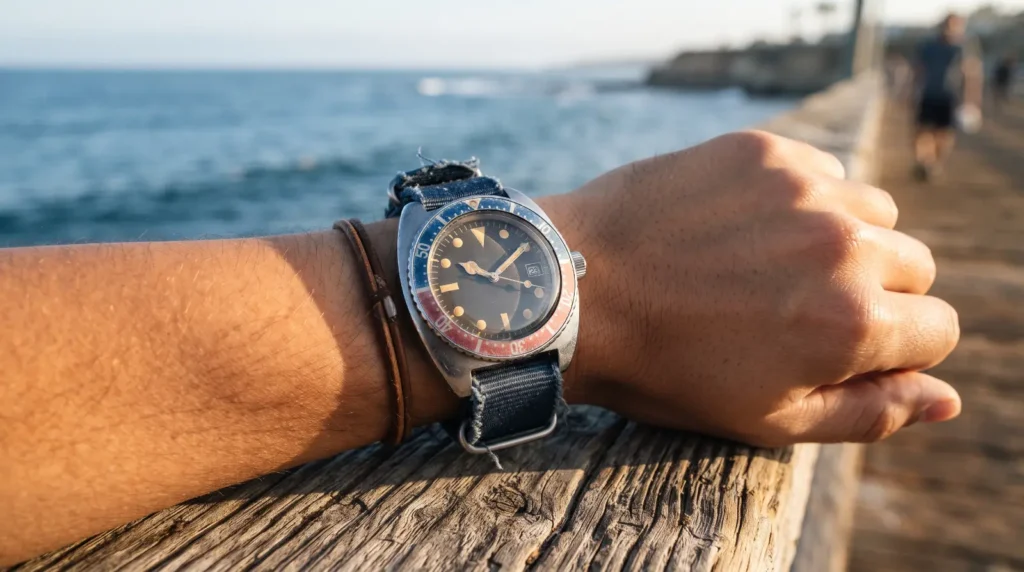
Why Vintage Seiko Still Matters
Seiko’s vintage period was unusually productive. During the 1960s and 1970s, the company developed everything from high-end mechanical watches to professional divers, automatic chronographs, and quartz technology.
Grand Seiko launched in 1960 as Seiko’s precision-focused flagship, while King Seiko followed in 1961. Seiko then pushed into automatic chronographs and professional diving watches later in the decade.
That variety is what makes collecting older Seikos so interesting. You can find a small dress watch, a chunky diver, a colorful chronograph, or a technically ambitious mechanical piece without leaving the brand.
More importantly, many references have recognizable designs that influenced later Seiko collections.
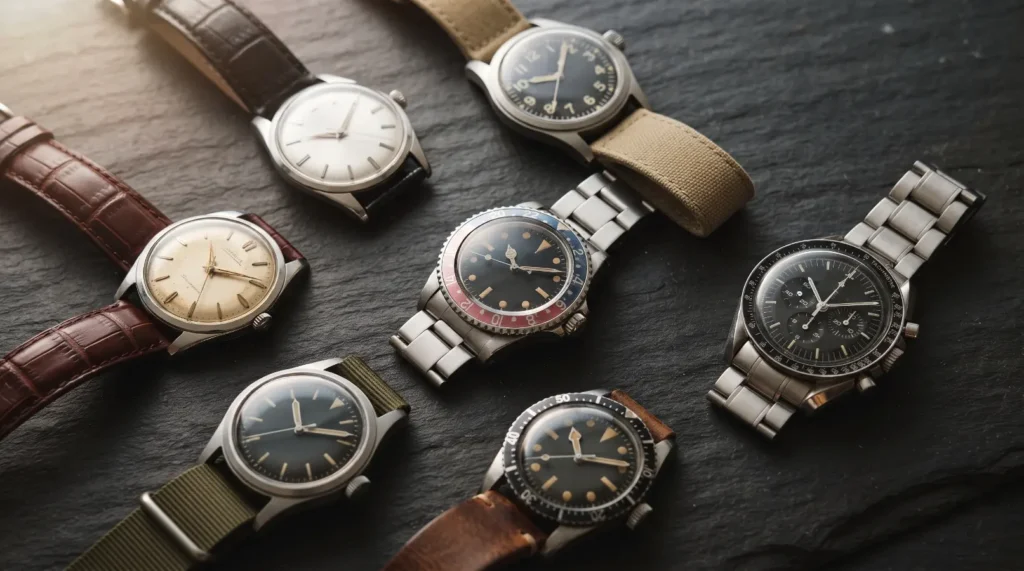
7 Vintage Seiko Models Worth Knowing
There is no single “best” vintage reference. A diver collector will want something very different from someone looking for a slim dress watch.
The seven below cover different sides of Seiko’s vintage identity and give buyers a useful starting point.
1. Seiko 62MAS 6217-8000/8001: The Foundational Diver
The 62MAS is one of the most important early Seiko divers. Introduced in the 1960s, it established a design direction that influenced generations of Seiko dive watches.
Its appeal comes from its straightforward tool-watch character. The dial is highly legible, the rotating bezel gives it obvious diving-watch DNA, and the relatively restrained case makes it easier to wear than some later professional models.
The downside is the collector market. Original examples in strong condition can be expensive, and originality matters enormously.
Best for: Collectors who want an important early Seiko diver.
Look for: Original dial, correct hands, bezel condition, case integrity, and evidence of professional servicing.
Fratello’s historical buying guide places original 62MAS examples in a substantially higher price bracket than many other vintage Seiko divers, particularly when condition is strong.
2. Seiko 6105-8110/8119: The Captain Willard
Few vintage Seikos have a stronger visual identity than the 6105.
Its asymmetrical cushion-shaped case, protected crown, black dial, and rotating bezel give it an instantly recognizable profile. The later 6105-8110/8119 is also associated with Martin Sheen’s watch in Apocalypse Now, which helped turn the model into a collector icon.
The 6105 was produced from the late 1960s into the 1970s, and the reference has become one of Seiko’s most recognizable vintage divers.
This is a watch where condition can change the buying equation dramatically. A heavily polished case can destroy much of the character that makes the model desirable.
Best for: Buyers who want an iconic vintage diver with a military and cinematic connection.
Watch out for: Refinished cases, replacement bezels, incorrect hands, aftermarket crystals, and watches assembled from mixed parts.
3. Seiko 6139 Chronograph: The Pogue
The 6139 is where Seiko’s vintage story gets particularly interesting.
Released in 1969, the automatic 6139 chronograph became part of the race to develop the world’s first automatic chronograph. Its integrated movement used a vertical clutch and column wheel, making the caliber an important piece of mechanical-chronograph history.
The famous yellow-dial version became known as the “Pogue” after astronaut William Pogue wore a 6139 during NASA’s Skylab 4 mission. That connection gives the watch an unusual combination of space history and Japanese mechanical watchmaking.
The design is also unmistakably 1970s: bold colors, a compact sports case, and a busy chronograph dial.
Best for: Chronograph collectors and anyone who wants a conversation-starting vintage Seiko.
Watch out for: Non-original dials, incorrect bezels, replacement hands, and chronograph mechanisms that have not been properly serviced.
4. Seiko 6138 Bullhead: The Unusual Chronograph
If the 6139 feels too conventional, the 6138 Bullhead goes in the opposite direction.
Its defining feature is the unusual placement of the chronograph pushers and crown toward the top of the case. The resulting shape gives the watch a distinctly 1970s motorsport personality.
The 6138 family is historically significant because Seiko’s automatic chronographs from this period represented a major technical step for the company.
It is also a watch that needs the right buyer. The case is visually distinctive and wears differently from a conventional chronograph.
Best for: Collectors who prefer unusual designs over traditional proportions.
Watch out for: Over-polished cases, damaged chronograph components, and replacement dial furniture.
5. King Seiko KSK: The Vintage Dress Choice
King Seiko is the answer for buyers who associate vintage Seiko only with divers and chronographs.
The collection began in 1961 as a high-end mechanical line and developed alongside Grand Seiko. The second-generation KSK arrived in 1965 and became particularly notable for its angular case design and hacking seconds.
The KSK has a sharper, more formal personality than the typical vintage Seiko sports watch. Its relatively clean dial and faceted case work especially well with a leather strap.
It also represents an important chapter in Seiko’s history. Grand Seiko and King Seiko were developed through different Seiko production organizations, creating a fascinating period of internal competition and technical development.
Best for: Buyers who want a vintage Japanese dress watch with genuine historical importance.
Watch out for: Polishing that has softened the original case lines and replacement dials.
6. Lord Marvel 5740: The Sleeper Dress Watch
The Lord Marvel is less famous than the 62MAS or 6105, but that is part of its appeal.
It belongs to the era when Seiko was aggressively developing mechanical precision and design. The Lord Marvel sits between everyday Seiko models and the more prestigious Grand Seiko and King Seiko families.
Later high-beat versions are particularly interesting to collectors because they demonstrate how far Seiko was pushing mechanical accuracy before quartz transformed the industry.
The styling is also easier to wear than many vintage sports references. A clean Lord Marvel can work with office clothing, casual shirts, or a simple leather strap.
Best for: Buyers who want an understated vintage mechanical watch rather than a famous collector icon.
7. Seiko 6309 Diver: The Practical Vintage Pick
The 6309 is one of the most accessible ways to experience classic Seiko diver design.
Its cushion-shaped case, large hands, rotating bezel, and distinctive dial layout give it plenty of vintage personality without reaching the collector intensity of the earliest divers.
The model is often associated with the “Turtle” nickname because of its rounded cushion case.
For a first vintage Seiko, that combination can be attractive. You get a recognizable design and a huge enthusiast community, while the model is generally easier to understand than rare early references.
Best for: Buyers who want a vintage diver to actually wear.
Watch out for: Water resistance should never be assumed simply because the original watch was designed as a diver. An old case, gasket, crown, or crystal can compromise modern water resistance.
Vintage Seiko Watches Compared
| Model | Style | Main Appeal | Best For | Buying Difficulty |
|---|---|---|---|---|
| 62MAS | Diver | Early Seiko dive history | Serious collectors | High |
| 6105 | Diver | Iconic case and Apocalypse Now connection | Vintage dive fans | High |
| 6139 | Chronograph | Automatic chronograph and space history | Chronograph collectors | High |
| 6138 Bullhead | Chronograph | Unusual 1970s design | Design-focused collectors | High |
| King Seiko KSK | Dress | Angular Japanese dress-watch design | Everyday vintage wear | Medium-High |
| Lord Marvel | Dress | Mechanical history and understated style | Vintage beginners | Medium |
| 6309 | Diver | Classic Turtle design | First-time vintage buyers | Medium |
Prices vary widely by reference, originality, condition, service history, and market. Recent buying guides show that some vintage Seikos can still be relatively accessible while historically important or highly original examples can move into the thousands of dollars.
What Makes an Old Seiko Valuable?
Age alone does not make a vintage watch valuable.
A 50-year-old Seiko with an incorrect dial, replacement hands, heavily polished case, and unknown mechanical condition can be less desirable than a less rare reference that retains its original components.
Collectors usually pay close attention to several factors.
Originality
Original parts matter. A correct dial, handset, bezel, crown, bracelet, and case can make a major difference to collector appeal.
Replacement parts are not automatically bad. A new crystal or gasket can make a watch more practical. The important distinction is whether the seller clearly identifies replaced components.
Condition
Patina can be attractive, but damage is different.
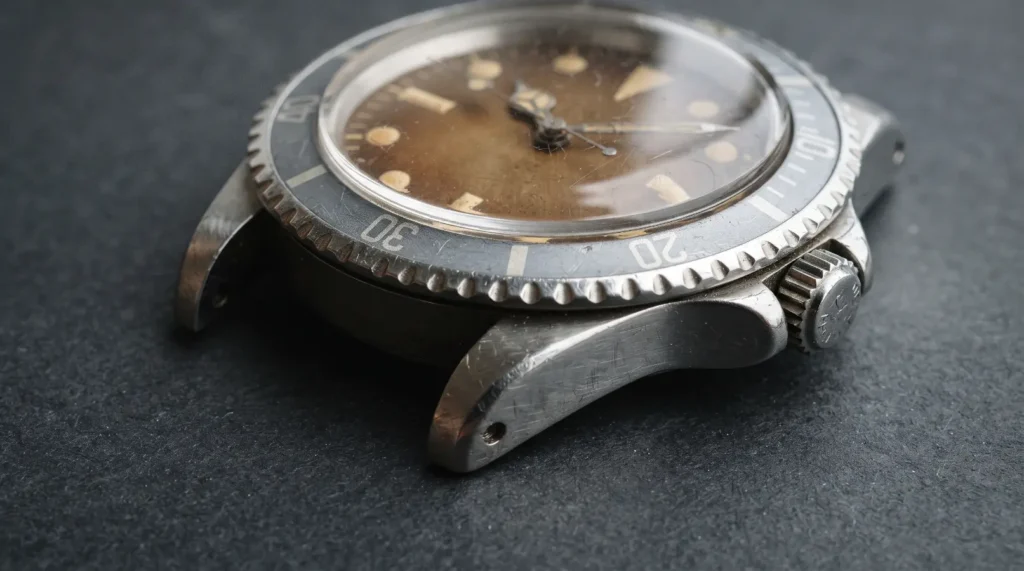
Natural dial aging, faded bezels, and small scratches may contribute to character. Deep corrosion, badly damaged threads, moisture damage, or excessive polishing can create genuine problems.
Service History
Mechanical watches need maintenance, and vintage examples deserve particular attention.
Ask whether the movement has been serviced, what was replaced, and whether the watch is keeping time consistently. A seller who cannot answer basic service questions deserves additional scrutiny.
Rarity
Rare does not automatically mean better.
Some obscure references are difficult to service because parts are scarce. A slightly less rare model with strong parts availability can make a more practical vintage purchase.
How to Check a Vintage Seiko Before Buying
Buying an old mechanical watch is different from ordering a new Seiko from an authorized retailer.
The biggest mistake is falling in love with the dial before examining the watch underneath it. Vintage Seikos are especially susceptible to replacement parts and “Frankenwatch” builds because many references share components or have had decades of repairs.
Before buying, check:
- Dial: Look for refinishing, incorrect fonts, unusual printing, or suspiciously perfect lume.
- Hands: Compare their shape and lume with the correct reference.
- Case: Check whether the original angles and brushing remain.
- Caseback: Reference and serial information should make sense for the watch.
- Movement: Confirm that the caliber matches the reference and inspect its condition.
- Bezel: Replacement bezels can look convincing in photographs.
- Crown: Check whether it is correct and whether the threads operate properly.
- Crystal: Scratches are replaceable, but chips and cracks can allow moisture inside.
- Bracelet: An original bracelet can add collector value, but a good replacement is preferable to a dangerous worn-out one.
- Service: Ask for documentation whenever the seller claims recent servicing.
For expensive references, photographs alone are not enough. A knowledgeable vintage Seiko dealer or watchmaker can save you from an expensive mistake.
Should You Wear a Vintage Seiko Every Day?
You can, but the watch should first pass a mechanical and case-condition check.
Vintage water resistance is the biggest issue. A watch that originally carried a substantial water-resistance rating may no longer provide anything close to that protection after decades of wear.
Treat an untested vintage watch as splash-sensitive rather than dive-ready.
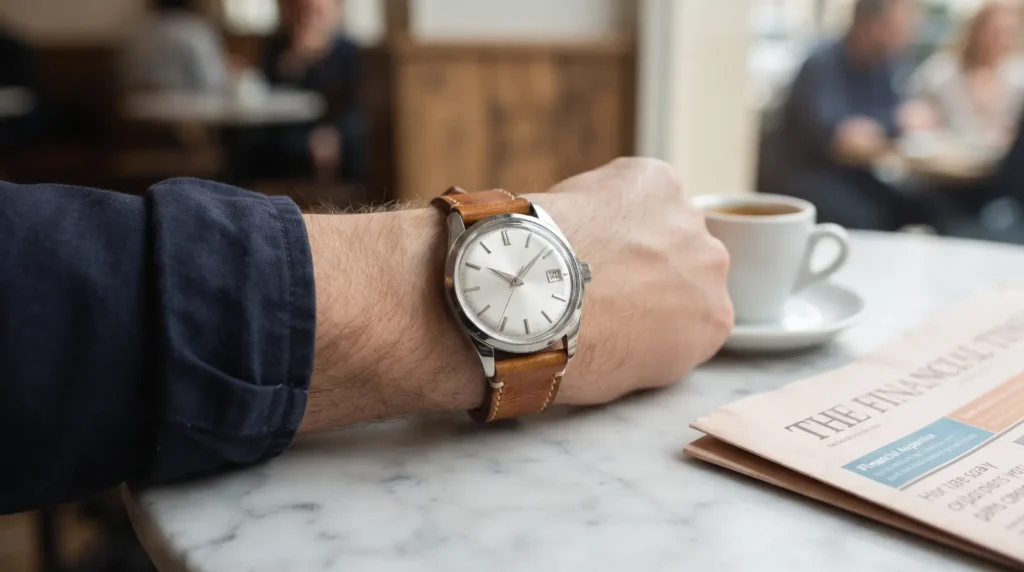
Daily wear also depends on the model. A 6309 or 6105 has a natural sports-watch personality, while a King Seiko or Lord Marvel makes more sense with office or dress clothing.
The safest approach is simple: service the movement, inspect the seals, check the crystal and crown, and have water resistance tested where appropriate.
Common Mistakes to Avoid
Vintage Seiko collecting becomes much easier once you know which mistakes cost the most money.
Buying the Story Instead of the Watch
A famous nickname such as “Pogue” or “Captain Willard” can make a watch exciting. It does not prove that the particular example is original.
Assuming Patina Means Originality
A faded dial can look old without being original. Refinished vintage dials can sometimes imitate aged surfaces surprisingly well.
Ignoring Polishing
Sharp case geometry is part of what makes many 1960s and 1970s Seikos attractive. Excessive polishing can erase those defining lines.
Treating Vintage Water Resistance Like Modern Water Resistance
Do not take an old dive watch swimming simply because its original specifications say 150 meters. The present condition of the seals and case is what matters.
Buying Without a Service Budget
The purchase price is only part of the cost. Vintage movements may need cleaning, lubrication, replacement parts, regulation, or more substantial repairs.
Where Vintage Seiko Makes Sense in a Collection
The strongest reason to buy an older Seiko is variety.
Modern watches can reproduce the visual language of the 1960s and 1970s, but an original vintage watch carries actual history. The 62MAS represents an early chapter in Seiko’s dive-watch development. The 6139 captures the company’s automatic-chronograph breakthrough. King Seiko shows the refined side of Japanese mechanical watchmaking.
That makes vintage Seiko particularly interesting for someone building a collection around Japanese watch history rather than simply accumulating modern watches.
Seiko’s own historical records confirm just how much technological development happened during this period, including Grand Seiko in 1960, King Seiko in 1961, and the company’s automatic chronograph and quartz breakthroughs in 1969.
The Final Talk
The right vintage Seiko isn’t just an old watch; it’s a piece of Japanese watchmaking history you can still wear.Vintage Seiko collecting is less about finding the oldest watch and more about finding the right example. The 62MAS brings early dive-watch history, the 6105 delivers unmistakable character, and the 6139 combines 1970s style with an important place in automatic chronograph history.
King Seiko and Lord Marvel offer a quieter route for collectors who prefer refined mechanical watches over famous sports references. Before you buy, prioritize originality, case condition, movement health, and service history. A clean, honest example will usually be more rewarding than a rare reference hiding questionable replacement parts.
FAQs
Yes, provided you buy the individual watch rather than relying only on the model’s reputation. Originality, condition, movement health, service history, and seller credibility can make a bigger difference than age alone.
The 6105 is one of the most recognizable vintage Seiko watches, particularly the 6105-8110/8119 associated with the “Captain Willard” nickname. The earlier 62MAS is more historically important as one of Seiko’s foundational professional dive-watch designs.
The 6139 is historically significant among vintage Seiko watches because Seiko introduced its automatic chronograph movement in 1969, during the industry’s race toward the first automatic chronographs. Its connection to astronaut William Pogue adds another layer of historical interest.
When buying vintage Seiko watches, prioritize an original dial, correct hands and bezel, healthy case geometry, matching movement and reference information, and evidence of proper servicing. A watch with documented maintenance is generally easier to evaluate than one with an unknown history.
Do not assume that you can. Even if the original model was rated for substantial water resistance, decades-old gaskets, crowns, crystals, and cases may no longer provide adequate protection.
Discover More,
Deep Blue Watches: 5 Tough Picks for Serious Divers
Piaget Watches: 7 Iconic Luxury Picks for 2026
Smart Watches for Women: 7 Stylish Smart Picks for 2026
[author box]