
What if the most interesting watch on your wrist is the one nobody saw coming?Fears watches take a refreshingly different approach to luxury, combining genuine British heritage, small-batch production, refined designs, and a deep connection to Bristol. Founded in 1846 and revived in 2016 by sixth-generation family descendant Nicholas Bowman-Scargill, Fears now creates everything from understated dress watches to capable modern sports pieces.
The big question is whether Fears is worth choosing over better-known Swiss names. If you value distinctive design, finishing, British character, and independent watchmaking more than maximum movement specs for the money, the answer may be yes. With models ranging from around $2,900 to $34,200, the collection offers far more variety than its quiet reputation suggests.suggests.
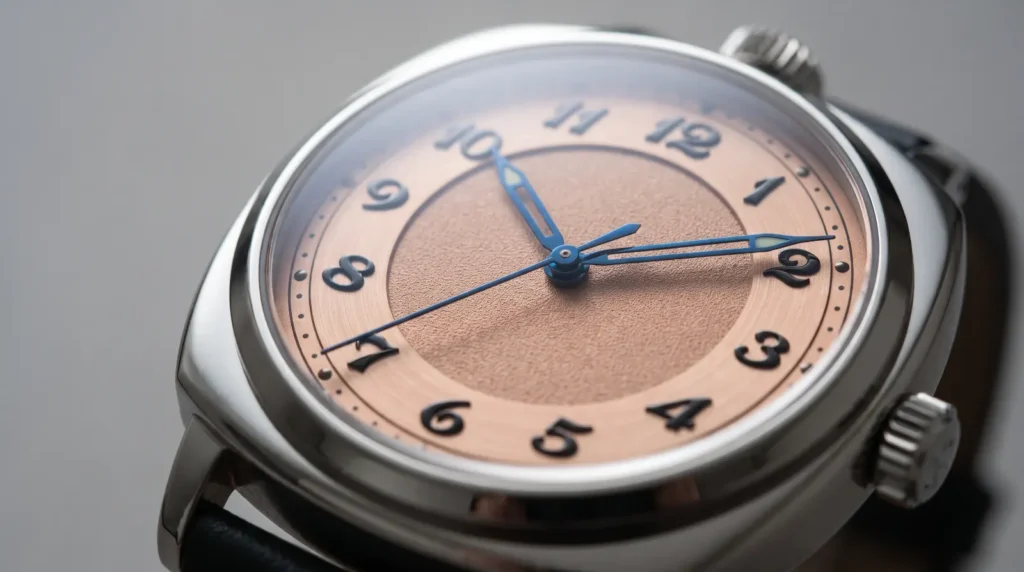
What Makes Fears Watches Different?
The biggest appeal is surprisingly simple: Fears has developed a recognizable design language without trying to imitate the usual luxury-watch playbook. Cushion cases, pipette-style hands, carefully finished dials, vintage references, and restrained proportions give the collection a personality that feels distinctly British rather than generically “luxury.”
The interesting part is the balance. Fears uses Swiss mechanical movements in many models, but the watches are hand built and finished in Britain, with the company openly presenting its watches as a blend of British craftsmanship and specialist international suppliers. That honesty is important because buyers are paying for the complete watchmaking experience, not merely the movement inside.
The result is compelling for collectors who want something less obvious. You are unlikely to confuse a Brunswick with a mainstream sports watch, and that individuality is arguably one of Fears’ strongest advantages.
Fears History: From 1846 to a Modern British Revival
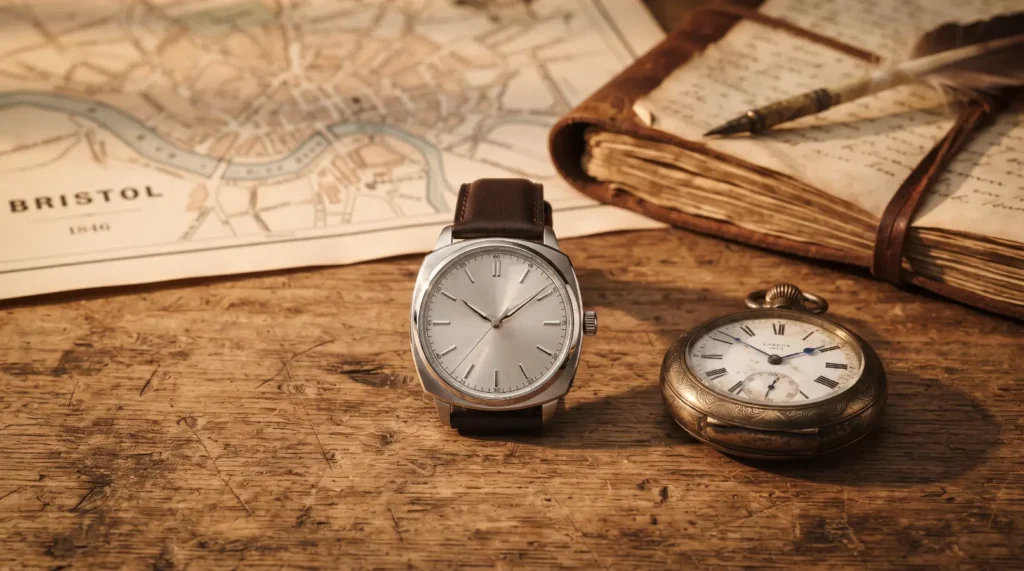
The story starts in Bristol in 1846, when Edwin Fear established his workshop and showroom on Redcliff Street. The family business grew through the following decades before eventually closing in the late 1970s.
The remarkable twist came in 2016. Nicholas Bowman-Scargill, Edwin Fear’s sixth-generation descendant, revived the company after working as a watchmaking apprentice at Rolex in London. The first modern Fears wristwatch was the Redcliff, followed by the Brunswick in 2017.
Fast forward to 2026, and Fears is celebrating its 180th anniversary while continuing to build watches in Britain. The brand has also expanded beyond its original dress-oriented identity with sportier Redcliff and Brunswick variants, alongside its highly complicated perpetual calendar.
What Are the Best Fears Watches to Buy?
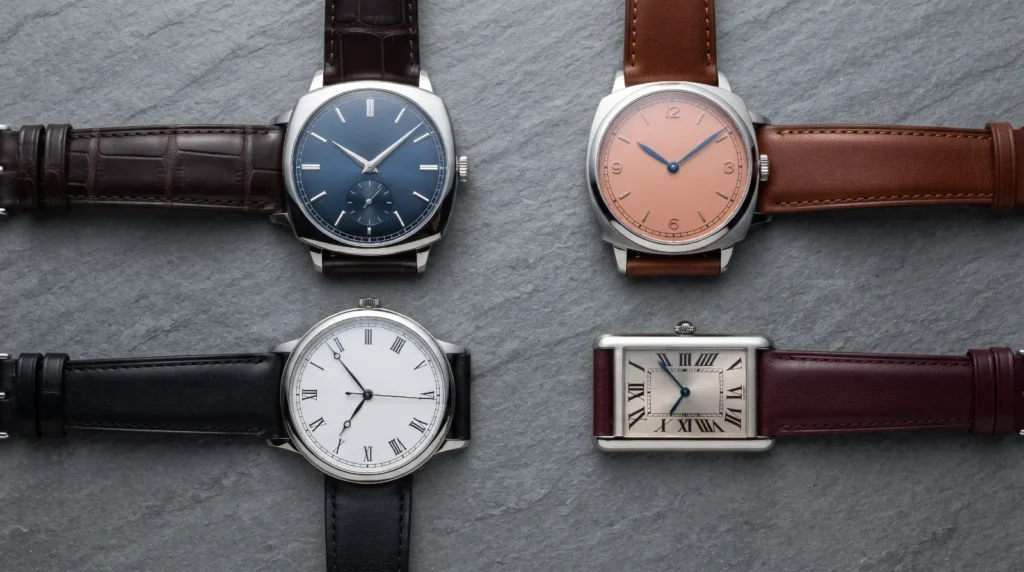
The short answer is that the Brunswick remains the safest starting point, while the Redcliff makes more sense for someone wanting a contemporary everyday watch. The Jump Hour adds serious personality, the Filton brings useful sportiness, and the Perpetual Calendar shows just how far the modern company has progressed.
Here are five particularly interesting choices.
1. Brunswick 38 White — Best Overall
The Brunswick 38 White is the watch to look at first if you want the purest expression of modern Fears. Its compact cushion-shaped case, restrained white dial, traditional hands, and manual-winding architecture create a watch that feels elegant without becoming precious.
The payoff is versatility. At 38mm, it has the kind of restrained wrist presence that works especially well with tailoring, knitwear, or a simple shirt, while the cushion case prevents it from looking like another generic round dress watch.
Key specs:
- Case: 38mm stainless steel
- Movement: Manual-winding mechanical
- Crystal: Sapphire
- Water resistance: 100m
- Price: From about $3,100
- Best for: Dressy everyday wear and collectors who want classic Fears design
Fears currently lists the Brunswick 38 White from $3,100 in its U.S. collection.
2. Redcliff 39.5 Date — Best Everyday Choice
Here’s the practical pick: the Redcliff 39.5 Date is easier to recommend as a one-watch collection than many of the brand’s more formal models. It keeps Fears’ design character but moves toward a contemporary round case, automatic winding, a date display, and a bracelet option.
The standout advantage is capability without visual aggression. The current Pewter Grey version measures 39.5mm, uses a Swiss La Joux-Perret G100 automatic movement with a 68-hour power reserve, and offers 150m of water resistance.
Key specs:
- Case: 39.5mm stainless steel
- Movement: La Joux-Perret G100 automatic
- Power reserve: 68 hours
- Water resistance: 150m
- Crystal: Sapphire
- Price: Around $3,100–$3,300 depending on version
- Best for: Everyday wear and one-watch collections
The important detail is the bracelet’s micro-adjust capability on the current Date model. That makes it a more practical everyday proposition than some beautifully designed watches that sacrifice fit for appearance.
3. Brunswick 40 Filton — Best Sporty Fears Watch
The surprise here is how naturally the classic Brunswick architecture adapts to a pilot-inspired format. The Filton uses oversized Arabic numerals, luminous details, and a 150m water-resistance rating while keeping the distinctive cushion case that makes the collection recognizable.
The Raven Black version is especially convincing if you want one watch that can move between casual and slightly dressier settings. It is more assertive than the Brunswick 38, but it still avoids the oversized, tactical look common among modern pilot watches.
Key specs:
- Case: 40mm stainless steel
- Movement: La Joux-Perret G100 automatic
- Power reserve: 68 hours
- Water resistance: 150m
- Strap/bracelet: Leather or stainless steel options
- Price: From about $3,500
- Best for: Everyday sportier wear
The catch is that the 40mm cushion case has more wrist presence than the 38mm Brunswick. If you have a smaller wrist or prefer understated proportions, the smaller model remains the safer choice.
4. Brunswick 40.5 Jump Hour — Best Conversation Starter
Want something genuinely different? The Jump Hour is where Fears stops playing it safe. Instead of presenting the time in the conventional way, the complication creates a more unusual display while retaining the signature Brunswick case.
The current collection includes versions such as China Blue and Barleycorn Plum, with U.S. pricing starting around $4,400.
Key specs:
- Case: 40.5mm
- Movement: Mechanical jump-hour configuration
- Water resistance: Varies by specification
- Price: From about $4,400
- Best for: Collectors who want unusual complications and colorful design
The big advantage is personality. A conventional three-hand watch can disappear into a collection, but a well-executed jump-hour display gives the watch a reason to be there.
5. Brunswick 39 Perpetual Calendar — Best Haute Horlogerie Choice
The headline-grabber is the Brunswick 39 Perpetual Calendar. This is not simply a more expensive Brunswick; it represents Fears moving decisively into high-complication territory.
The watch uses a Swiss-made Dubois Dépraz 55115 automatic movement with a perpetual calendar and moonphase, plus a solid 18ct gold rotor and a 47-hour power reserve. Its calendar is designed to account for varying month lengths and leap years without requiring regular correction, with the system requiring adjustment only around 2100.
Key specs:
- Case: 39mm stainless steel
- Movement: Dubois Dépraz 55115 automatic
- Power reserve: 47 hours
- Functions: Perpetual calendar and moonphase
- Water resistance: 50m
- Price: $34,200 including VAT on the U.S. site
- Production: Maximum 25 pieces per year
The biggest limitation is obvious: this is a serious luxury purchase. Fears says the 2026 allocation has already sold out, with 2027 pre-orders being taken.
Fears Watch Comparison: Which One Fits You?
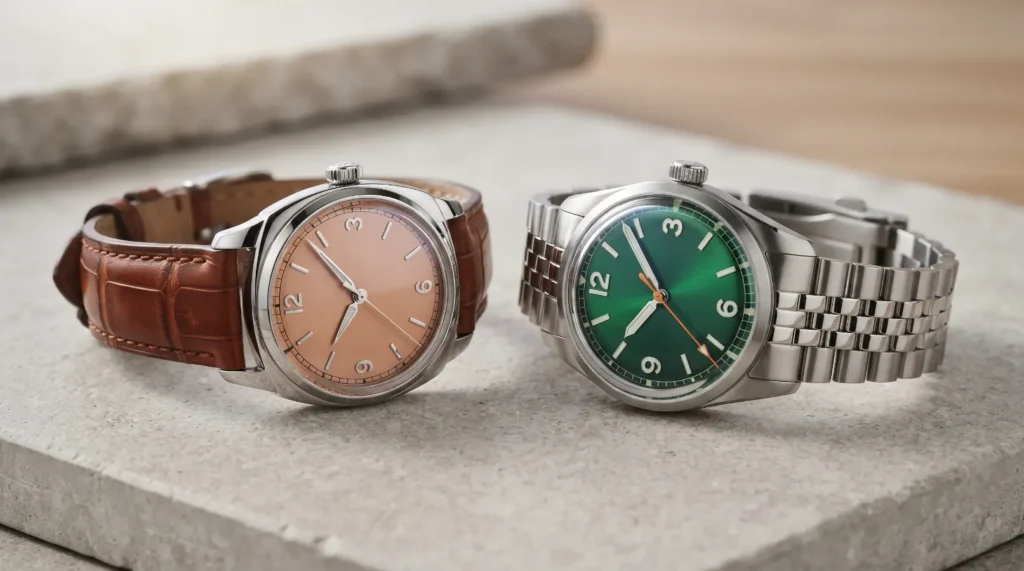
The easiest way to understand the current lineup is to stop thinking about the watches as competing directly with one another. Each serves a different collector.
| Model | Size | Movement | Water Resistance | Approx. U.S. Price | Best For |
|---|---|---|---|---|---|
| Brunswick 38 White | 38mm | Manual mechanical | 100m | From $3,100 | Classic everyday/dress |
| Redcliff 39.5 Date | 39.5mm | LJP G100 automatic | 150m | From ~$3,100 | One-watch collection |
| Brunswick 40 Filton | 40mm | LJP G100 automatic | 150m | From ~$3,500 | Sporty everyday wear |
| Brunswick 40.5 Jump Hour | 40.5mm | Mechanical | Model-dependent | From ~$4,400 | Collectors |
| Brunswick 39 Perpetual Calendar | 39mm | Dubois Dépraz automatic | 50m | $34,200 incl. VAT | High-end collecting |
Prices and specifications are based on Fears’ current product listings and can change as individual editions sell through.
Are Fears Watches Worth the Money?
The honest answer is yes, but only if you understand what you are paying for. Fears is not trying to win a specification contest against mass-produced Swiss brands, and comparing one purely by movement cost misses the point.
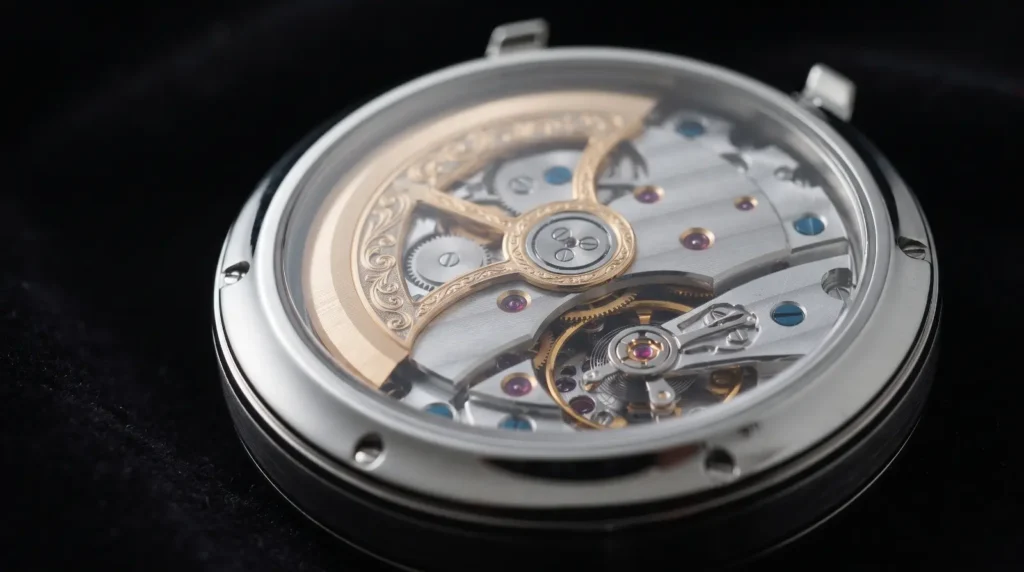
The value proposition comes from design originality, small production, hand finishing, British assembly, detailed dials and hands, historical continuity, and the experience of owning an independent watch. The company even makes certain hands in Britain, while individual models combine British finishing with Swiss movements and components from specialist suppliers.
The downside is equally clear. A buyer focused primarily on movement prestige or maximum specifications per dollar can find better-equipped alternatives elsewhere. Some enthusiasts have also questioned whether the pricing is high relative to the underlying movement, while owner discussions show that bracelet fit can be a concern on certain models.
That tension is actually useful when shopping. If you care about the story, design, finishing, and rarity, Fears makes a strong case. If you only care about the caliber inside the case, there are easier brands to justify.
Fears vs. Christopher Ward: Which Is Better?
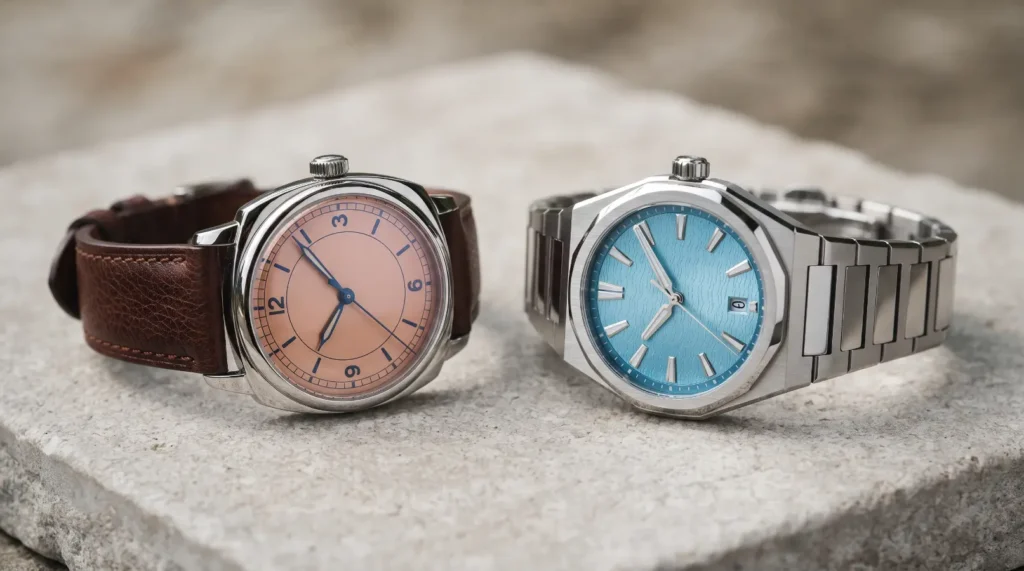
The comparison is revealing because both brands demonstrate that British watchmaking does not have to mean traditional dress watches. Christopher Ward generally offers a broader range and stronger specification-per-dollar proposition, while Fears leans harder into restrained design, hand finishing, heritage, and low-volume production.
The better choice depends on the buying motive. Christopher Ward makes more sense for someone hunting for technical value, modern sports watches, and a wide selection. Fears makes more sense for someone who wants an object with a stronger sense of place and a much smaller production footprint.
The bottom line is simple: choose Christopher Ward for specification and range; choose Fears for character and exclusivity.
How to Choose the Right Fears Model
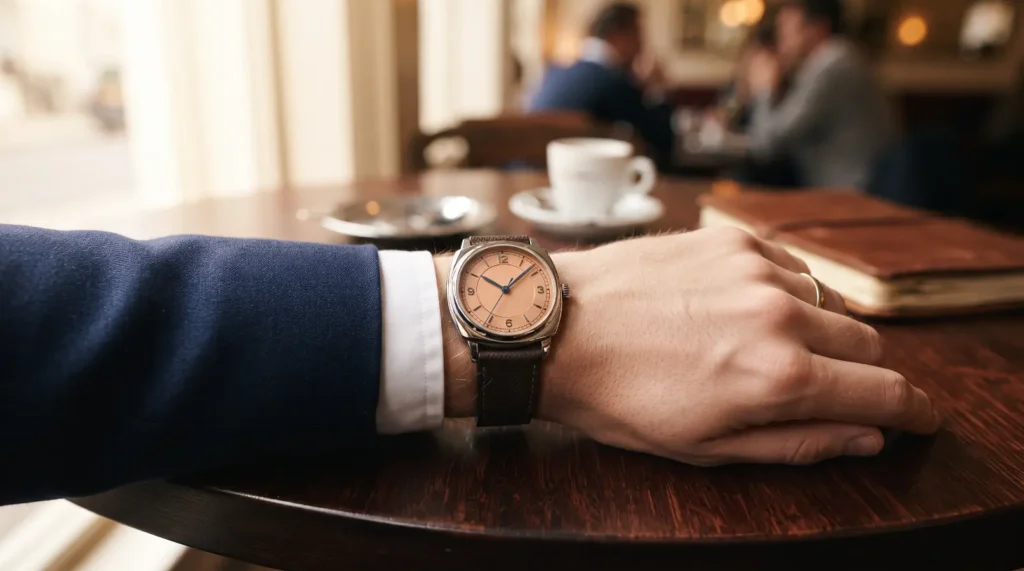
The smartest approach is to decide how you intend to wear the watch before falling for a particular dial. Fears offers enough variety now that the wrong model can be an expensive mistake.
Start with these questions:
- Do you want classic or contemporary? Choose the Brunswick 38 for traditional Fears styling or the Redcliff for a more modern everyday profile.
- Do you need higher water resistance? The Redcliff Date and Filton offer 150m, making them more practical for active daily wear.
- Do you prefer manual or automatic? The traditional Brunswick models are ideal if you enjoy winding a watch, while the Redcliff and Filton are easier daily automatics.
- How large does your watch need to wear? Do not judge only by diameter. Cushion cases can create more wrist presence than a similarly sized round watch.
- Are you buying for practicality or collecting? The Redcliff is easier to justify as a daily watch; the Jump Hour and Perpetual Calendar are much more collection-driven choices.
Common Mistakes to Avoid
The first mistake is buying a Fears purely because the name has 180 years of history. The company has genuine heritage, but the modern brand was re-established in 2016, so the current watches should be judged on their own merits as well as their historical connection.
The second mistake is assuming every model is equally sporty. A 100m-rated Brunswick can handle considerably more daily life than a fragile dress watch, but the 50m Perpetual Calendar is clearly aimed at a different kind of ownership.
The third mistake is ignoring fit. The elegant cushion cases can wear differently from round watches of the same diameter, while bracelet adjustment can matter enormously for all-day comfort. Recent owner discussion around bracelet fit is a useful reminder that a beautiful watch still needs to sit properly on your wrist.
Finally, do not overlook the production model. Some Fears pieces are produced in tiny numbers, while others are part of continuing collections. Check whether the watch is a regular-production model, limited edition, discontinued piece, or allocation-only complication before assuming availability or future value.
The Final Talk
The best Fears watch isn’t the one with the biggest specs it’s the one you’ll never get tired of looking at.Fears has successfully revived its British heritage without feeling stuck in the past. The Brunswick 38 is the sweet spot for most buyers, while the Redcliff 39.5 Date is the smarter everyday choice.For collectors, the Brunswick 39 Perpetual Calendar shows how far the brand has come. Each model brings its own personality, making Fears an appealing choice for buyers who want something beyond the usual luxury names.
If individuality matters as much as craftsmanship, Fears is a brand worth knowing. It may not be the obvious choice but that’s exactly what makes it interesting.Fears isn’t just bringing British watchmaking back t’s making it worth watching again.
FAQ
Yes. Fears produces well-finished mechanical watches with distinctive British design, hand-built production, sapphire crystals on many models, and Swiss mechanical movements. The main criticism is value: prices can be high compared with watches using similar base movements.
Fears describes its watches as hand built in Britain. However, individual components and movements come from specialist suppliers in countries including Switzerland, Germany, Hong Kong, and elsewhere, depending on the model.
Fears occupies the independent luxury and high-end British watchmaking space. Its current range extends from roughly $2,900 Redcliff models to the $34,200 Brunswick 39 Perpetual Calendar, so the collection covers several levels of luxury positioning.
The Brunswick is arguably the defining modern Fears model because it was introduced shortly after the company’s 2016 revival and remains central to the collection. Its cushion-shaped case has become one of the brand’s signature design elements.
No. Fears is a British watch company that hand builds its watches in Britain, while many movements and components are sourced internationally. Swiss-made movements are used in several current models.
Discover More,
Cheap Watches That Look More Expensive
Square Watches: Best Styles, Top Picks & Buying Guide
Sell Watches for the Best Price
[author box]