
The best dive watches combine underwater capability, everyday comfort, and a design that never goes out of style. Whether you’re exploring the ocean or simply want a rugged watch for daily wear, the right model should offer excellent legibility, reliable water resistance, a secure fit, and a functional rotating bezel.
Dive watches are purpose-built sports watches designed for underwater use, typically featuring luminous hands and markers, a timing bezel, and substantial water resistance. In 2026, the best options range from affordable Japanese favorites to premium Swiss timepieces. The key is finding a watch that matches your budget, wrist size, and lifestyle without paying extra for features you don’t need.
What Is a Dive Watch?
A dive watch is a timepiece designed to help divers track elapsed time underwater while remaining readable and functional in demanding conditions. Traditional models feature a unidirectional rotating bezel, high-contrast dial, luminous markers, and a case engineered for water pressure.
Many modern examples also have sapphire crystals, screw-down crowns, stainless steel bracelets, or rubber straps. However, a sporty design alone does not make a watch suitable for scuba diving.
A proper dive watch is generally built to the ISO 6425 standard or an equivalent manufacturer specification. If you intend to use one underwater, check the model’s actual certification and operating instructions rather than relying on its appearance.
A Brief History of Underwater Timepieces
The development of the modern diver was driven by a practical problem: divers needed to measure elapsed time reliably without losing track of their underwater activity.
During the 1950s, brands such as Blancpain and Rolex helped establish the design language associated with professional diving instruments. Seiko introduced its first commercial diver in 1965, creating a foundation for the Japanese manufacturer’s long-running Prospex collection.
Over time, these watches moved beyond professional diving. Their robust cases, contrasting dials, and versatile styling made them popular with collectors and everyday wearers.
Today, the category includes everything from inexpensive quartz watches to sophisticated mechanical instruments with ceramic bezels and extended power reserves. The best choice is not necessarily the most expensive or the one with the highest depth rating.
Key Features That Define a Quality Underwater Watch
Understanding a few essential specifications will help you distinguish a genuinely useful diver from a watch that merely looks rugged.
Water Resistance: 200m vs. 300m
Water resistance is one of the first specifications buyers compare, but a higher number does not automatically mean a better watch.
- 100m: May suit swimming and surface water activities when the manufacturer permits them, but is not the default choice for scuba diving.
- 200m: A common specification for recreational diving watches, provided the model is appropriately designed and rated for that purpose.
- 300m or more: Offers additional pressure capability, often appealing to serious enthusiasts and professional-style watch buyers.
A rating in meters represents a standardized pressure rating, not a promise that the watch is safe at that exact depth under every circumstance. Crown position, seal condition, impacts, and maintenance all matter.
For actual diving, look for a watch explicitly intended for the activity and follow its manufacturer’s guidance.
The Unidirectional Rotating Bezel
The bezel is the defining feature of a traditional diver. Its markings allow the wearer to track elapsed time by aligning the zero marker with the minute hand.
A unidirectional bezel rotates in only one direction, so an accidental movement generally indicates more elapsed time rather than less. That conservative behavior is important when tracking a dive.
A quality bezel should offer distinct clicks, secure alignment, and markings that remain easy to read. Excessive play or a difficult grip can make a watch frustrating to use.
Luminous Hands and Hour Markers
Underwater visibility changes rapidly as light decreases. Strong luminous material on the hands, hour markers, and bezel pip makes elapsed time easier to read in low-light conditions.
Look for clear contrast between the dial and its markings. A colorful dial can look excellent in photographs, but legibility should come before decoration on a functional diver.
Automatic, Quartz, or Solar Movement?
The movement determines how a watch keeps time and how much maintenance it requires.
- Automatic: Uses motion from the wearer’s wrist to power a mechanical movement. It appeals to enthusiasts but may need periodic servicing and time-setting.
- Quartz: Runs on a battery and generally offers excellent convenience and accuracy with relatively little maintenance.
- Solar-powered: Converts light into electrical energy, reducing the need for conventional battery replacements.
None is automatically superior for diving. Choose the mechanism that best suits your preferences, ownership habits, and budget.
Case Size, Crystal, and Strap
A large case may look authentic to the category but can be uncomfortable on a smaller wrist. Case diameter is only part of the equation: lug-to-lug length and thickness determine how the watch sits on your arm.
Sapphire crystal generally offers stronger scratch resistance than mineral crystal, although it can still be damaged by a hard impact. Stainless steel is a versatile case material, while titanium offers lower weight at a higher price in many models.
For straps, rubber is practical around water, while a steel bracelet works well for daily wear. Whichever you choose, make sure the clasp and fit are secure.
7 Best Dive Watches to Consider in 2026
The following selection covers several budgets and ownership styles, from a value-focused Japanese automatic to a more refined Swiss sports watch. Specifications can vary by reference, and prices change with region, retailer, and promotions, so confirm the exact configuration before purchasing.
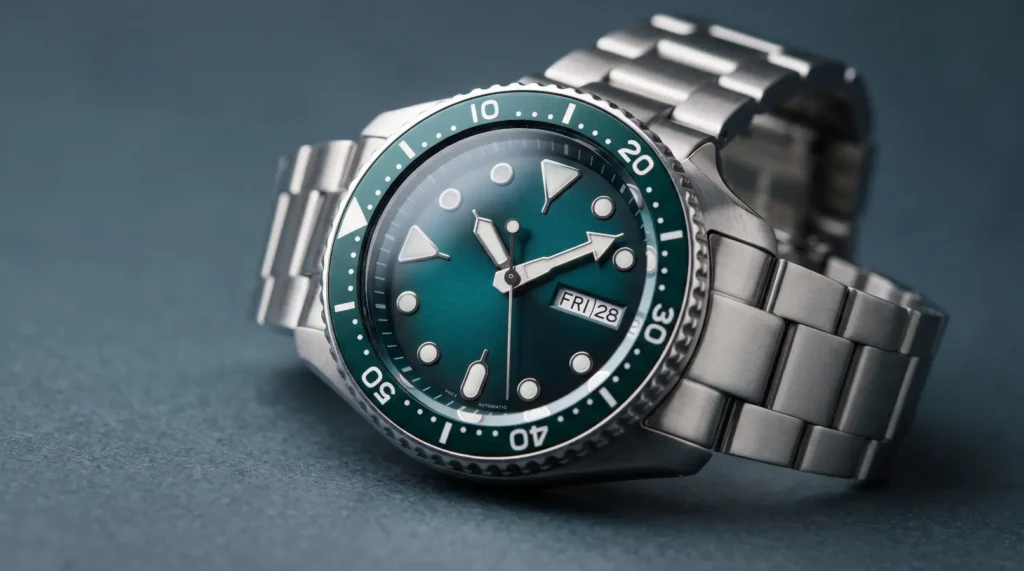
1. Orient Kamasu: Best Value Automatic
The Orient Kamasu is an excellent starting point for anyone who wants mechanical watchmaking without moving into expensive Swiss territory. Its appeal comes from a useful combination of an automatic movement, sapphire crystal, and traditional diver styling.
The green and blue dial versions are particularly attractive if you want something more distinctive than a plain black watch.
Key specifications
- Movement: Orient F6922 automatic
- Case diameter: Approximately 41.8mm
- Water resistance: 200m
- Crystal: Sapphire
- Power reserve: Approximately 40 hours
- Typical price tier: A few hundred US dollars, depending on configuration and retailer
Orient lists the Kamasu with a 200m rating, screw-down crown, and unidirectional bezel.
RA-AA0005B39B RA-AA0005B19A – Orient Watch USA
+1
Why it makes the list: The Kamasu delivers the core features many buyers actually want without charging a premium for a famous logo. Its main drawback is the relatively substantial case and conventional bracelet finishing, which may not feel as refined as more expensive alternatives.
Best for: First-time automatic buyers, budget-conscious collectors, and anyone seeking an everyday sports watch.
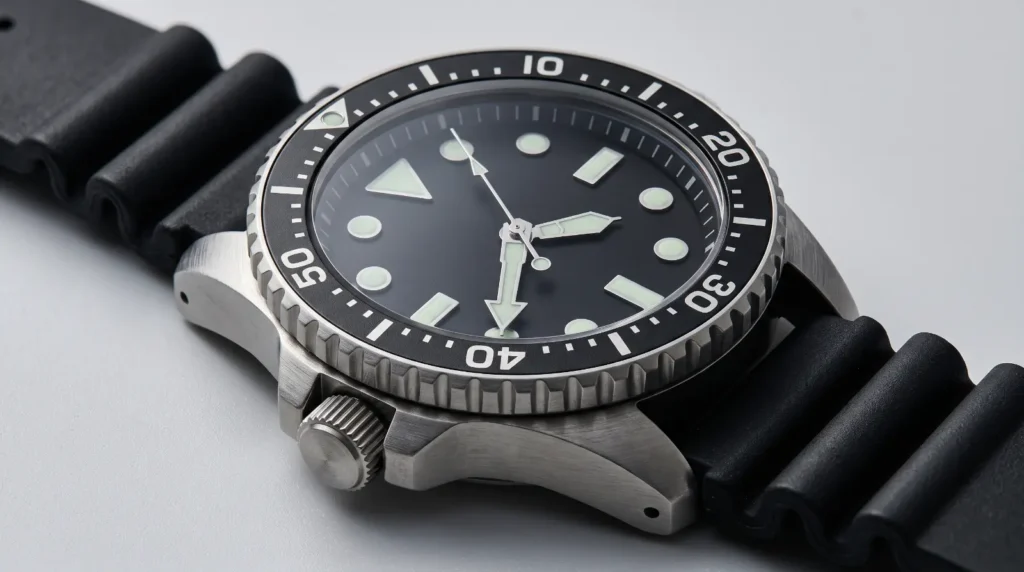
2. Citizen Promaster Diver: Best Practical Quartz Choice
The Citizen Promaster Diver is a strong choice for people who want a practical watch rather than another hobby to maintain.
Selected BN0150-series models combine Citizen’s light-powered Eco-Drive technology with a robust diving-oriented design. That means ordinary light can keep the watch running, so routine battery changes are generally unnecessary.
Key specifications
- Movement: Eco-Drive light-powered quartz on applicable references
- Case diameter: Approximately 44mm on the BN0150 reference
- Water resistance: 200m on the BN0150 reference
- Crystal: Mineral crystal on this reference
- Typical price tier: A few hundred US dollars, depending on the exact model and market
Why it makes the list: Its low-maintenance movement is ideal for someone who wants to pick up a watch and wear it. The trade-off is its relatively large case and less scratch-resistant crystal compared with sapphire-equipped rivals.
Best for: Everyday wear, travel, swimming, and buyers who prioritize convenience over mechanical movement appeal.
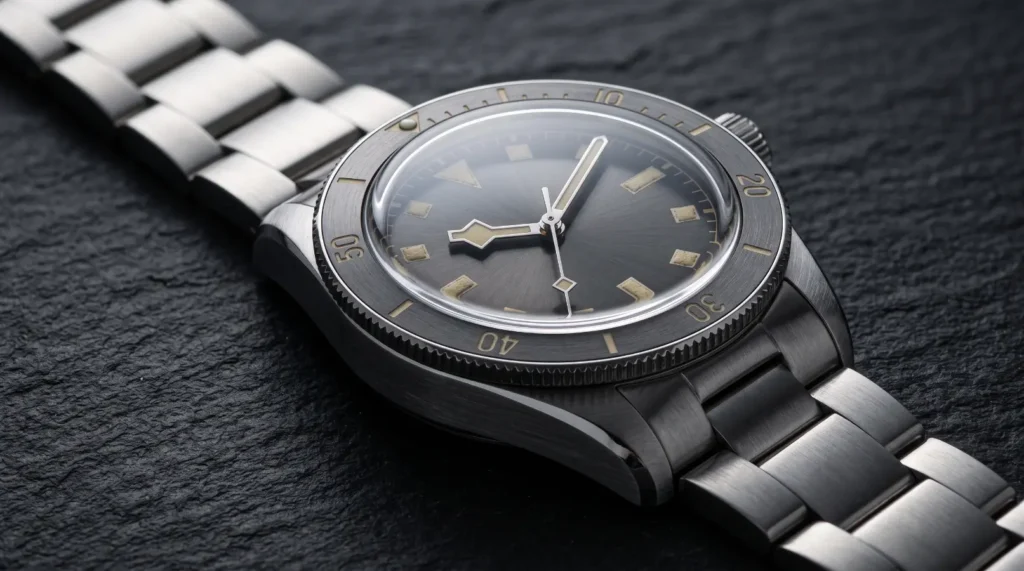
3. Seiko Prospex SPB143: Best Vintage-Inspired All-Rounder
The Seiko Prospex SPB143 takes inspiration from Seiko’s early diving-watch designs while giving the modern wearer a restrained, versatile appearance.
Its grey dial, steel case, and understated bezel make it easier to wear outside the water than many oversized, brightly colored sports watches. It is the kind of design that can transition from weekend clothing to a casual office without looking out of place.
Key specifications
- Movement: Seiko 6R35 automatic
- Case diameter: 40.5mm
- Water resistance: 200m
- Crystal: Sapphire
- Power reserve: Approximately 70 hours
- Typical price tier: Around the upper hundreds to low four figures in US dollars, depending on the market and condition
Published specifications for the SPB143 list its 40.5mm case, 200m water resistance, and 6R35 movement.
Ombré & Co.
+1
Why it makes the list: Its proportions and vintage-inspired styling are the major attractions. It looks considered rather than aggressively sporty, making it a strong option for a one-watch collection. The price is the main objection: cheaper divers can offer comparable basic functionality.
Best for: Collectors who value heritage-inspired design, versatile styling, and a mechanical movement.
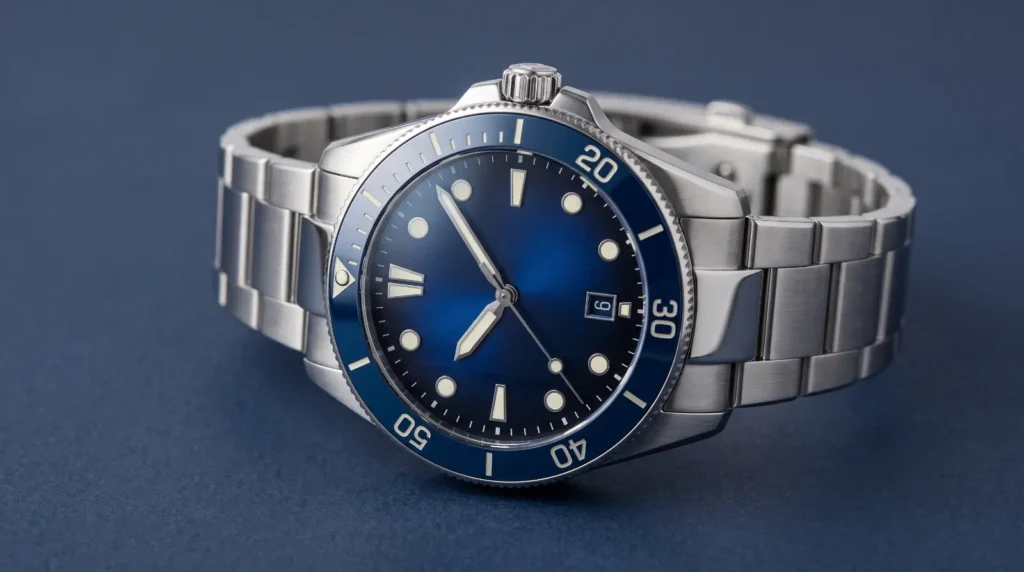
4. Tissot Seastar 1000 Powermatic 80: Best Swiss Automatic
The Tissot Seastar 1000 Powermatic 80 makes sense for buyers who want Swiss branding, a modern sports-watch appearance, and substantial technical specifications without immediately entering luxury-watch pricing.
The 43mm automatic version combines a ceramic bezel ring, sapphire crystal, screw-down crown, and 300m water resistance. Tissot also offers a 40mm automatic variant, which is worth considering if the larger model feels too dominant on your wrist.
Key specifications
- Movement: Swiss automatic Powermatic 80
- Case diameter: 43mm or 40mm, depending on reference
- Water resistance: 300m
- Crystal: Sapphire
- Power reserve: Up to 80 hours
- Typical price tier: Mid-hundreds to around US$1,000, depending on reference and retailer
The official Tissot specifications confirm the 43mm version’s 300m rating, sapphire crystal, ceramic bezel, and up-to-80-hour power reserve.
Tissot® Malaysia
+1
Why it makes the list: The longer power reserve is genuinely convenient if you rotate between watches. Its more substantial design and premium-looking materials are also appealing. However, the 43mm case and relatively heavy steel bracelet will not suit everyone.
Best for: Buyers wanting a Swiss automatic with strong specifications and contemporary styling.
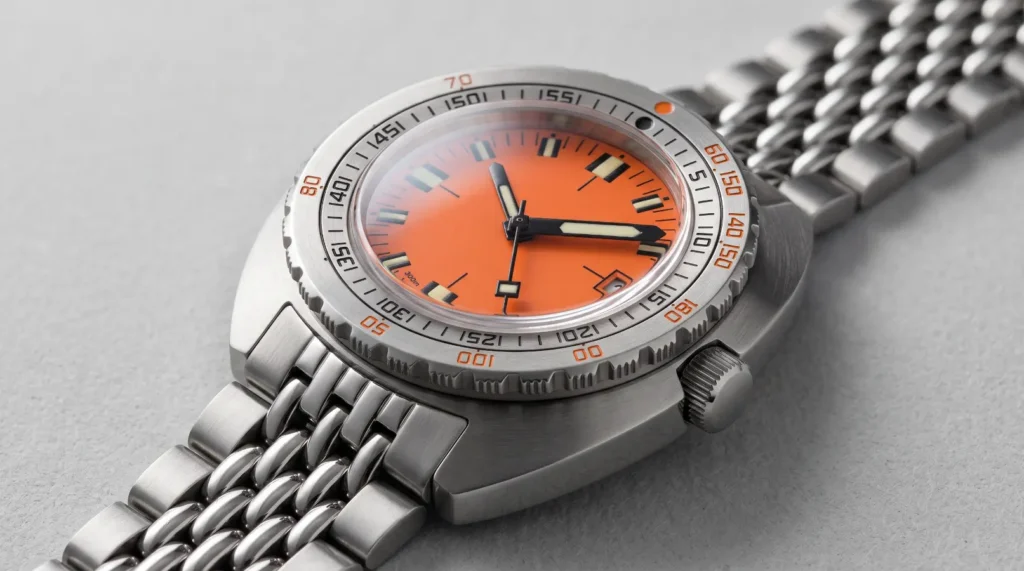
5. Doxa SUB 300: Best for Distinctive Diving-Watch Style
The Doxa SUB 300 takes a different approach from the familiar black-and-blue diver. Its distinctive dial colors, unmistakable case design, and diving heritage give it a strong identity.
Orange is the signature look many enthusiasts associate with Doxa, although the collection includes other dial colors. The design is a deliberate choice: it is for someone who wants a recognizable specialist watch rather than a discreet all-purpose sports model.
Key specifications
- Movement: Automatic Swiss movement; confirm the exact reference
- Case: Compact, cushion-shaped design
- Water resistance: 300m on the established SUB 300 models
- Typical price tier: Premium four-figure US-dollar territory, depending on version
Why it makes the list: Doxa offers genuine character in a market full of watches that resemble one another. The downside is versatility: the bold colors and distinctive case are not as understated as the Seiko SPB143, and the price requires a stronger commitment.
Best for: Enthusiasts who value diving heritage, unusual design, and a recognizable alternative to mainstream divers.
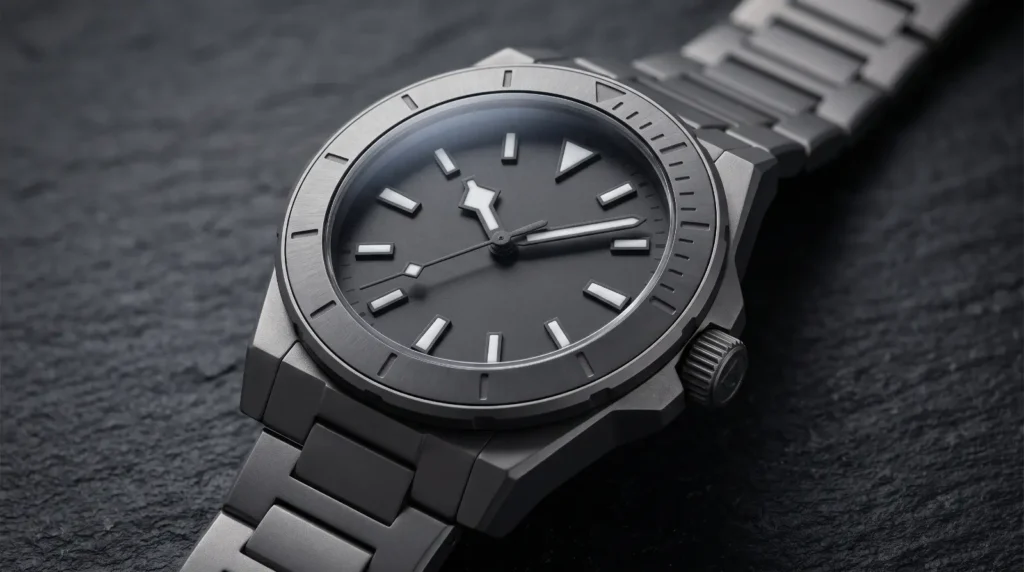
6. Oris Aquis Date: Best Refined Everyday Sports Watch
The Oris Aquis Date is a compelling choice if you want a robust underwater-oriented watch with a more integrated, contemporary appearance.
Its bracelet flows closely into the case, giving the watch a cohesive silhouette. Depending on the reference, buyers can choose different case sizes, dial colors, and movements. Some versions emphasize everyday value, while models fitted with Oris Calibre 400 offer a substantially longer power reserve.
Key specifications
- Movement: Automatic; caliber depends on the reference
- Case: Multiple sizes and configurations
- Water resistance: Commonly 300m on Aquis Date dive models
- Crystal: Sapphire on many current references
- Typical price tier: Generally low-to-mid four figures in US dollars, depending on model
Why it makes the list: The Aquis feels like a considered luxury sports watch rather than a basic tool watch. Its integrated-looking bracelet is also part of its identity. However, the design is less traditional than some divers, and the bracelet can limit the visual flexibility of the watch.
Best for: Buyers seeking a refined Swiss sports watch for work, travel, and water-related activities.
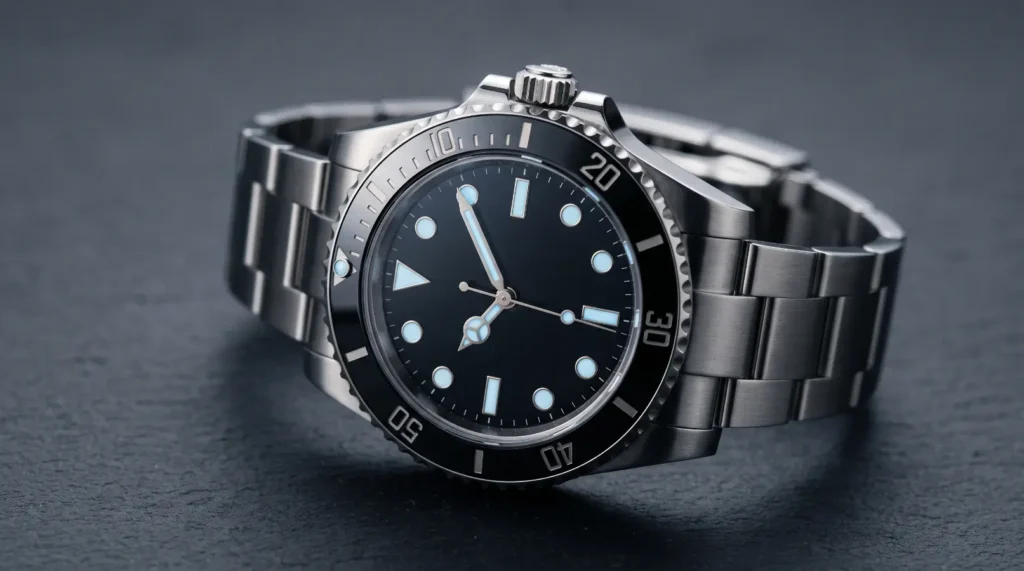
7. Rolex Submariner: Best Luxury Benchmark
The Rolex Submariner remains a benchmark because it combines a recognizable design with professional diving-watch credentials and a substantial ownership ecosystem.
The modern collection includes date and no-date versions, allowing buyers to choose between a cleaner dial and additional calendar functionality. Its design is versatile enough to work with casual clothing, although the watch’s price and availability make it a very different proposition from an affordable everyday diver.
Key specifications
- Movement: Rolex automatic manufacture caliber, depending on reference
- Case diameter: 41mm for the current standard Submariner and Submariner Date references
- Water resistance: 300m
- Bezel: Unidirectional, with a Cerachrom ceramic insert on modern models
- Typical price tier: Luxury five-figure US-dollar territory for new examples, depending on model and market
Why it makes the list: The Submariner offers a balanced combination of heritage, design, finishing, and brand recognition. But it is not the rational default for everyone. A buyer interested primarily in swimming or diving can get the necessary core functions for much less.
Best for: Luxury-watch enthusiasts who appreciate the Submariner’s history, design, and long-established market presence.
Dive Watch Comparison: Which One Should You Buy?
A side-by-side comparison makes it easier to separate everyday practicality from luxury appeal. The best option depends on how much you want to spend and which features matter most.
| Model | Movement | Water resistance | Best reason to buy |
|---|---|---|---|
| Orient Kamasu | Automatic | 200m | Affordable mechanical watch |
| Citizen Promaster BN0150 | Eco-Drive quartz | 200m | Low-maintenance ownership |
| Seiko Prospex SPB143 | Automatic | 200m | Vintage-inspired versatility |
| Tissot Seastar 1000 | Automatic | 300m | Swiss movement and long reserve |
| Doxa SUB 300 | Automatic | 300m | Distinctive design and heritage |
| Oris Aquis Date | Automatic | Commonly 300m | Refined sports-watch styling |
| Rolex Submariner | Automatic | 300m | Luxury benchmark and heritage |
Specifications refer to the models or model families discussed above. Always verify the exact reference before buying.
For most first-time buyers, the Orient Kamasu is a sensible value choice, while the Citizen Promaster is ideal for someone who prefers minimal maintenance. If your budget is higher, the Seiko SPB143 offers an especially versatile design, and the Tissot Seastar 1000 is worth considering if Swiss automatic watchmaking is a priority.
How to Choose the Right Underwater Watch
The right watch is the one that matches your actual routine, not just the specification sheet. Ask yourself four questions before paying for one.
1. What Is Your Budget?
At the lower end, Japanese quartz and automatic models offer excellent everyday utility. Spending more can bring better finishing, different materials, longer power reserves, or a more distinctive design, but the extra cost does not necessarily make a watch better at basic timekeeping.
A practical approach is to set a budget before comparing brands. That prevents a simple purchase from turning into an expensive search for marginal improvements.
2. Will You Actually Dive With It?
If you need a watch for recreational scuba diving, prioritize appropriate water-resistance specifications, clear elapsed-time markings, and manufacturer guidance for underwater use.
If you mainly want a watch for swimming, holidays, and everyday wear, you may care more about comfort, legibility, and maintenance than a rating of 300m or beyond.
3. Does It Fit Your Wrist?
Do not buy a large diver just because it looks impressive online. A 43mm watch may sit comfortably on one wrist and overhang another, depending on the case shape and lug-to-lug measurement.
Try the watch on if possible. If that is not an option, compare its diameter, thickness, and lug-to-lug length with a watch you already find comfortable.
4. Do You Prefer Mechanical or Low-Maintenance Ownership?
An automatic movement brings mechanical interest, but it can require servicing and occasional adjustment. Quartz and solar-powered watches are often more convenient for people who want dependable daily timekeeping without thinking about winding or power reserves.
Choose the movement you’ll enjoy owning, not the one that sounds most impressive in a product description.
Dive Watch Buying Mistakes to Avoid
Even a well-made watch can disappoint if you choose the wrong reference or misunderstand its specifications. A few common mistakes are easy to prevent.
- Assuming every water-resistant watch is dive-ready: A 100m rating alone does not establish suitability for scuba diving. Check the manufacturer’s intended use and certification.
- Ignoring the condition of the seals: Water resistance can deteriorate over time. Older and pre-owned watches should be checked and pressure-tested by a qualified watchmaker before underwater use.
- Buying the largest case available: Thickness and lug-to-lug length can affect comfort more than diameter alone. Consider how the watch sits on your wrist.
- Paying for specifications you do not need: A higher depth rating or luxury movement may be appealing, but it may not improve your everyday experience.
- Choosing a watch from its photographs alone: Bracelet quality, bezel action, clasp security, and dial legibility matter in real use. Whenever possible, handle the watch before buying.
For luxury models, purchase from an authorized dealer or a reputable specialist. If you buy pre-owned, verify the reference, serial information where appropriate, service history, seller reputation, and authenticity. A convincing appearance is not proof that a watch is genuine.
The Final Talk
The right sports watch doesn’t have to cost a fortune to make a lasting impression. The best choice comes down to comfort, reliability, legibility, and value rather than price alone. The Orient Kamasu and Citizen Promaster deliver practical performance for everyday wear, while the Seiko Prospex SPB143 and Tissot Seastar 1000 offer worthwhile upgrades for enthusiasts. If you want luxury, prestige, and heritage, the Rolex Submariner remains an iconic benchmark.
However, you don’t need to spend thousands to enjoy a capable, stylish sports watch. Choose a watch that fits your wrist, matches your lifestyle, and delivers the features you’ll actually use because the best watch is the one you’ll love wearing long after the excitement of buying it fades.
FAQs
Yes, dive watches are practical everyday timepieces thanks to their durable cases, high-contrast dials, and luminous markers. Some models can be thick or heavy, so comfort and case proportions should guide your choice.
It depends on the dive watch’s design and the manufacturer’s instructions. A 100m water-resistance rating does not automatically mean the watch is suitable for scuba diving, so always check the specific model’s permitted uses before taking it underwater.
A 300m water-resistance rating indicates higher specified pressure resistance, but it does not automatically make dive watches better for everyday use. When choosing dive watches for recreational diving, appropriate construction, the watch’s condition, and the manufacturer’s intended-use guidance matter more than simply choosing the highest number.
Neither movement type is universally better when comparing dive watches. Automatic dive watches appeal to enthusiasts who enjoy mechanical engineering, while quartz and solar-powered watches generally offer easier, lower-maintenance timekeeping.
A rotating bezel is an essential feature of many dive watches, helping the wearer track elapsed time by aligning its marker with the minute hand. Traditional unidirectional bezels are designed so accidental rotation tends to indicate more elapsed time rather than less.
Discover More,
Montblanc Watches: 7 Exceptional Picks for 2026
Classic Watches: 7 Proven Picks That Stand the Test of Time
Best Watches Under 500: 7 Standout Picks for 2026
[author box]