
A watch that keeps running because you moved your wrist feels very different from one powered by a battery. The best automatic watches for men bring that mechanical charm to the wrist, but a good watch still needs the right size, reliable movement, useful water resistance, and everyday comfort.
These timepieces balance mechanical craftsmanship, practical design, and dependable performance without making you pay for features you will never use. From affordable Seiko and Orient models to Swiss options from Tissot and Hamilton, these picks cover different budgets, wrist sizes, and everyday styles.
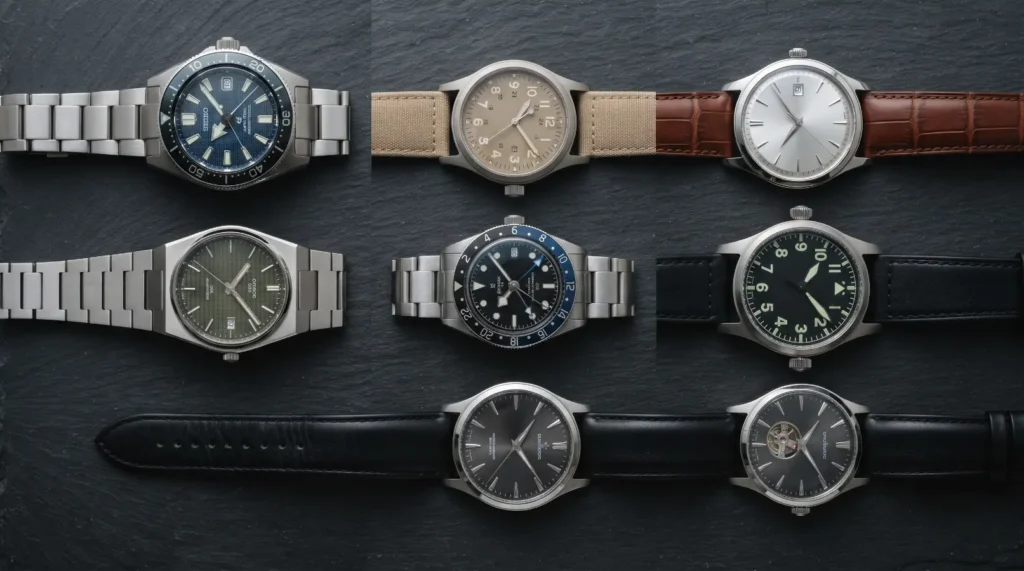
Quick Comparison: 7 Automatic Watches Worth Considering
There is no single watch that makes sense for every wrist or budget. A 42mm sports watch can be excellent for an active wearer but awkward under a shirt cuff, while a slim dress watch may look fantastic at work but feel too delicate for outdoor use.
This table gives you the quickest way to narrow the field before getting into the details.
| Watch | Movement | Case Size | Water Resistance | Crystal | Best For |
|---|---|---|---|---|---|
| Seiko 5 Sports SRPD55 | Seiko 4R36 automatic | 42.5mm | 100m | Hardlex | Affordable everyday wear |
| Orient Kamasu | Orient automatic | 41.8mm | 200m | Sapphire | Affordable diving |
| Seiko Presage Cocktail Time | Seiko automatic | 40.5mm | 50m | Hardlex | Dressier style |
| Hamilton Khaki Field Auto | Hamilton H-10 | 38mm | 100m | Sapphire | Field watch versatility |
| Tissot Gentleman Powermatic 80 | Powermatic 80 | 40mm | 100m | Sapphire | Office and everyday wear |
| Tissot PRX Powermatic 80 | Powermatic 80 | 40mm | 100m | Sapphire | Sport-luxury styling |
| Longines HydroConquest | Longines automatic | Varies | 300m on current diver models | Sapphire | Premium dive-watch use |
Specifications can vary by reference, so check the individual model before buying.
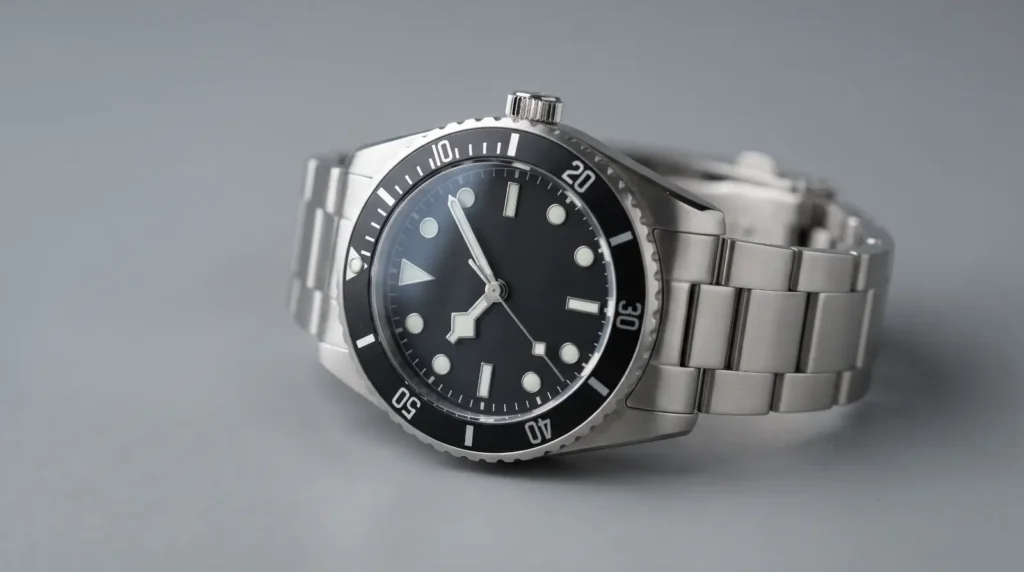
Best Affordable Automatic: Seiko 5 Sports SRPD55
If your first mechanical watch needs to be affordable, practical, and unmistakably mechanical, the Seiko 5 Sports remains an easy place to start.
The SRPD55 uses Seiko’s 4R36 automatic movement with manual winding, hacking, and an approximately 41-hour power reserve. Its 42.5mm stainless-steel case has a 46mm lug-to-lug measurement, 100m water resistance, a day-date display, and a Hardlex crystal.
Specs: Seiko 4R36 automatic / 42.5mm / 100m / Hardlex / approximately 41-hour power reserve.
Why It Made the List
The attraction is straightforward: you get a genuine automatic movement and a sporty design without entering Swiss-watch pricing.
The downside is equally straightforward. At 42.5mm, this is not a particularly small watch, and Hardlex does not have the same scratch resistance as sapphire. If your wrist is small or you are particularly hard on crystals, those are worth considering.
For a first mechanical watch, though, the Seiko 5 Sports gives you plenty of room to discover what you actually like before spending more.
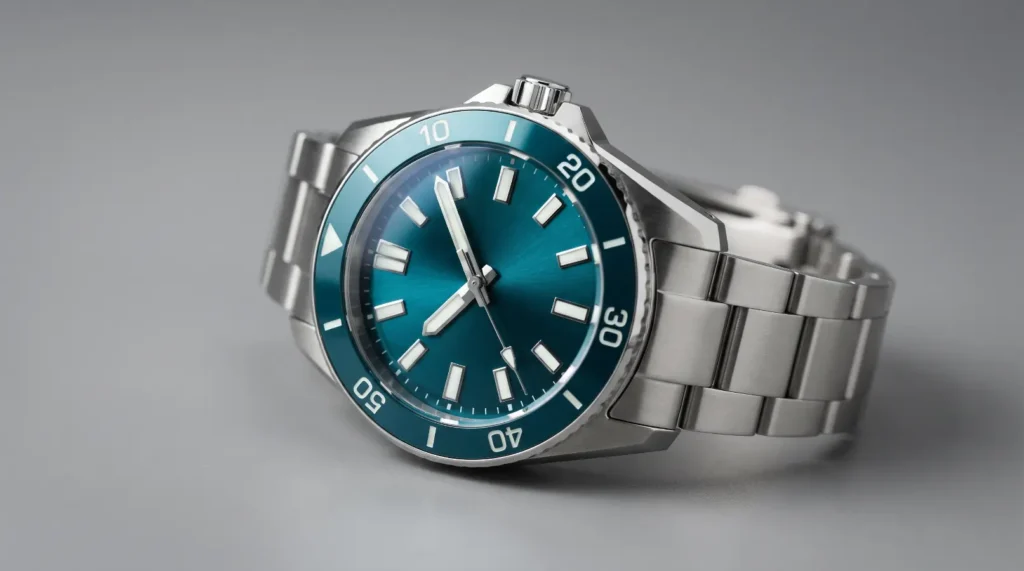
Best Affordable Dive-Style Automatic: Orient Kamasu
The Orient Kamasu takes a different approach. Instead of trying to be an all-purpose field or dress watch, it gives you the proportions and specifications associated with a proper dive watch at a relatively accessible price.
The Kamasu is known for its 200m water resistance, sapphire crystal, rotating dive bezel, and Orient automatic movement. Current references use an in-house Orient caliber with hand-winding and hacking functionality.
Specs: Orient automatic / approximately 41.8mm / 200m / sapphire / roughly 40-hour power reserve.
Why It Made the List
The Kamasu makes sense for someone who wants one watch that can handle swimming, weekends, travel, and casual clothing without feeling precious.
Its larger case also means it wears differently from compact dress watches. If you prefer smaller watches, try one on first.
The biggest advantage here is the specification package. Sapphire and 200m water resistance are meaningful features, not just marketing language.
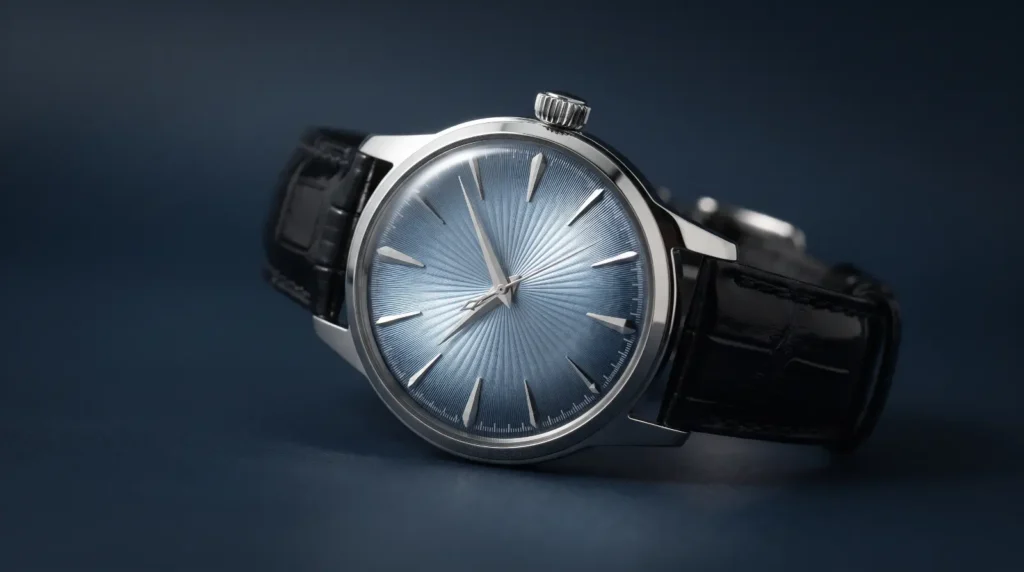
Best Dressy Option: Seiko Presage Cocktail Time
Some automatic watches are about ruggedness. The Cocktail Time is about the dial.
Seiko’s Presage Cocktail Time models are designed around richly textured dials inspired by cocktail-bar colors and lighting. The popular SRPB41, for example, uses a 40.5mm stainless-steel case, Seiko’s 4R35 automatic movement, approximately 41 hours of power reserve, Hardlex crystal, a date display, and 5-bar water resistance.
Specs: Seiko 4R35 automatic / 40.5mm / 50m / Hardlex / approximately 41-hour power reserve.
Why It Made the List
This is the kind of watch that changes personality depending on the lighting. The dial gives it considerably more visual character than many entry-level mechanical watches.
It also works beyond formal clothing. Pair it with a shirt and jacket and it feels naturally dressy; wear it with jeans and it becomes a more relaxed statement piece.
The trade-off is the Hardlex crystal and relatively modest water resistance. Treat it as a stylish everyday or office watch rather than a swimming companion.
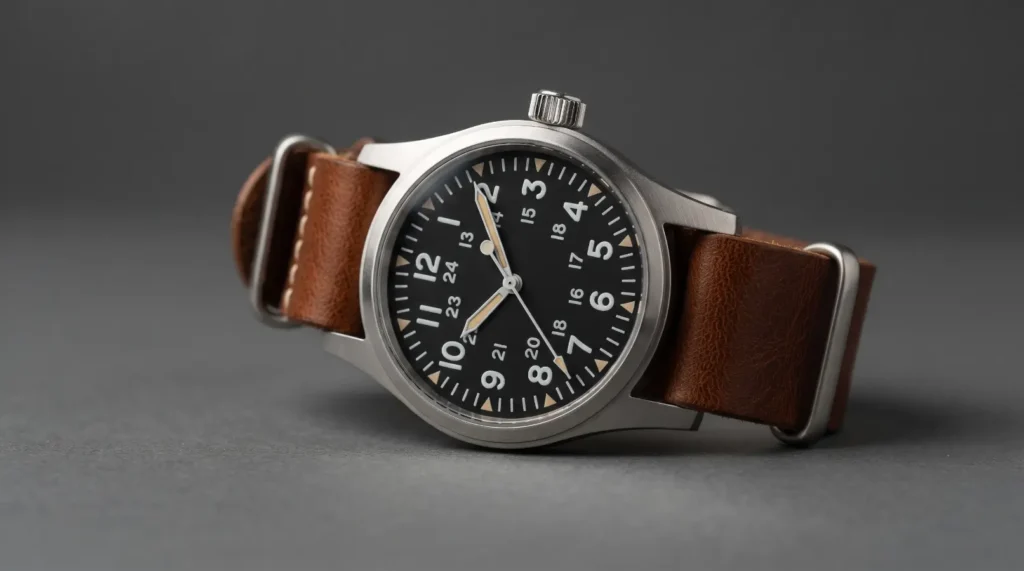
Best Field Watch: Hamilton Khaki Field Auto 38mm
A field watch should not need much explanation once it is on the wrist. The dial should be readable, the proportions should be comfortable, and the movement should be capable of disappearing into the background.
The Hamilton Khaki Field Auto 38mm does exactly that. Its H-10 automatic caliber offers up to 80 hours of power reserve, while the watch combines a 38mm stainless-steel case, sapphire crystal, 100m water resistance, a 47mm lug-to-lug measurement, and a Nivachron balance spring.
Specs: Hamilton H-10 automatic / 38mm / 100m / sapphire / 80-hour power reserve.
Why It Made the List
The 38mm size is a major reason to consider it. Many modern sports watches have become increasingly large, but the Khaki Field keeps the traditional field-watch scale without feeling toy-like.
It is also a strong choice if you rotate watches during the week. An 80-hour power reserve gives you considerably more breathing room than a typical roughly 40-hour automatic. Take it off Friday and there is a reasonable chance it will still be running Monday morning.
Hamilton’s current US listings also show the 38mm model with an open caseback and sapphire crystal.
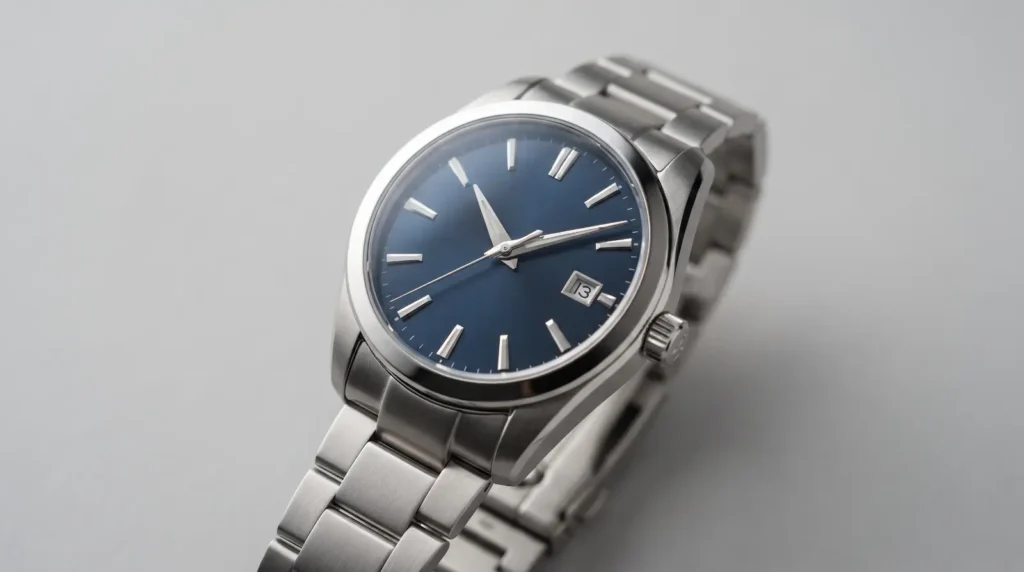
Best Everyday Swiss Automatic: Tissot Gentleman Powermatic 80
If you want one mechanical watch to cover the office, dinner, weekends, and travel, the Tissot Gentleman is one of the most straightforward choices in this category.
The current 40mm Gentleman uses a Swiss automatic Powermatic 80 movement with an 80-hour power reserve, sapphire crystal, 100m water resistance, a 316L stainless-steel case, date display, and see-through caseback. Tissot currently lists the reference at $950 on its US site, although pricing can vary by configuration and market.
Specs: Powermatic 80 automatic / 40mm / 100m / sapphire / 80-hour power reserve.
Why It Made the List
The Gentleman does not lean heavily into one category. That is exactly why it works.
The 40mm case is easy to dress up, but the 100m water resistance and sapphire crystal make it much more practical than a delicate dress watch. The 80-hour reserve is another useful advantage for anyone who does not wear the same watch every day.
Its weakness is less about the watch itself and more about personality. If you want a strong vintage field-watch identity or a bold dive-watch look, the Gentleman may feel too restrained.
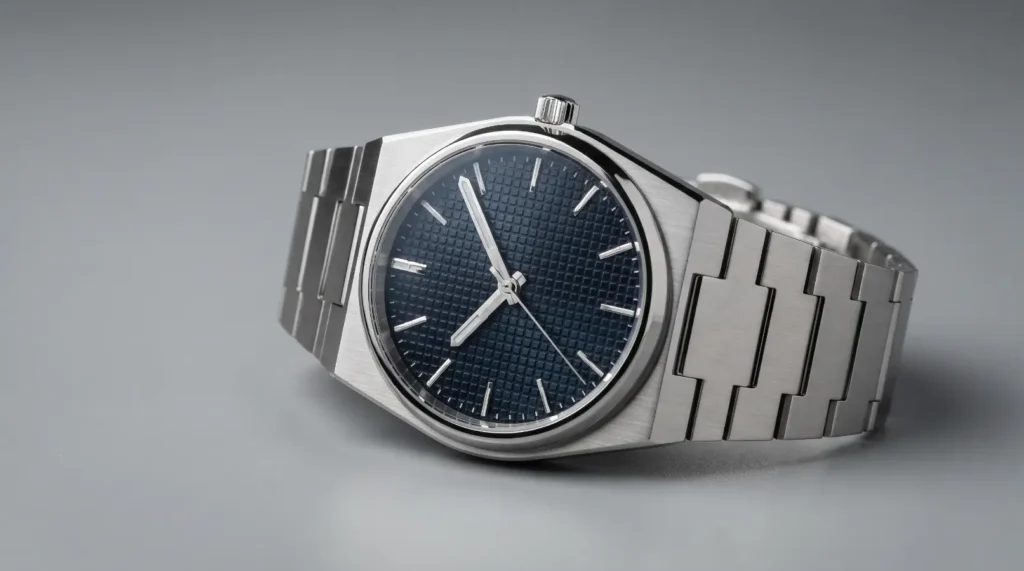
Best Sport-Luxury Automatic: Tissot PRX Powermatic 80
The PRX is for the buyer who wants mechanical watchmaking but also wants the watch to look unmistakably modern.
The current 40mm PRX Powermatic 80 has a 39.5mm case length, 40mm width, 10.93mm thickness, sapphire crystal, 100m water resistance, an integrated stainless-steel bracelet, and an 80-hour automatic movement with a Nivachron balance spring. Tissot’s US listings currently show several 40mm configurations around the $775–$850 range.
Specs: Powermatic 80 automatic / 40mm / 100m / sapphire / 80-hour power reserve.
Why It Made the List
The integrated-bracelet design gives the PRX a completely different presence from the Gentleman. It feels closer to the sport-luxury watches that inspired the style while staying far below traditional high-end pricing.
The relatively slim 10.93mm profile also helps it sit neatly on the wrist.
There is one thing to remember: integrated bracelets make strap changes less flexible than a conventional watch with standard lugs. Buy the PRX because you like the design, not because you expect it to behave like a traditional three-hand watch.
Best Premium Dive Option: Longines HydroConquest
Once the budget moves beyond entry-level Swiss watches, the Longines HydroConquest becomes an interesting step into serious Swiss dive-watch territory.
Current HydroConquest automatic models are built around a sporty diver format with substantial water resistance, a rotating bezel, luminous hands and markers, and sapphire crystal. Depending on the exact reference, case sizes and specifications vary, so this is one category where checking the individual model number matters.
Specs: Longines automatic / multiple case sizes / up to 300m water resistance on current dive models / sapphire crystal.
Why It Made the List
The HydroConquest works when you want a watch that looks sporty without becoming overly tactical.
It is also a useful reminder that “automatic” does not automatically mean “dress watch.” A mechanical movement can sit inside a purpose-built diver just as naturally as it can inside a slim office watch.
The catch is size. Some HydroConquest references have substantial wrist presence, so smaller-wrist buyers should pay attention to case diameter and lug-to-lug dimensions rather than relying on diameter alone.
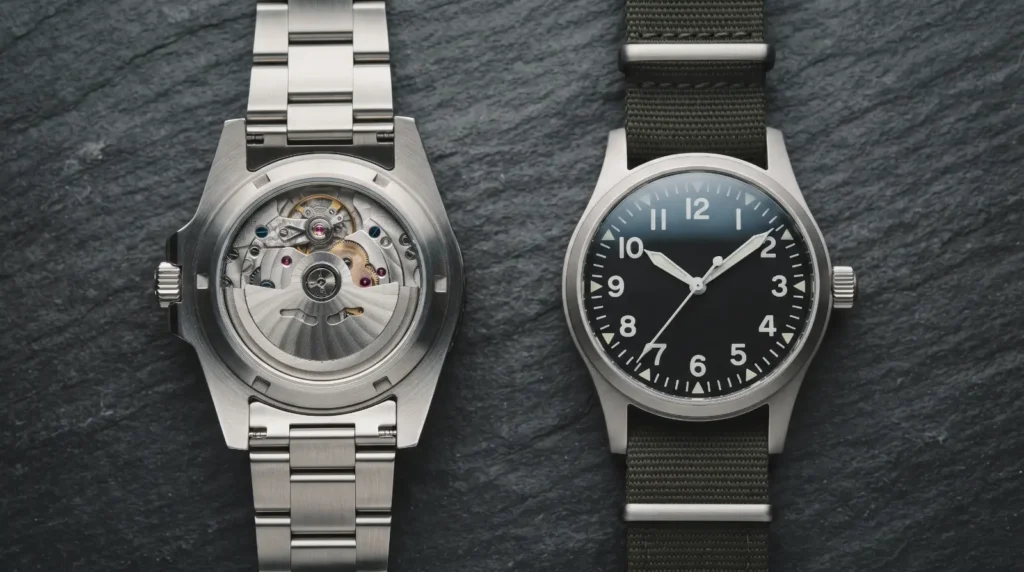
Automatic vs. Quartz: Which Makes More Sense?
An automatic watch is powered by a mechanical movement that uses a rotor to wind its mainspring as the wearer moves. Quartz watches use an electronic oscillator regulated by a quartz crystal and are generally chosen for convenience and accuracy.
Neither system makes the other obsolete. They simply solve different problems.
Automatic watches make more sense if you value mechanical construction, traditional watchmaking, a sweeping seconds hand, and the experience of owning a miniature machine. Quartz is usually the more practical choice if you want maximum accuracy with minimal maintenance.
An automatic watch also has a limitation that beginners sometimes discover too late: it can stop.
If the power reserve runs out, you may need to reset the time and date before wearing it again. A quartz watch avoids that particular inconvenience.
What Should You Look For in a Men’s Automatic Watch?
The movement is only one part of the decision. Case dimensions, crystal material, water resistance, bracelet quality, and how often you actually plan to wear the watch can matter just as much.
Start with these questions:
1. What Will You Actually Use It For?
For office wear, a 38–40mm dress or everyday watch is usually easier to live with than a large diver.
Outdoor use calls for stronger water resistance, good lume, a robust case, and sapphire crystal where possible.
When traveling, a longer power reserve can be surprisingly useful, particularly if you rotate several watches.
2. Does the Case Fit Your Wrist?
Do not judge size by diameter alone.
A 42mm watch with short lugs can sometimes wear more comfortably than a 40mm watch with long, straight lugs. Lug-to-lug distance, thickness, bracelet design, and case shape all affect the final fit.
The Hamilton Khaki Field Auto is a good example of this principle: its 38mm case and 47mm lug-to-lug give it compact diameter without making the watch feel tiny.
3. Do You Need Sapphire Crystal?
Sapphire is significantly more scratch-resistant than mineral or Hardlex crystal, which makes it attractive for everyday wear.
That does not mean every watch without sapphire is a bad purchase. Seiko’s use of Hardlex on watches such as the SRPD55 is part of how the brand keeps the overall package accessible.
If you frequently knock your watch against desks, doors, or equipment, however, sapphire becomes more appealing.
4. How Much Power Reserve Do You Need?
Around 40 hours is common in affordable automatic movements. Longer reserves can be more convenient if you rotate watches.
The difference becomes obvious on weekends. A watch with roughly 40 hours of reserve may stop if you leave it untouched Friday night. An 80-hour movement such as the Hamilton H-10 or Tissot Powermatic 80 can keep running considerably longer.
5. Are You Comfortable With Mechanical Accuracy?
Automatic watches are mechanical instruments, not quartz clocks.
They can gain or lose seconds over time, and performance can change depending on position, temperature, magnetism, wear, and the individual movement. If you need absolute grab-and-go precision, quartz still has a strong practical argument.
Seiko vs. Tissot vs. Hamilton: How Are They Different?
These three brands often appear in the same buying conversation, but they approach the affordable mechanical-watch market differently.
| Brand | General Strength | Typical Character | Good Starting Point |
|---|---|---|---|
| Seiko | Variety and accessible mechanical watches | Sporty, field, dress, dive | Seiko 5 Sports or Presage |
| Tissot | Swiss versatility and long power reserve | Modern, dressy, sport-luxury | Gentleman or PRX |
| Hamilton | Field-watch heritage and compact proportions | Military-inspired, practical | Khaki Field Auto |
Seiko gives buyers an enormous range of styles and price points. Tissot’s Powermatic 80 platform brings an 80-hour reserve and Swiss-made positioning into a comparatively accessible part of the market. Hamilton leans particularly hard into field and military-inspired designs, with the Khaki Field Auto combining a 38mm case and 80-hour H-10 movement.
The better match depends on what you want the watch to do rather than simply choosing the most recognizable name.
Common Mistakes to Avoid
Buying your first automatic watch is easier when you know which specifications actually matter to your lifestyle.
Buying by Diameter Alone
A 40mm watch is not automatically smaller-wearing than every 42mm watch. Check lug-to-lug measurements and thickness too.
Assuming 100m Water Resistance Makes Every Watch a Dive Watch
Water resistance is not the same thing as dive-watch construction. A proper diver brings additional design features such as a rotating timing bezel and appropriate case and crown construction.
Ignoring the Crystal
A beautiful dial is less enjoyable when it quickly accumulates scratches. Compare Hardlex, mineral, and sapphire before deciding.
Choosing a Watch That Is Too Large
Big watches can look impressive in product photography and feel very different on an actual wrist. If you have a smaller wrist, compact field and dress watches deserve a closer look.
Forgetting That Automatic Watches Need Servicing
Mechanical movements contain many moving parts and lubricants. They are designed to be maintained. Do not buy an automatic assuming it will require zero attention for decades.
Are Automatic Watches Worth Buying for Everyday Wear?
Yes, provided you value what a mechanical watch offers.
For someone who wants maximum accuracy and minimal fuss, quartz remains easier. But if you enjoy the mechanical movement, the feel of a rotor winding the watch, the visible mechanics through an exhibition caseback, or simply owning something that is not powered by a battery, an automatic can be much more satisfying.
The key is matching the watch to your habits. A 38mm field watch can be easier for daily wear than a 45mm diver, while an 80-hour power reserve can make a rotating collection much more convenient.
The Final Talk
The right automatic watch should earn a permanent spot on your wrist, not just look impressive in a product photo. The Seiko 5 Sports is a strong starting point for mechanical watchmaking, while the Orient Kamasu brings serious dive-watch capability without a luxury price. For everyday versatility, the Hamilton Khaki Field Auto and Tissot Gentleman offer a more refined balance of comfort, durability, and 80-hour power reserves, while the Tissot PRX Powermatic 80 adds a distinctive sport-luxury edge.
Ultimately, focus on case size, movement, water resistance, crystal, and wearing style before worrying about the brand name. Get those basics right, and the mechanical charm of a self-winding watch becomes something you enjoy every day rather than the only reason you bought it.
FAQs
Strong choices among automatic watches for men include the Seiko 5 Sports for affordable everyday wear, Orient Kamasu for dive-watch value, Hamilton Khaki Field Auto for field-watch use, and Tissot Gentleman or PRX for Swiss everyday styling.
The right automatic watches for men depend mainly on your budget, wrist size, intended use, and whether you prefer Japanese or Swiss watchmaking.
Yes, automatic watches for men can be worn every day, especially when they have useful water resistance, a durable case, and a suitable crystal. They offer mechanical craftsmanship while still being practical for regular wear.
Just remember that mechanical watches require more care and servicing than basic quartz watches.
It depends on the movement. Many affordable automatic watches for men use movements with around 40 hours of power reserve, while movements such as the Hamilton H-10 and Tissot Powermatic 80 offer up to 80 hours.
A longer power reserve is especially useful if you rotate between several watches and do not wear the same one every day.
They serve different preferences. Automatic watches for men from Seiko offer a broad selection of affordable mechanical options, while Tissot provides Swiss-made choices such as the Gentleman and PRX with Powermatic 80 movements and 80-hour power reserves.
Seiko is especially strong for variety and accessible pricing, while Tissot focuses more on Swiss-made finishing and versatile everyday designs.
No. Automatic watches for men use a mechanical movement and a rotor that winds the mainspring through wrist movement. This is what gives automatic watches for men their self-winding functionality.
However, some automatic watches can also be manually wound through the crown, depending on the movement.
Discover More,
Wren Watches Review: 7 Best Models & Prices
Montblanc Watches: 7 Exceptional Picks for 2026
Classic Watches: 7 Proven Picks That Stand the Test of Time
[author box]